South Africa & Botswana

Day 17

Thursday, July 9, 2026

Around the Cape Peninsula — a road cut into a cliff, a lighthouse, and penguins

MorningDown the Atlantic seaboard to Maiden's Cove.
Chapman's Peak, and the road with a roof.
MiddayBaboons, ostriches, and the Cape of Good Hope.
AfternoonCape Point lighthouse; the penguins at Boulders.
LateKirstenbosch, and singing in the lobby.

Yesterday Dylan had pointed at a relief model on top of Table Mountain and traced the shape of the peninsula with his finger — the long finger of rock running south into the sea, the Atlantic on one side and False Bay on the other. Today we drove it, all the way down and all the way back, and it turned out to be one of the best days of the whole three weeks.

Maiden's Cove

The first stop was Maiden's Cove, a pull-off between Clifton and Camps Bay, with the Atlantic going on forever in one direction and the Twelve Apostles — the great buttressed run of cliffs that make up the back of Table Mountain — standing over us in the other. Yesterday we had been on top of that mountain looking out. Today we were underneath it looking up. There were vendors set up along the verge selling paintings, and a certain amount of good-natured haggling broke out. Eric, our driver for the Cape Town days, stepped in to help negotiate on somebody's behalf — which is the sort of thing a local can do in about a third of the time it takes a visitor.
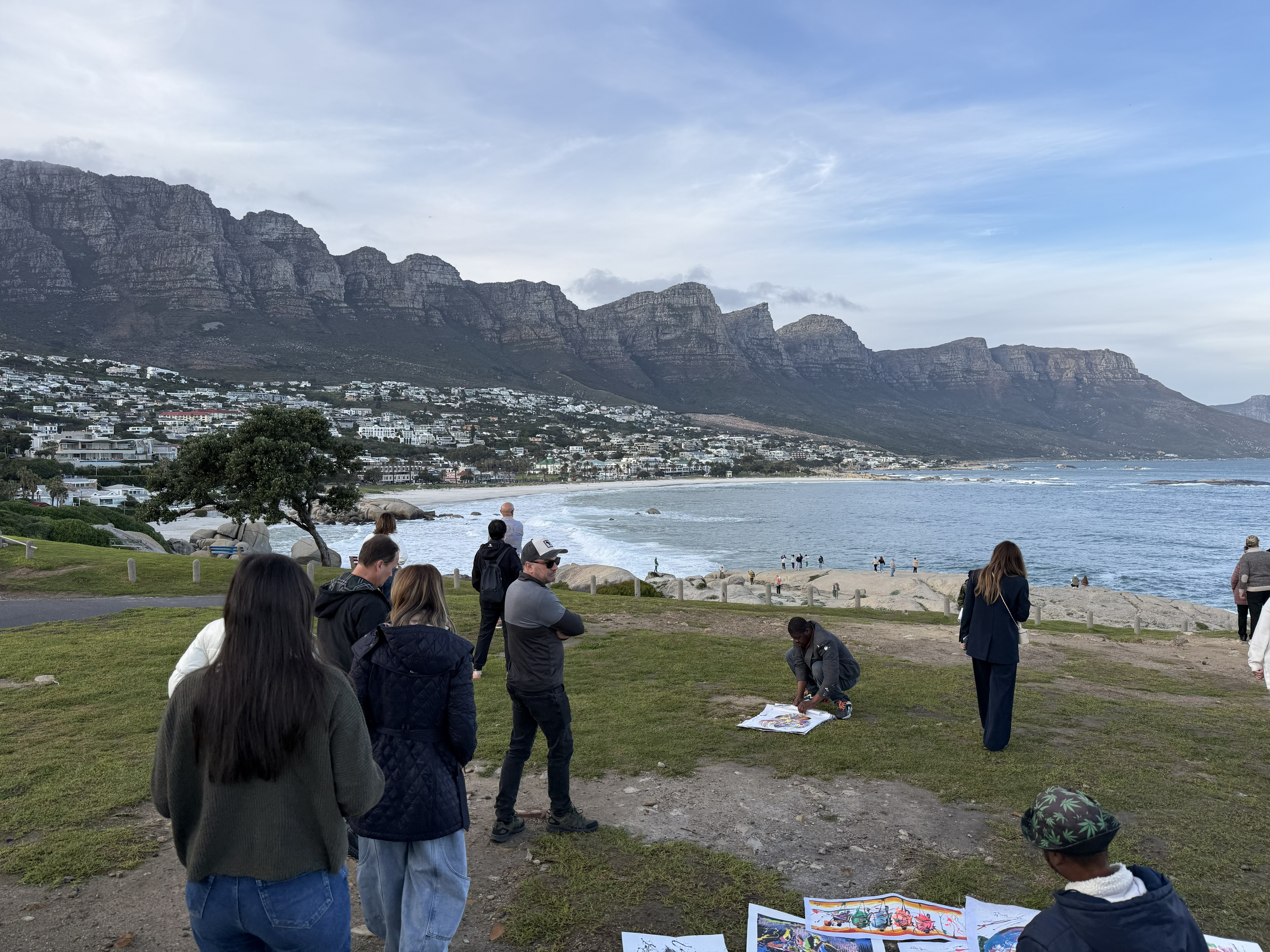
Maiden's Cove, the first stop of the day — the Twelve Apostles behind, the Atlantic in front, and a row of paintings for sale along the verge.

It was here, too, that Dylan did something I have not forgotten. He noticed me folded sideways into the van — at six foot five I don't fit most seats — and quietly gave me the front. It was mine for the rest of the trip; when I protested, he said it made him too uncomfortable to see someone else uncomfortable.
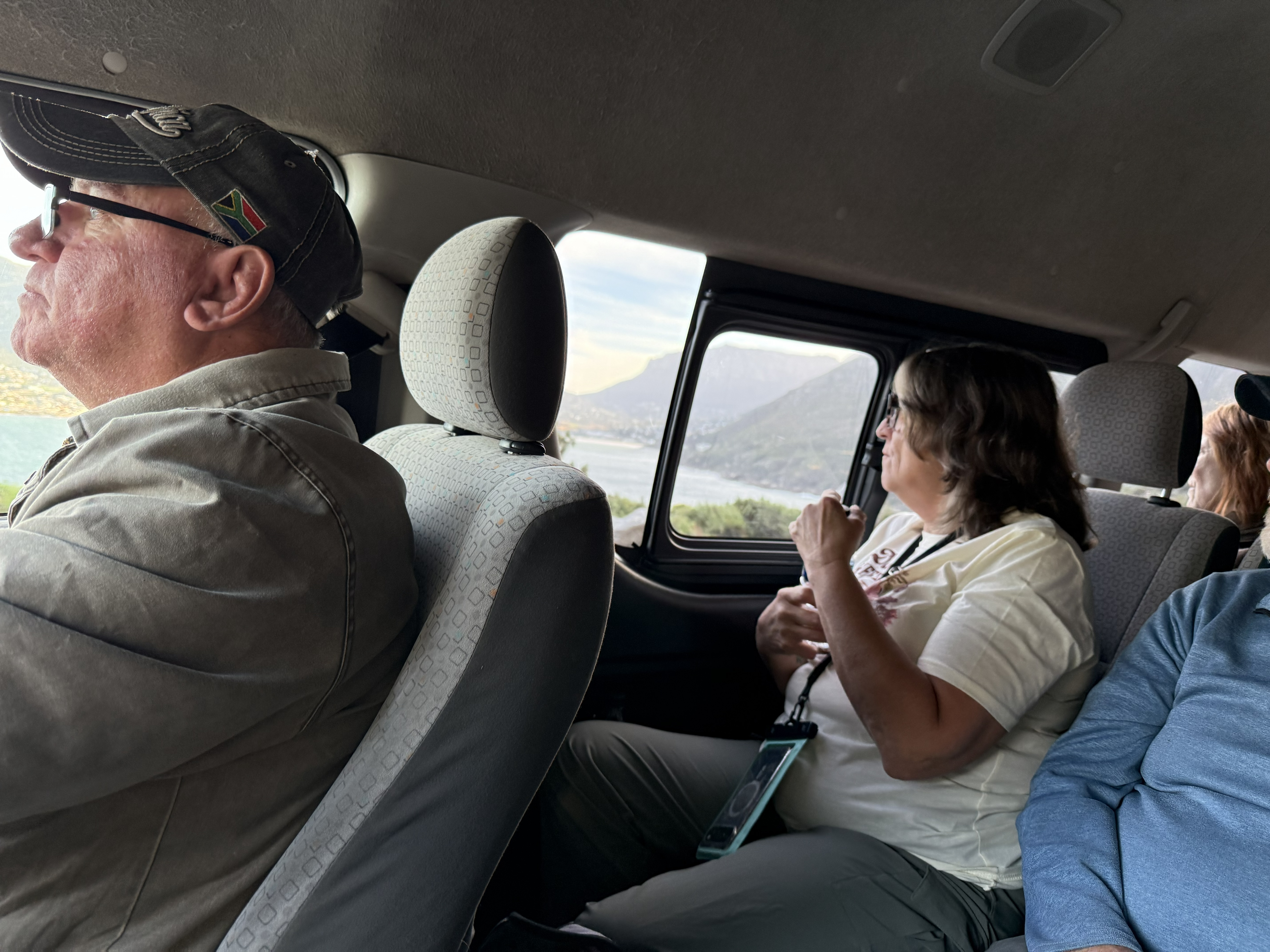
The front seat, mine from this stop onward — up beside Eric for the rest of the way. The view improved considerably, and so did my knees.

The Road with a Roof

From there the road runs south through Camps Bay and over the mountain to Hout Bay, and then onto the piece of engineering everybody comes for: Chapman's Peak Drive, nine kilometres of road carved directly into a near-vertical cliff face, with the mountain on one side and a long drop to the sea on the other.
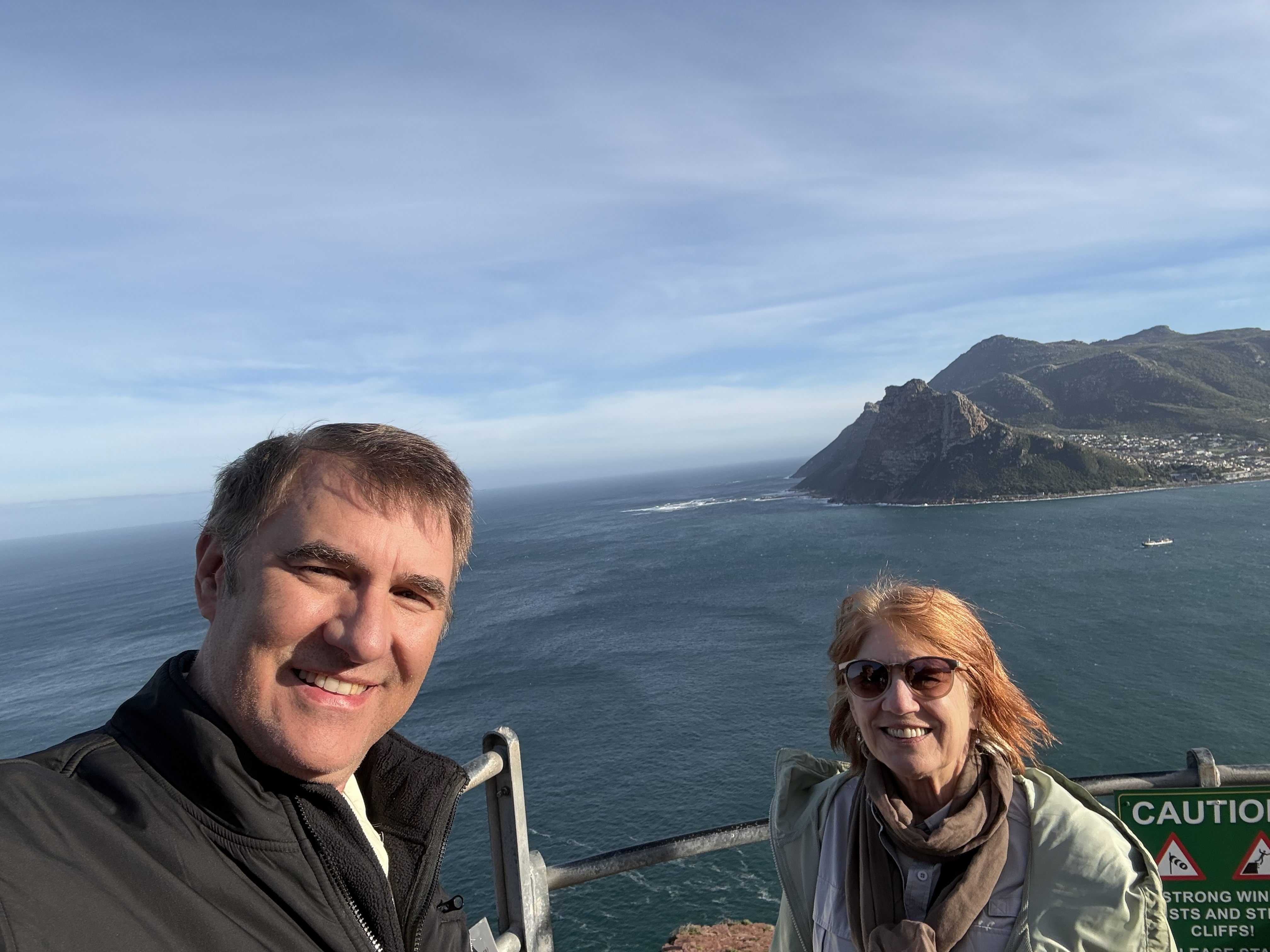
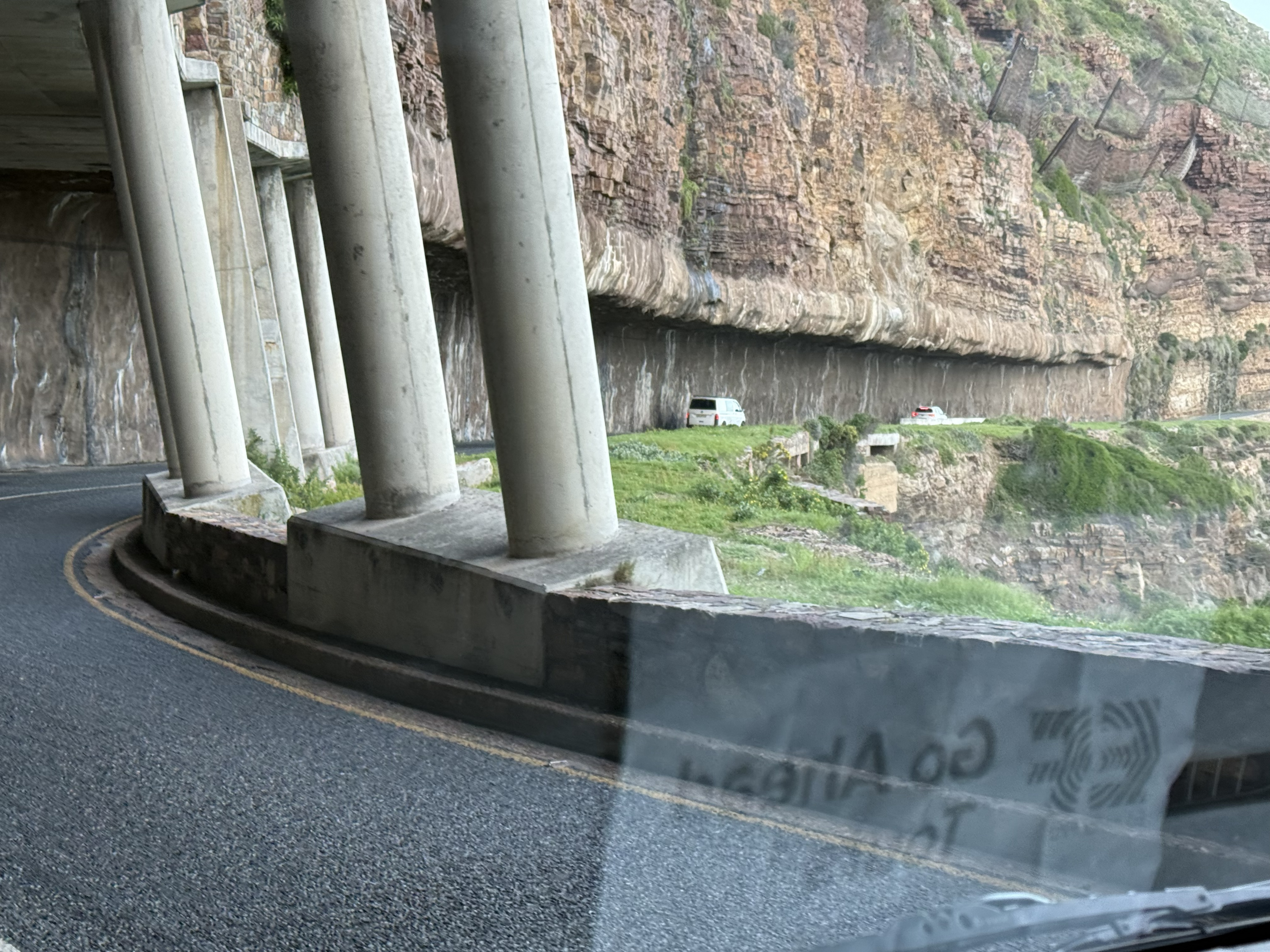
Somewhere along the drive, with the coast running away behind us. The road has 114 curves, and there is a viewpoint at what feels like every one of them.
And the surprise: in places the road has a ceiling. These concrete canopies and the half-tunnel cut into the rock are there to catch what the cliff drops.

Chocolate, Baboons, and Ostriches

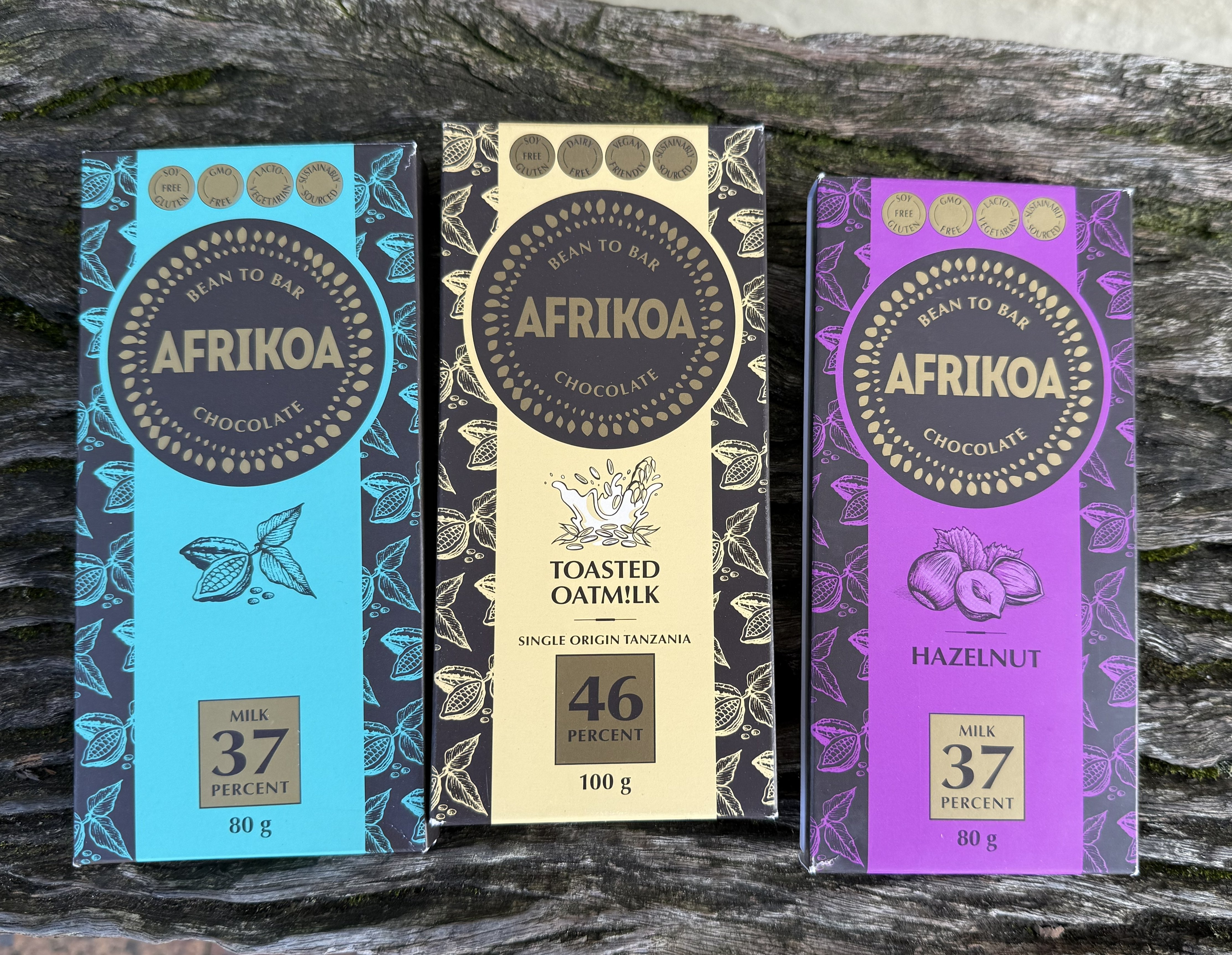
We stopped at a shop along the way, and I came away with chocolate — Afrikoa, made in South Africa from African cocoa, which felt like the correct souvenir for a man who had already bought nothing else.
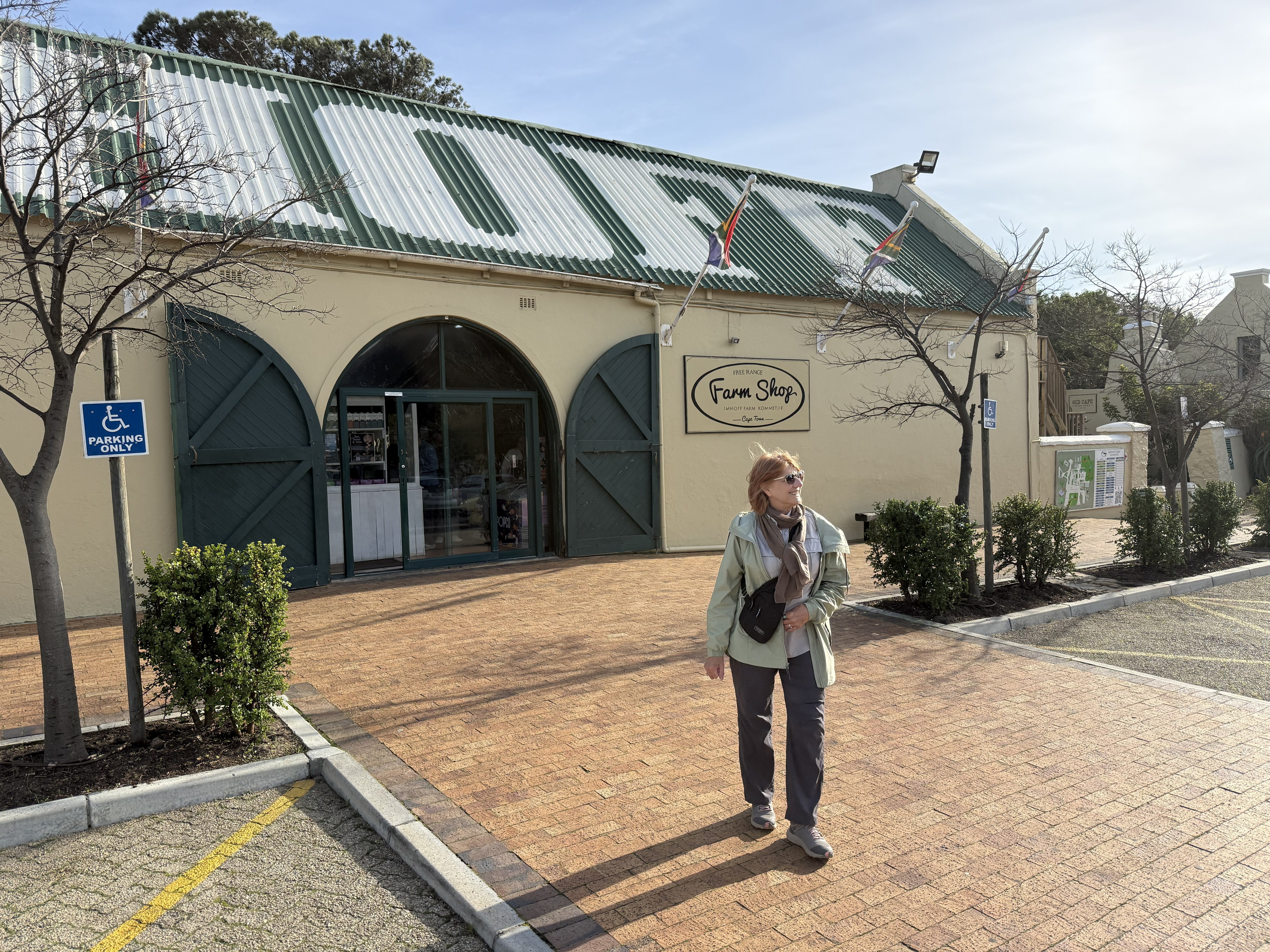
Bonnie coming out of the store — an old building with a long verandah.
The haul: three bars of Afrikoa, photographed on a tree trunk because the light was good and I had become that sort of tourist.

Then we came through baboon country, and the baboons were very much in evidence — crossing the road ahead of us, sitting on the verge, entirely unbothered by traffic. Dylan explained the local situation, which is a good deal less charming than it looks from a passing van.
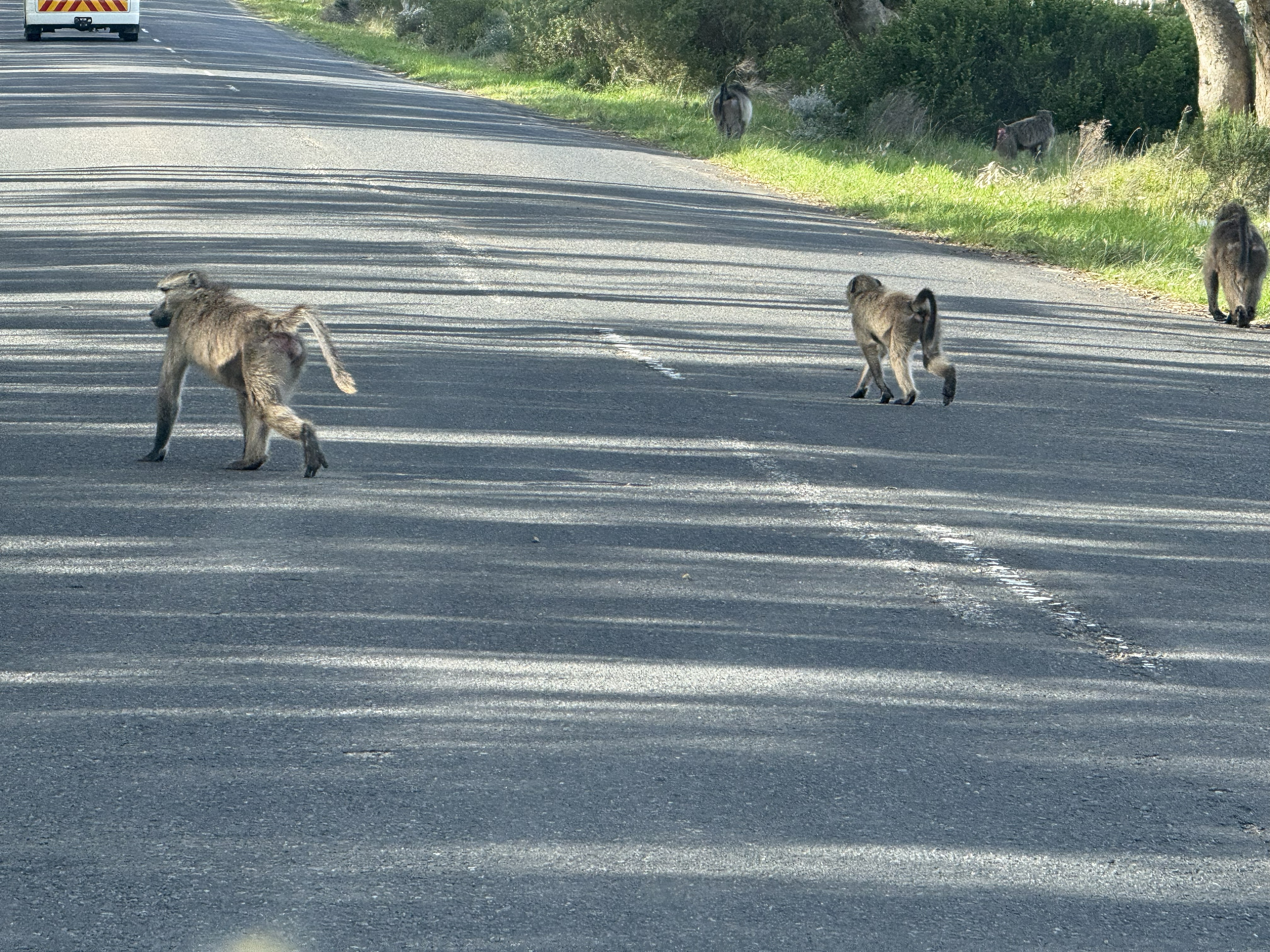
Chacma baboons crossing the road on the peninsula, at their leisure.

Then an ostrich farm, where the difference between the sexes is about as obvious as nature ever makes it.
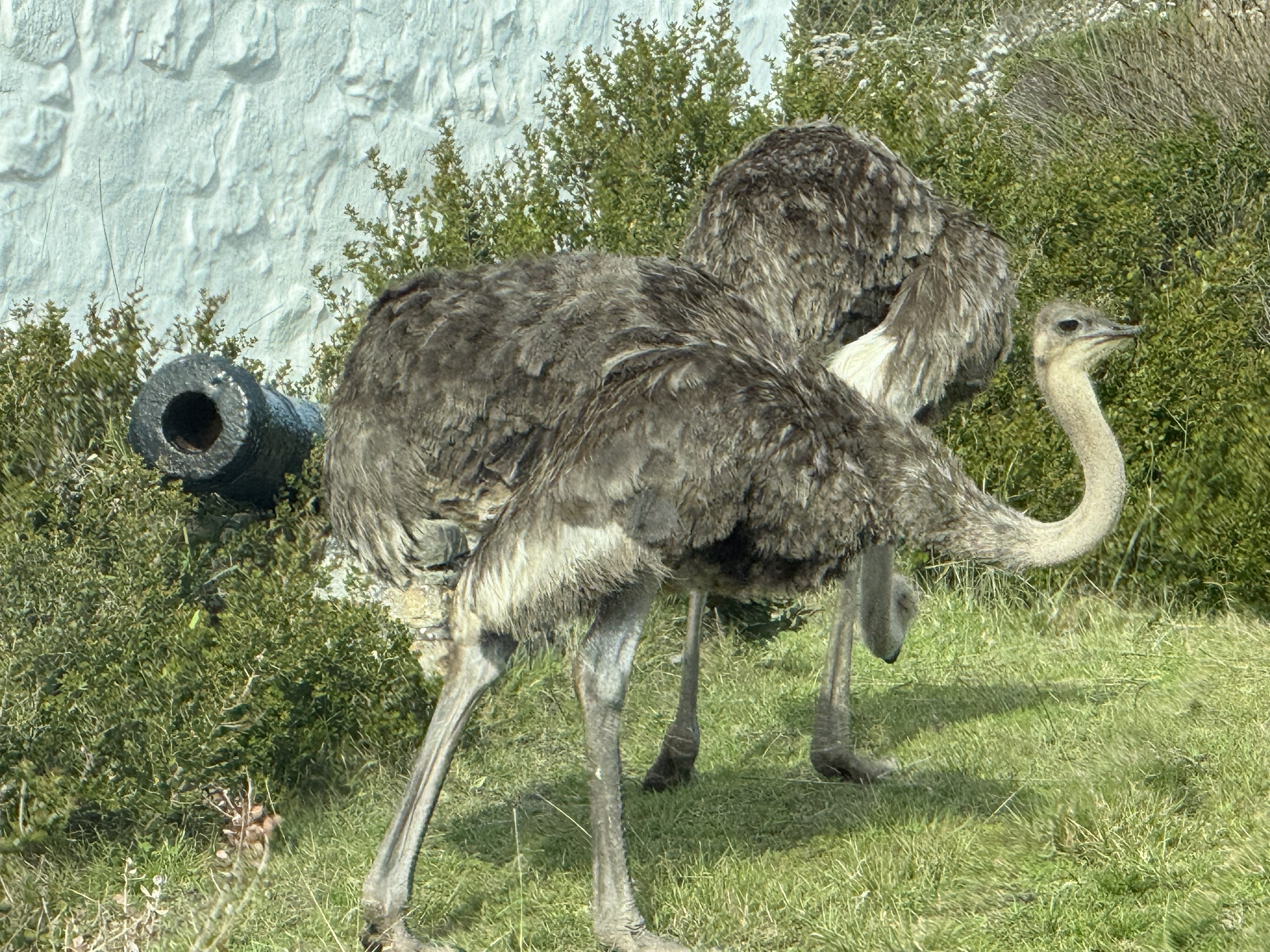
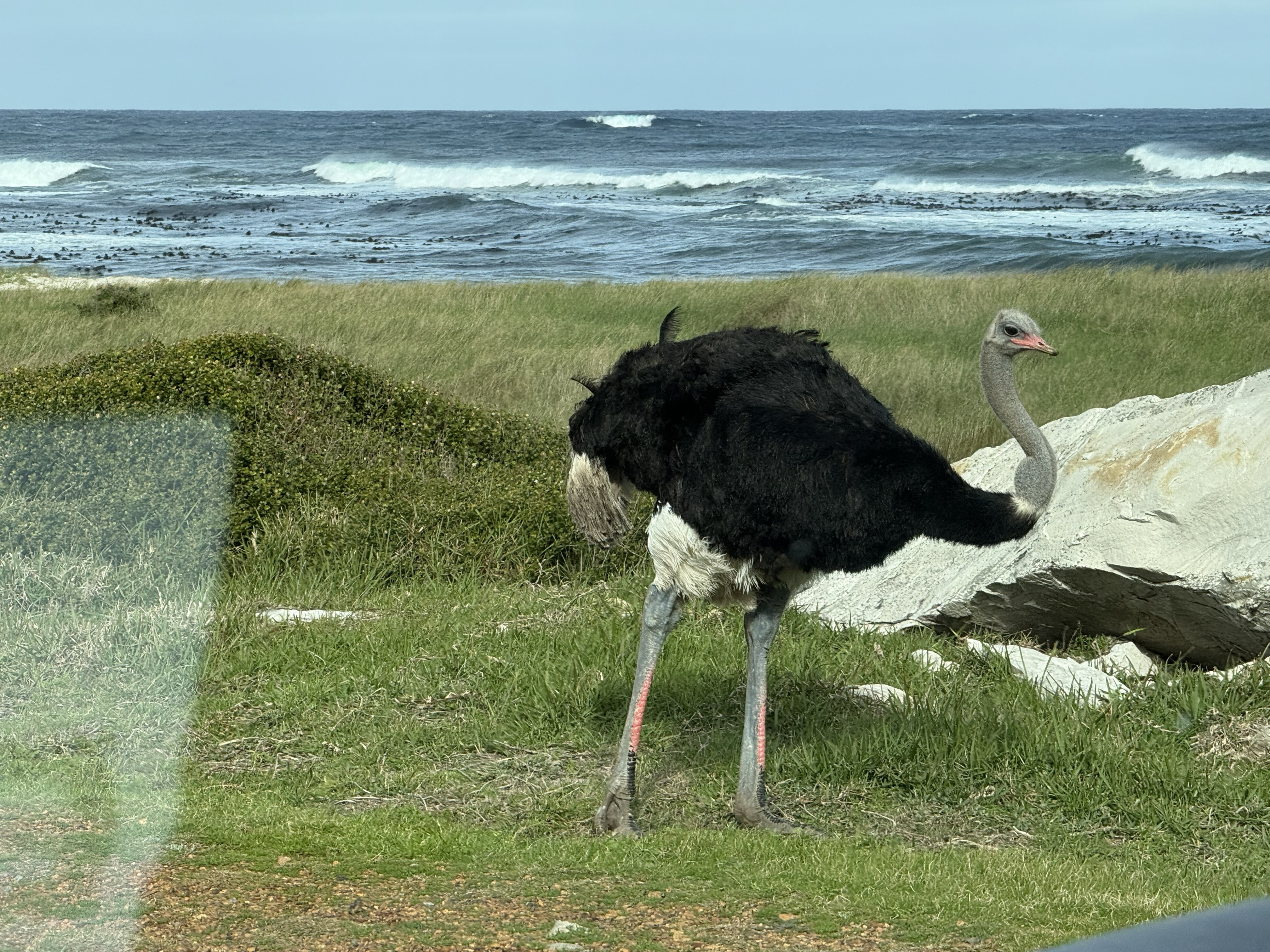
The female — grey-brown and sensible, which is exactly what you want when you are the one sitting on the nest by day.
And the male, black and white and considerably more pleased with himself. He takes the night shift, when black is the better camouflage.

The Cape of Good Hope

And then the point of the whole drive: the Cape of Good Hope, the rocky end of the peninsula that every schoolchild is told is where two oceans meet. (Strictly it isn't — Cape Agulhas, further east, is the true southern tip of Africa, and the oceans mix over a broad and moving front rather than at a signpost. But this is the corner that mattered to sailors, and it is the one with the sign.)
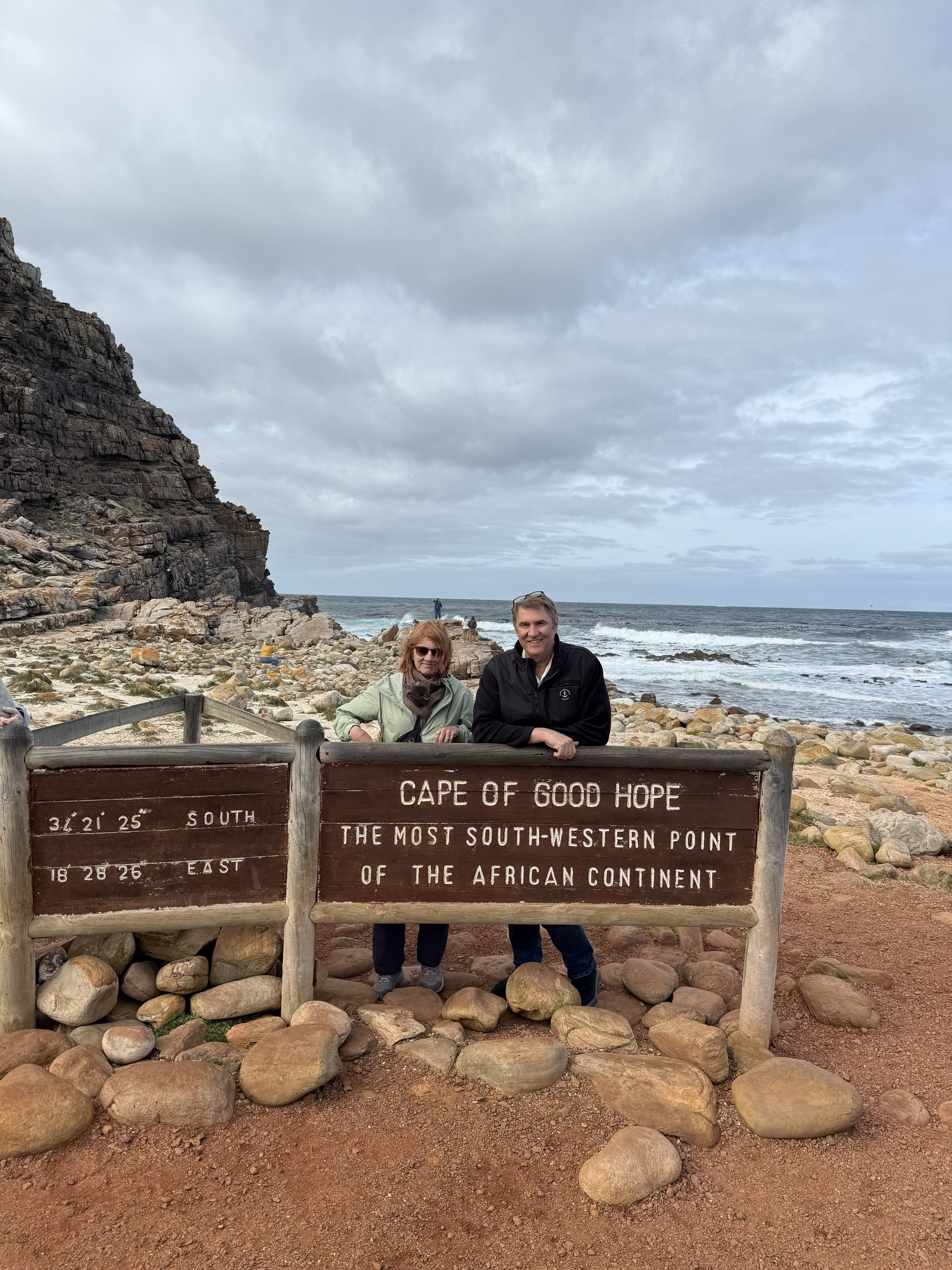
The obligatory and entirely non-negotiable photograph at the sign: “Cape of Good Hope — the most south-western point of the African continent.”

From there we went up to Cape Point, where the old lighthouse stands on the peak. I climbed to it, which is a proper set of steps, and the view from the top is worth every one of them.
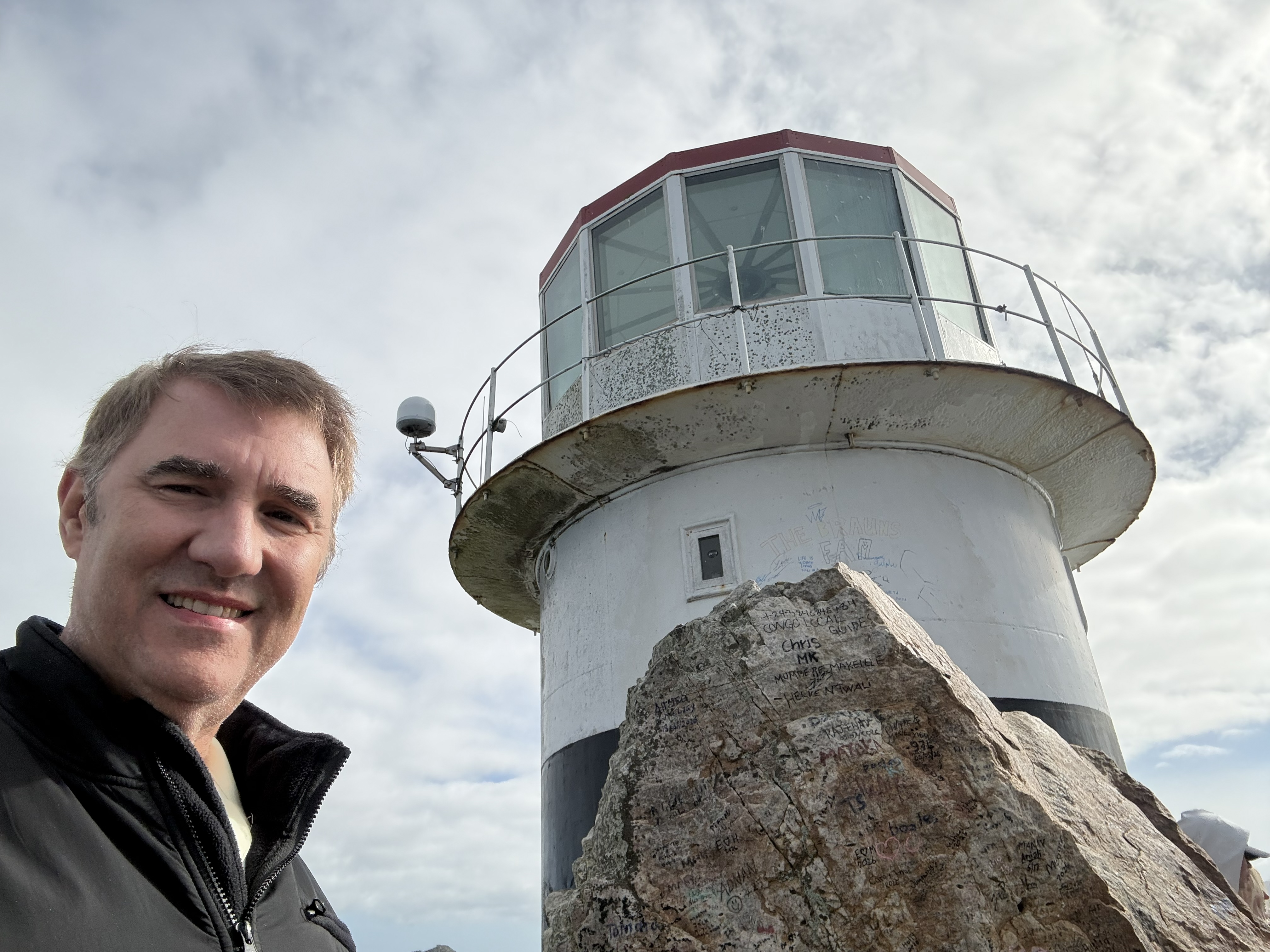
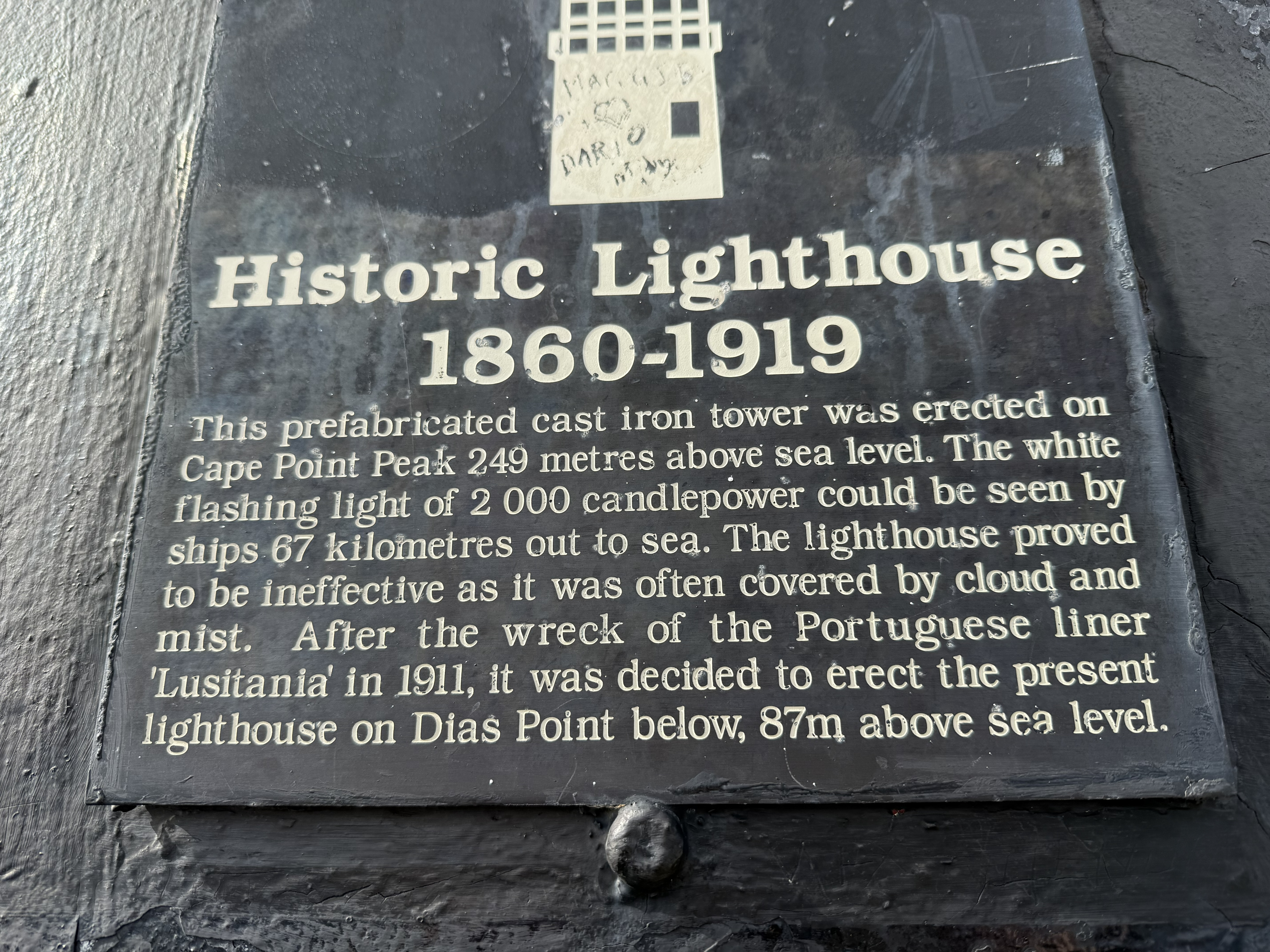
At the top, with the old lighthouse — cast iron, shipped out from England in sections and bolted together up here in 1860.
The sign that explains why it was a failure: at 238 metres up, the light was too often buried in cloud and mist for ships to see it at all.

The lighthouse is a lovely illustration of a very human mistake — building the light as high as possible, on the reasonable theory that higher is more visible, and discovering that the summit spends much of its life inside a cloud. Ships kept missing it. After the Portuguese liner Lusitania went onto the rocks in 1911, they finally built a new lighthouse much lower down the cliff, closer to the sea, where it could actually be seen.

Boulders

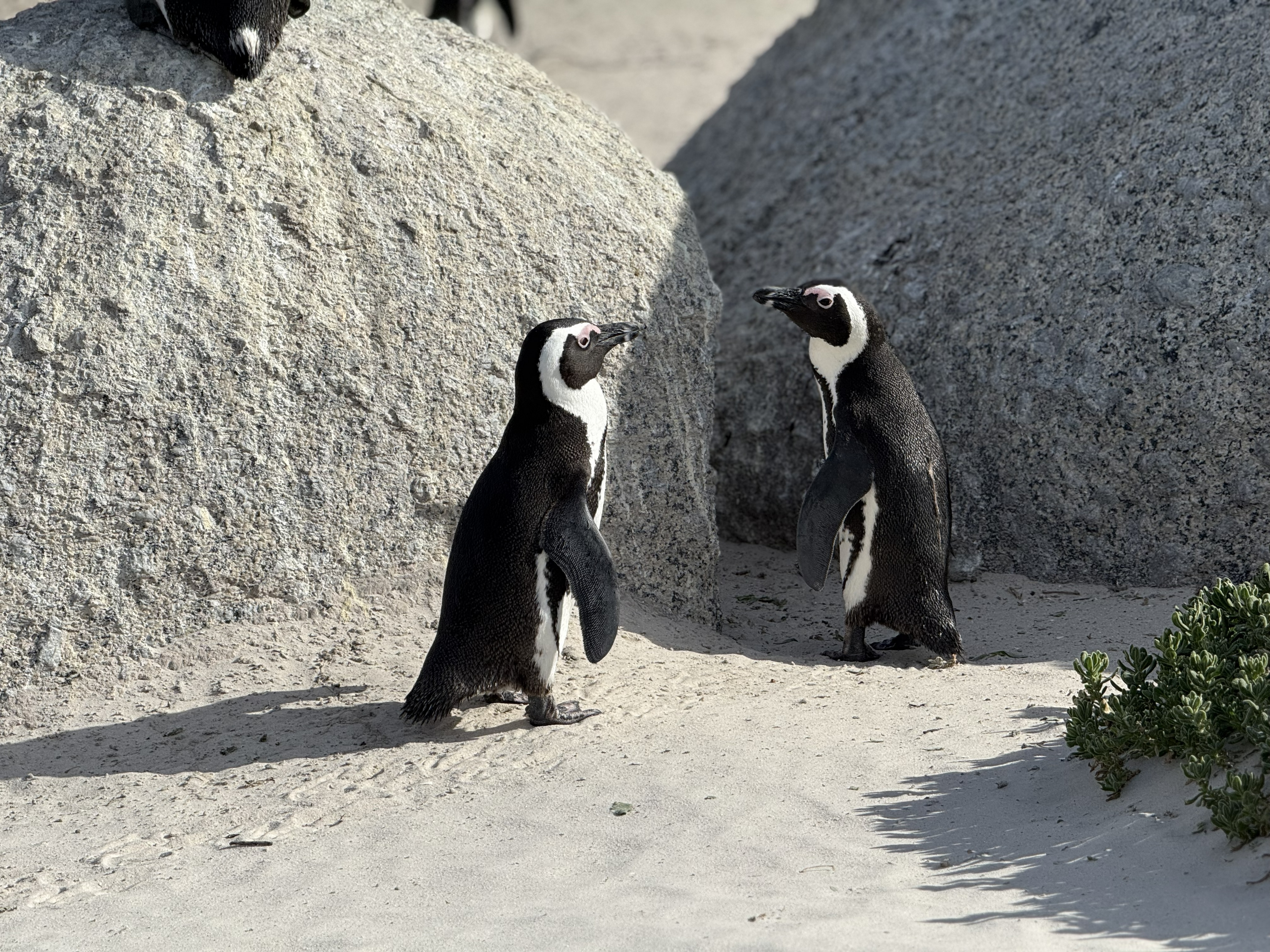
Back up the False Bay side, we stopped at Boulders Beach near Simon's Town, where an entire colony of African penguins lives among ancient granite boulders and, as far as anyone can tell, considers the arrangement excellent.
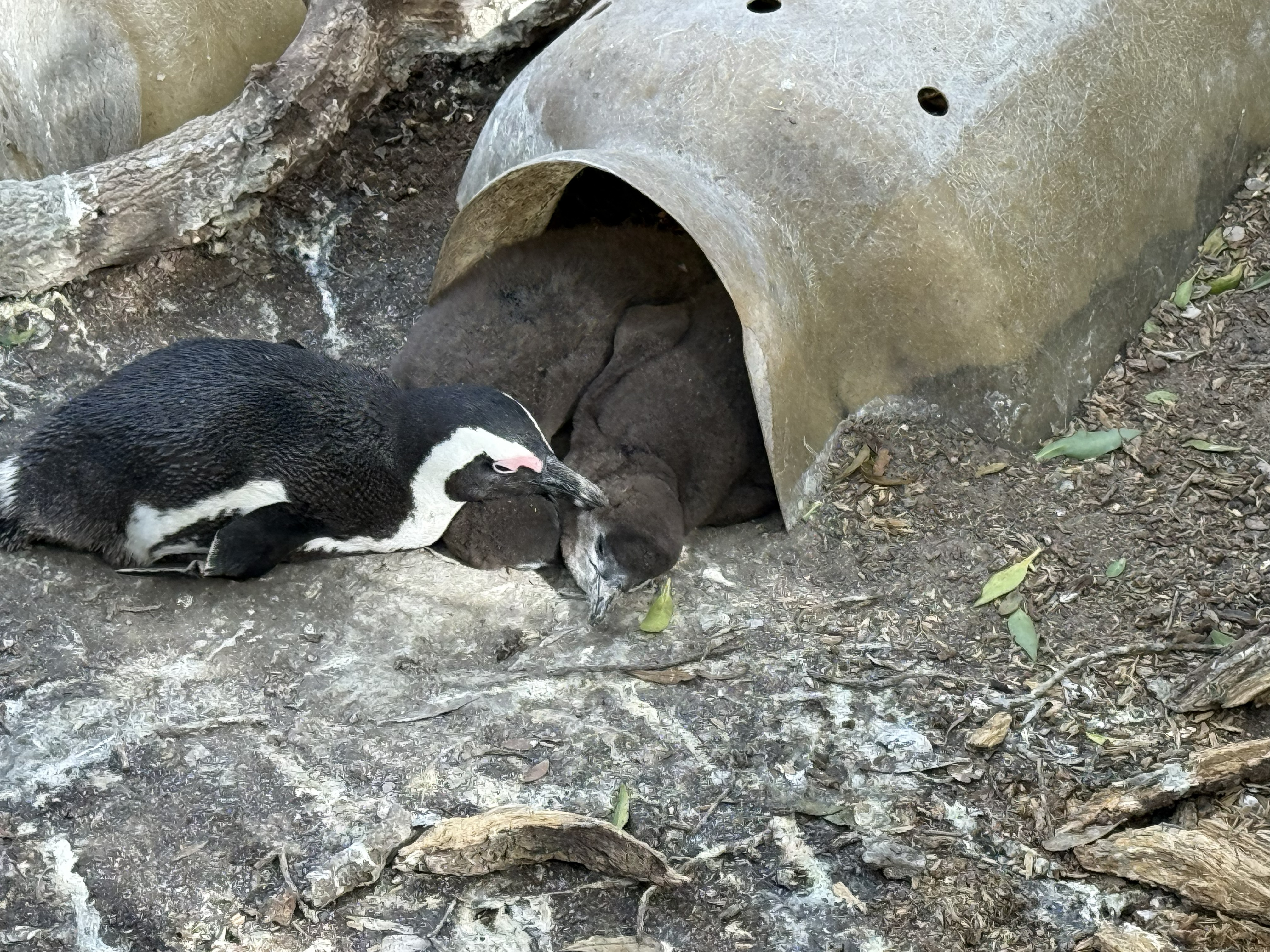
A chick at the nest — grey, fluffy, and not yet in possession of the formal wear.
Adults among the boulders. The colony started in 1982 when a single pair turned up; the sheltered beach and the granite suited them, and they stayed. The pink patches above the eye
Adults among the boulders. The colony started in 1982 when a single pair turned up; the sheltered beach and the granite suited them, and they stayed. The pink patches above the eyes are not decoration — they flush with blood to shed heat, which is how a penguin copes with an African summer.

Africa's only breeding penguin, and in serious trouble: the population has collapsed over the last century, which makes protected colonies like this one matter more than the crowds of us photographing them probably realise.

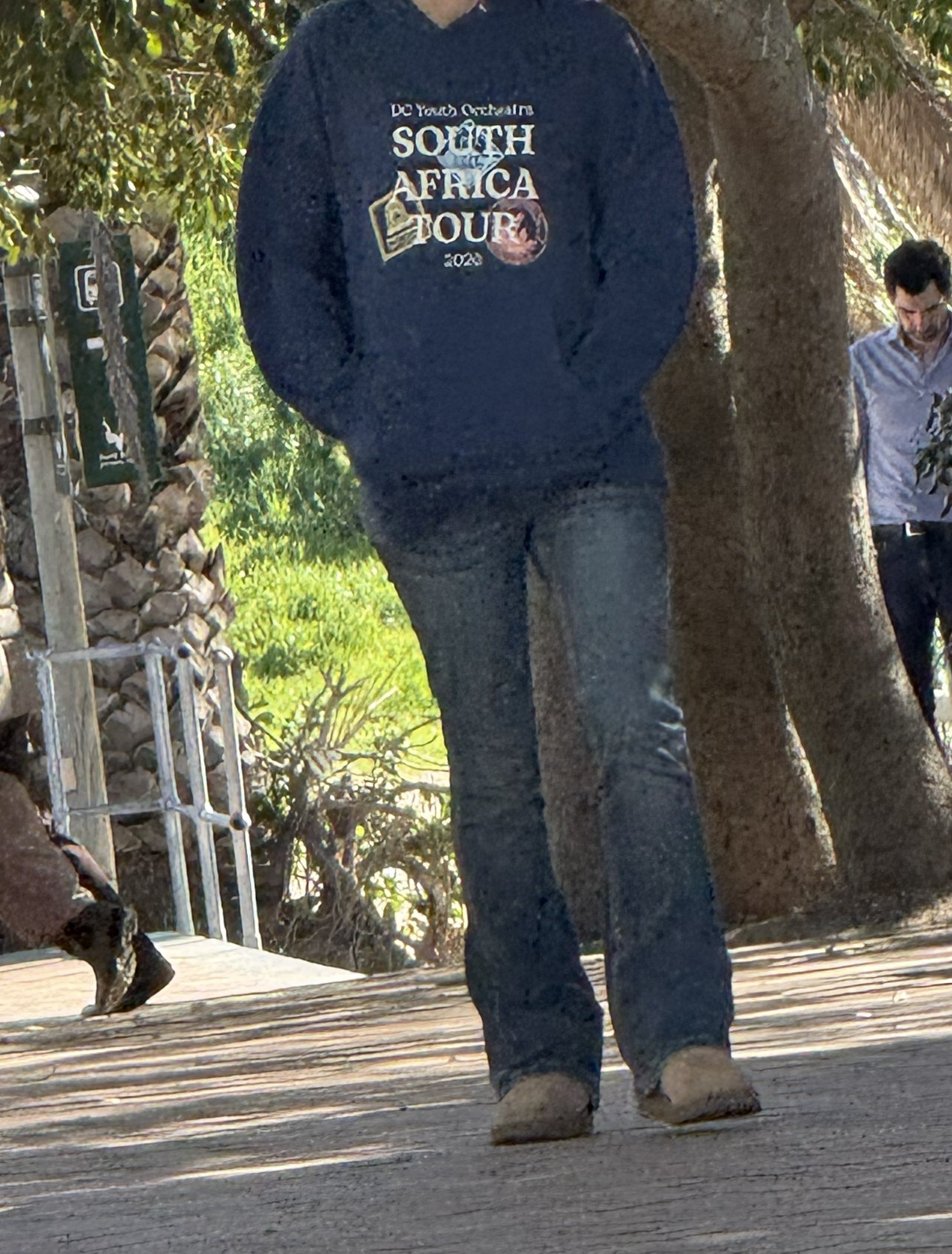
And a wholly unexpected sight in the middle of it — a group from the DC Youth Orchestra, in matching sweatshirts, wandering the same path. Six thousand miles from home and we run i
And a wholly unexpected sight in the middle of it — a group from the DC Youth Orchestra, in matching sweatshirts, wandering the same path. Six thousand miles from home and we run into Washington.

Kirstenbosch

The last stop was Kirstenbosch, the botanical garden on the eastern slopes of Table Mountain and one of the great gardens of the world — devoted almost entirely to South Africa's own flora, which, given that the Cape has one of the richest and most peculiar plant kingdoms on earth, is a deep well to draw on.
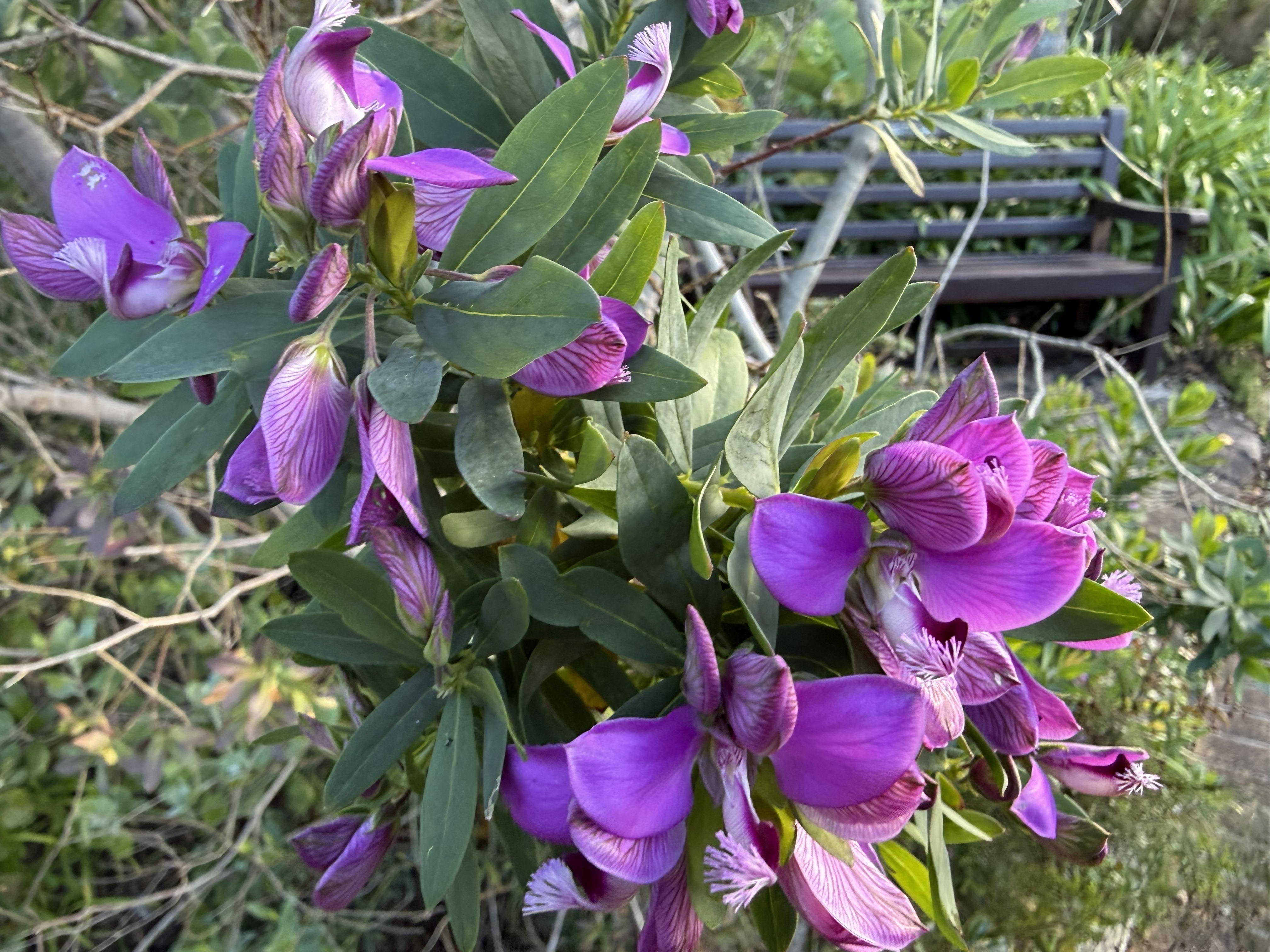
Polygala myrtifolia — the September bush. At a glance the flowers look like sweet peas, but they aren't: there is no banner petal at the back, and instead each bloom carries a
Polygala myrtifolia — the September bush. At a glance the flowers look like sweet peas, but they aren't: there is no banner petal at the back, and instead each bloom carries an extravagant little white brush on the keel. That fringed tuft is the signature of every polygala, and once you have seen it you cannot unsee it.
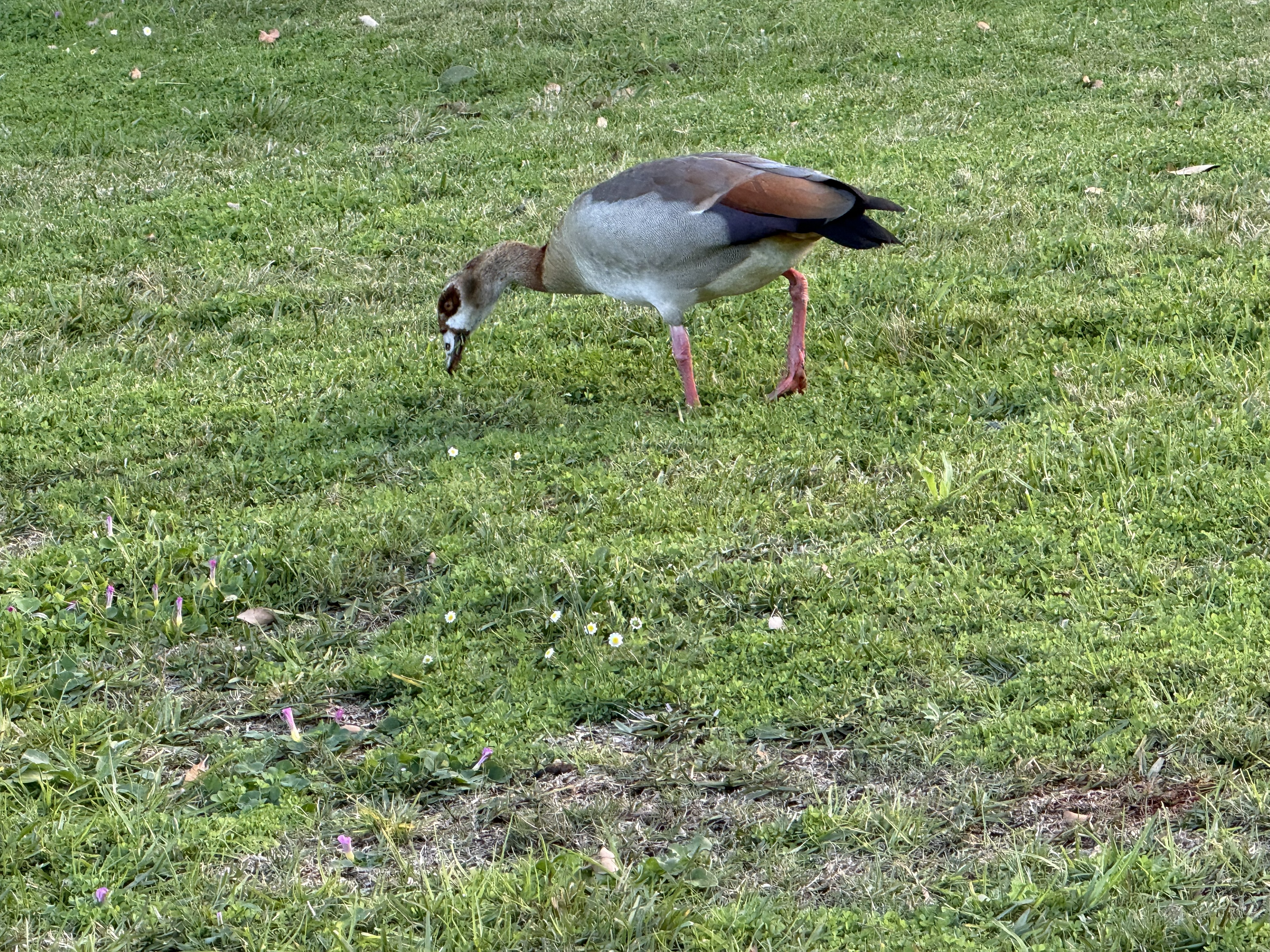
An Egyptian goose on the lawn, by the look of it — the same bird we last saw on a sandbar in the Chobe, now grazing a manicured garden two thousand miles south.
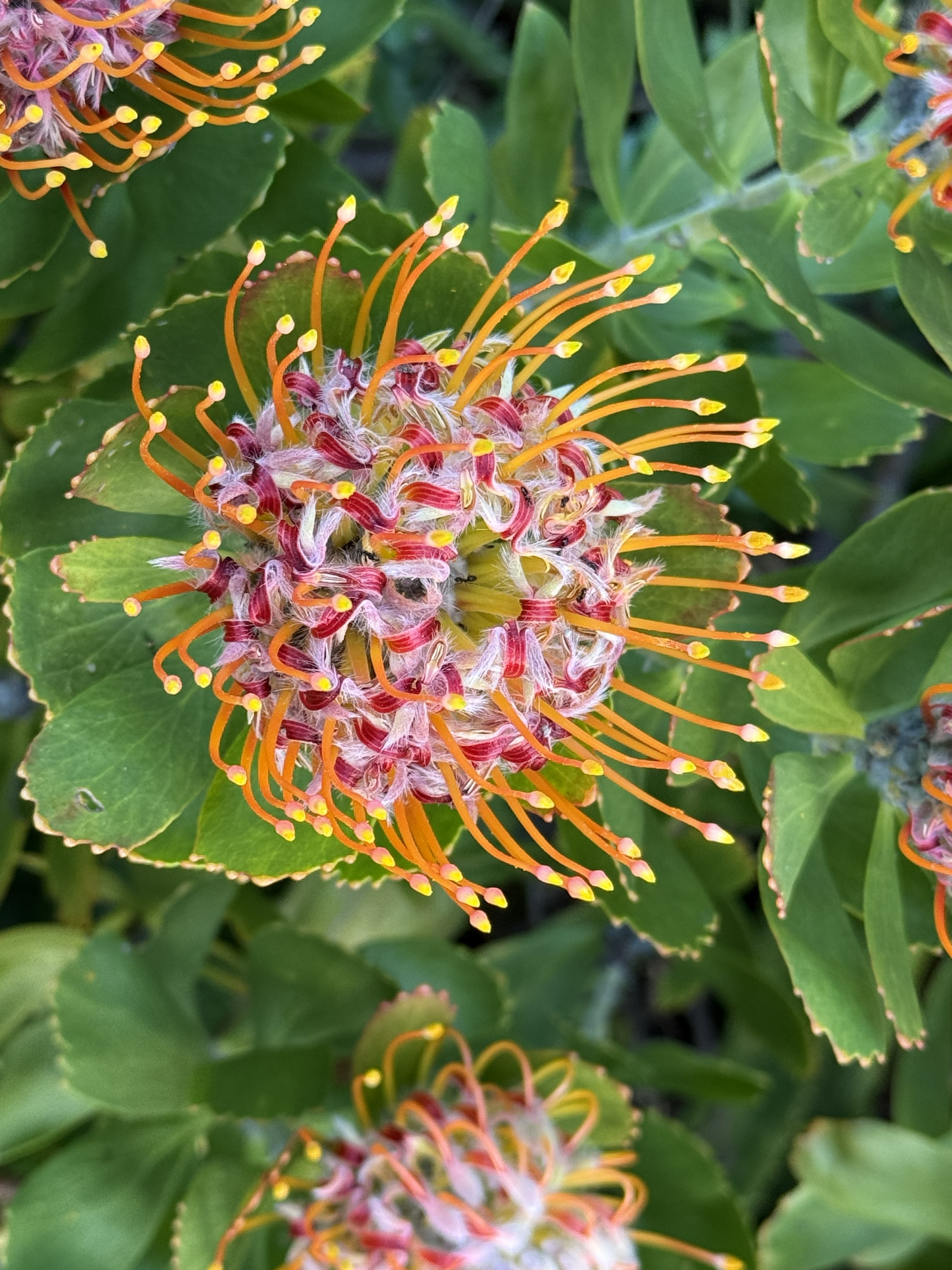
A pincushion protea, all orange spokes — one of the signature flowers of the Cape fynbos, and the reason the garden is worth the stop even in winter.
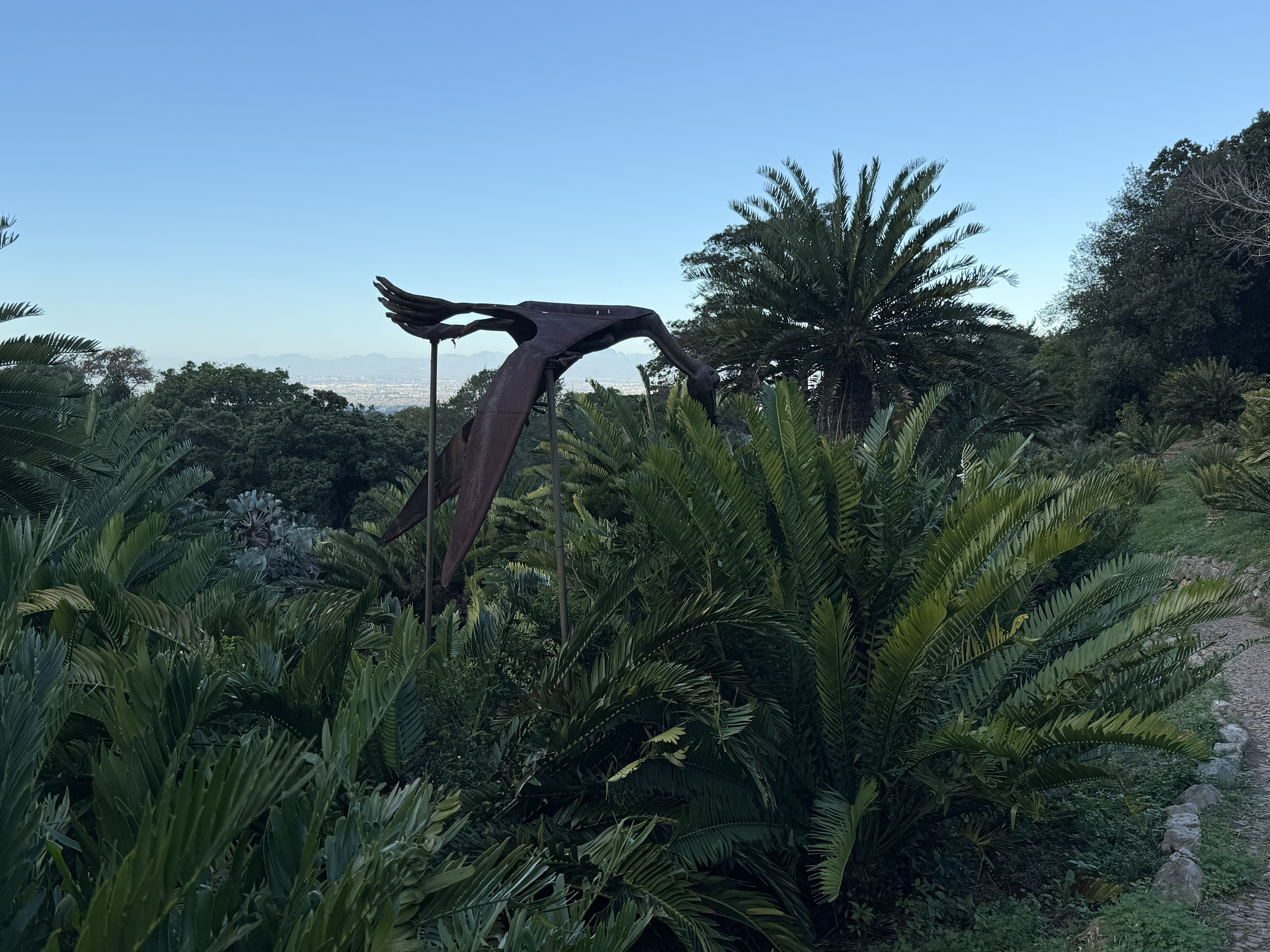
Tree ferns and a life-size model dinosaur — a nod to how ancient some of the plant lineages here really are. Cycads and ferns like these were old before there were flowers.
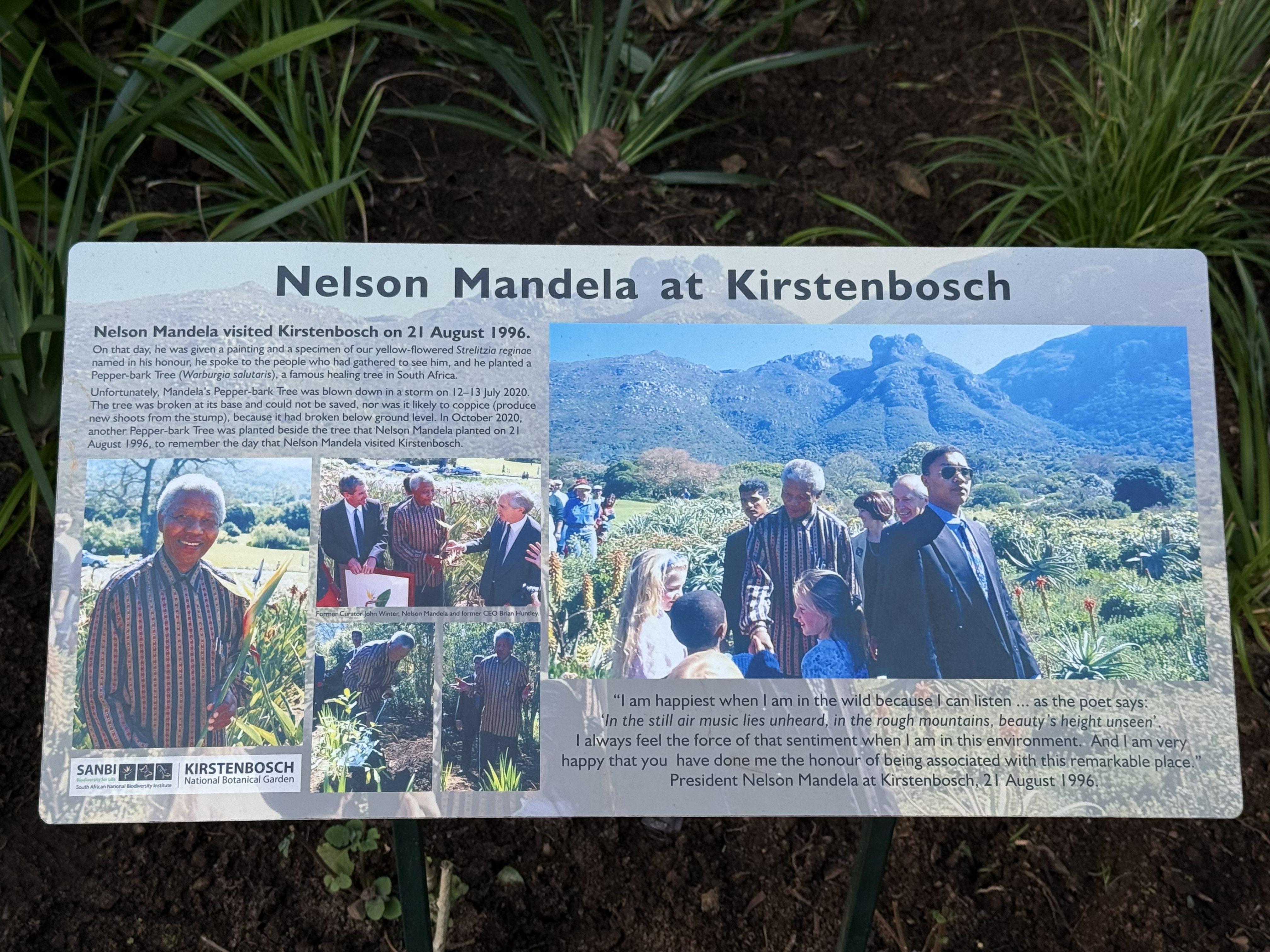
A panel on Nelson Mandela at Kirstenbosch. He is threaded through this whole city — the cell yesterday, the balcony yesterday afternoon, and now a garden.

Major Voices

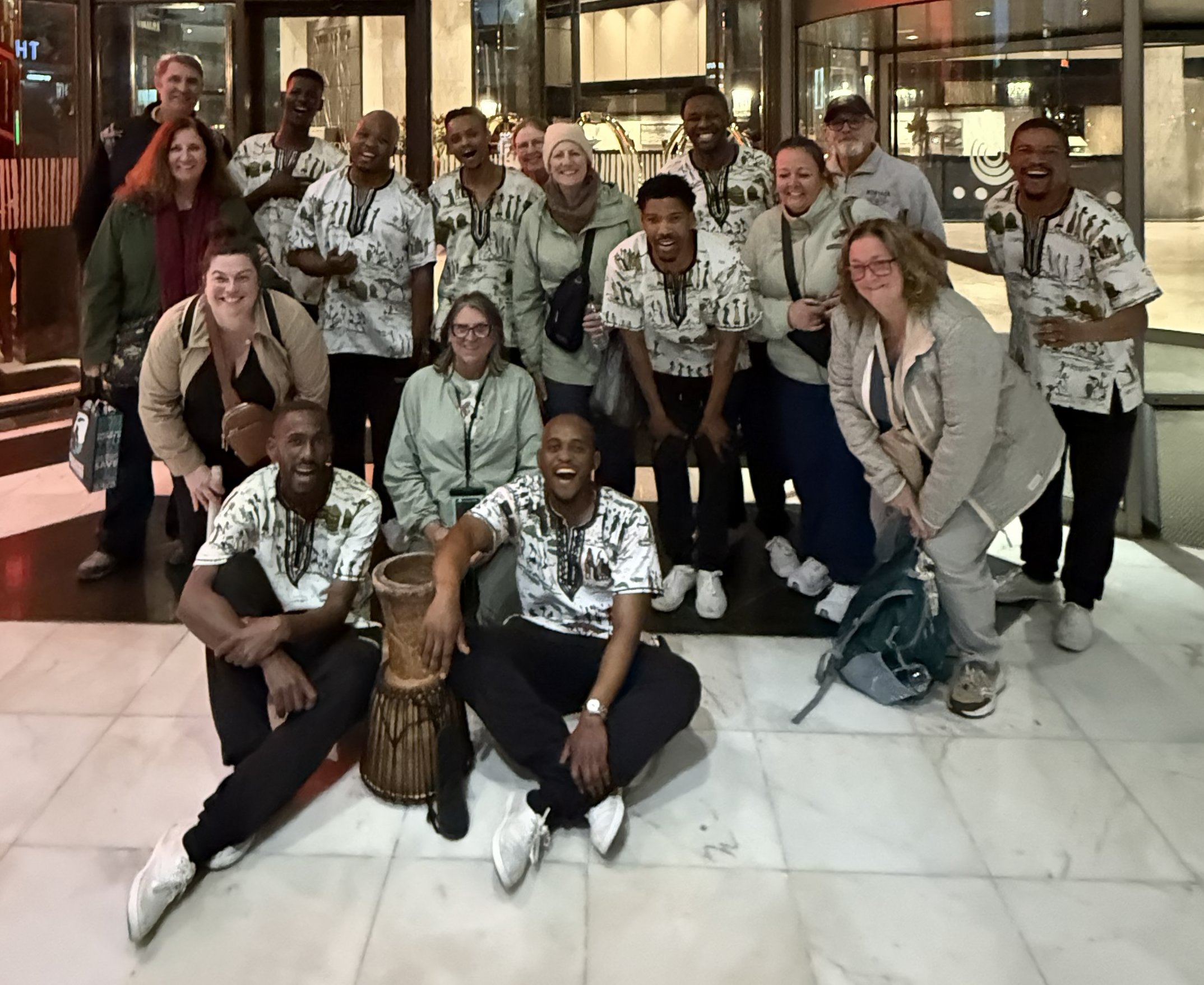
And then back to the hotel, where the Major Voices South African Choir were waiting to perform for us in the lobby — and had been waiting, it turned out, for about three quarters of an hour, sitting patiently along the wall because we were late getting back. Not one of them made anything of it. They sing a cappella: isicathamiya, the close-harmony Zulu style, along with Afro-gospel and jazz. The group exists to give young people in their community a way into music and the arts. It was the sort of thing you brace yourself to find perfunctory, and it was instead tremendous — the whole group of us stopped where we stood and listened.
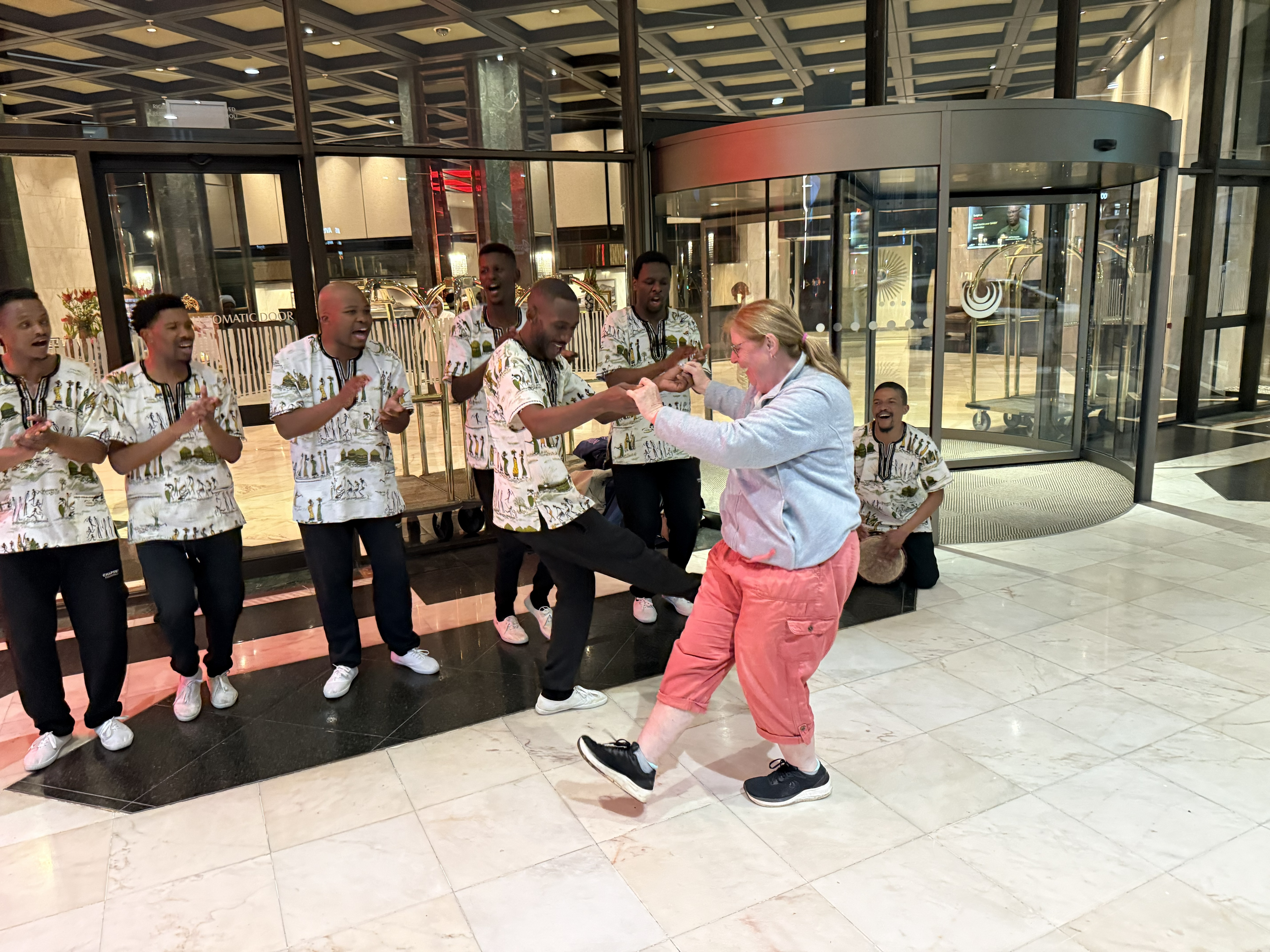
Kathy, pulled in to join the dancing, and going along with it entirely.
And afterwards we all had our picture taken with the singers and dancers.

It was a full day and an easy one — no dawn start, no standing request, nothing at stake. Just a road cut into a cliff by convicts a century ago, a lighthouse that taught its builders a lesson, a beach full of penguins, and a garden at the foot of the mountain we had stood on top of the day before. And the front seat, for the rest of the way.