South Africa & Botswana

Day 9

Wednesday, July 1, 2026

Victoria Falls to Hwange National Park, Zimbabwe

MorningThe wish list. Then the road — four hours of it.
MiddayThe Big Tree. Twelve hundred years old.
AfternoonArrive Hwange Safari Lodge, on its waterhole.
LateThe first game drive. Lions.
SunsetAnd the light goes out over the bush.

The Wish List

Before the first game drive, Dylan went around the vehicle and asked each of us the same question: if you could see one animal on this trip, what would it be? It is a good question, and it produces a revealing set of answers. Debbie said hippos. I said painted dogs — African wild dogs, the one common large mammal I had somehow never seen, the animal I actually came for. Somebody said leopard, which is a reasonable thing to want and an unreasonable thing to expect. And several people said elephants. I want to be gentle about this, because they were lovely people and it was their first safari. But — elephants? You are in Zimbabwe and Botswana, which between them hold the largest elephant population on earth, on a tour whose own brochure promises elephant herds, and the animal you are worried about missing is the elephant? That is like going to the ocean and hoping to see water. You could not miss an elephant here if you tried. You will, in fact, spend part of this trip actively wishing there were slightly fewer elephants in the road. But I kept that to myself, mostly, and we set off.

The Road

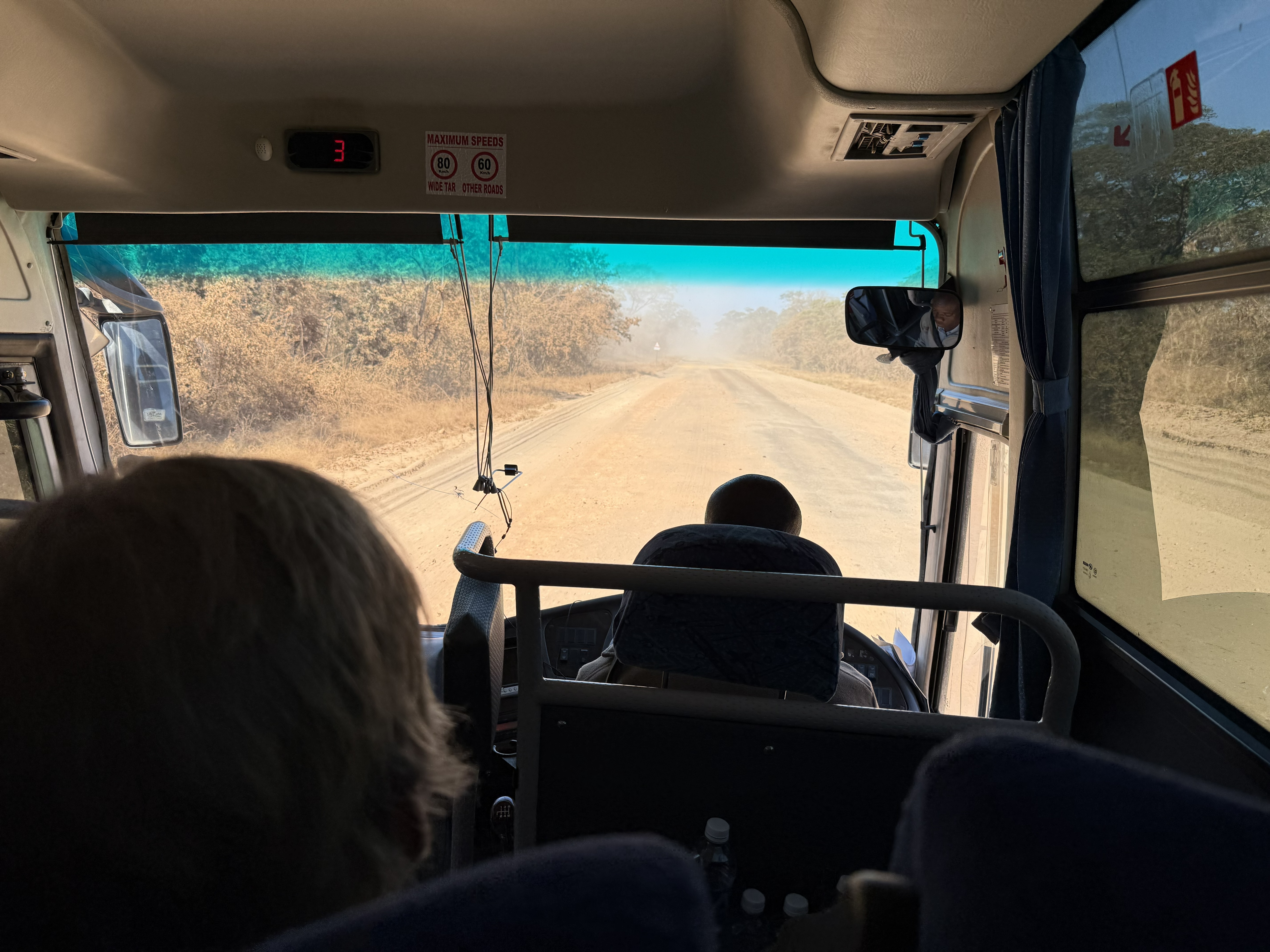
Nobody warns you about the road. Hwange is not far from Victoria Falls as the crow flies, but we are not crows, and the road is a rutted, dusty, cratered ordeal that turned a short distance into four hours. Our driver was genuinely skilled — slowing for the deep holes, picking a line across the washboard, keeping a coach full of Americans more or less upright — and it was still four hours of being shaken like a paint can. There is no photograph of the road that does it justice, which is probably for the best.

The Big Tree

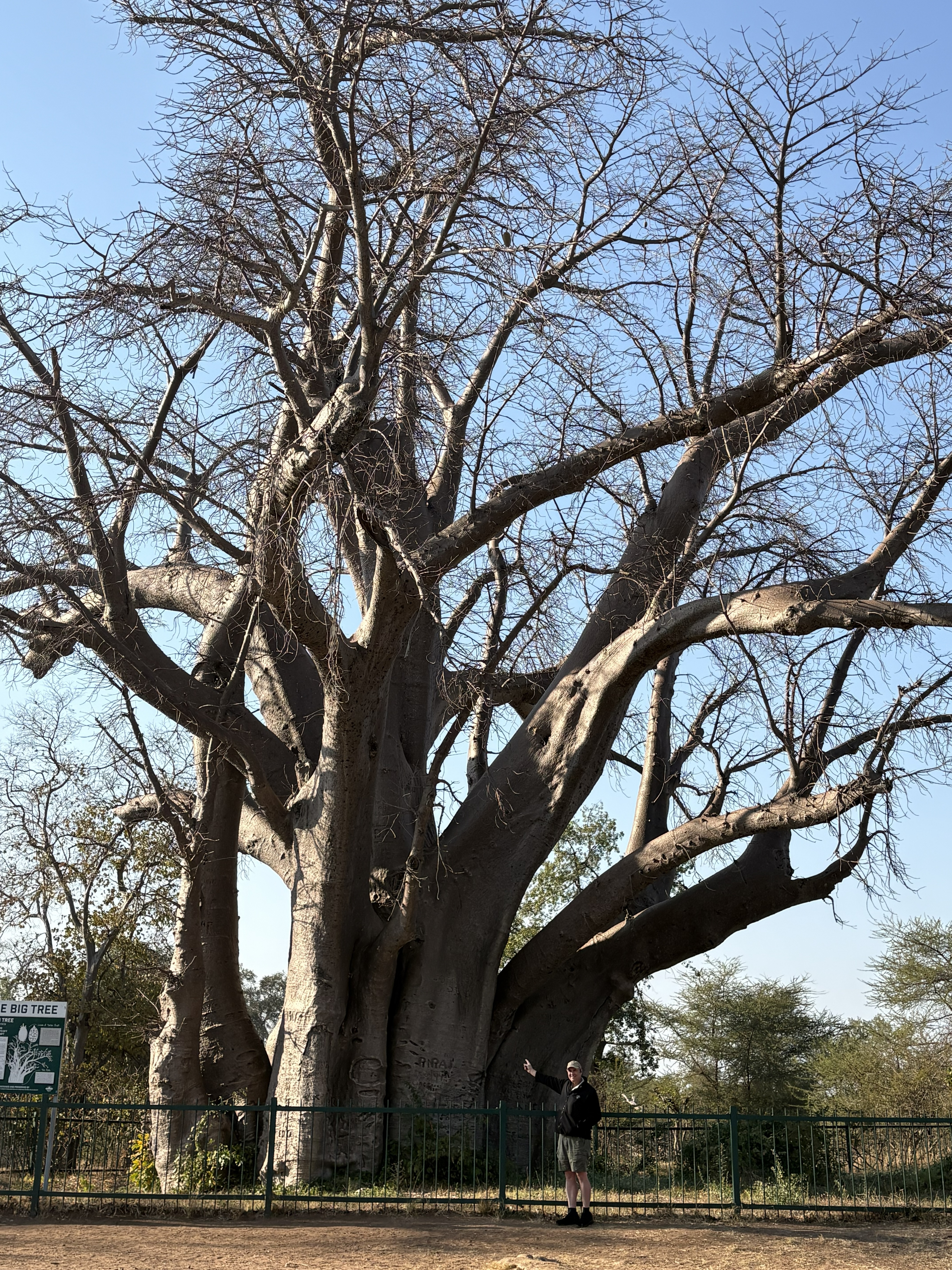
We stopped, on the way, at a tree. That undersells it. We stopped at the Big Tree — a baobab, one of the oldest living things any of us had ever stood next to, fenced off and signed and genuinely staggering in person.
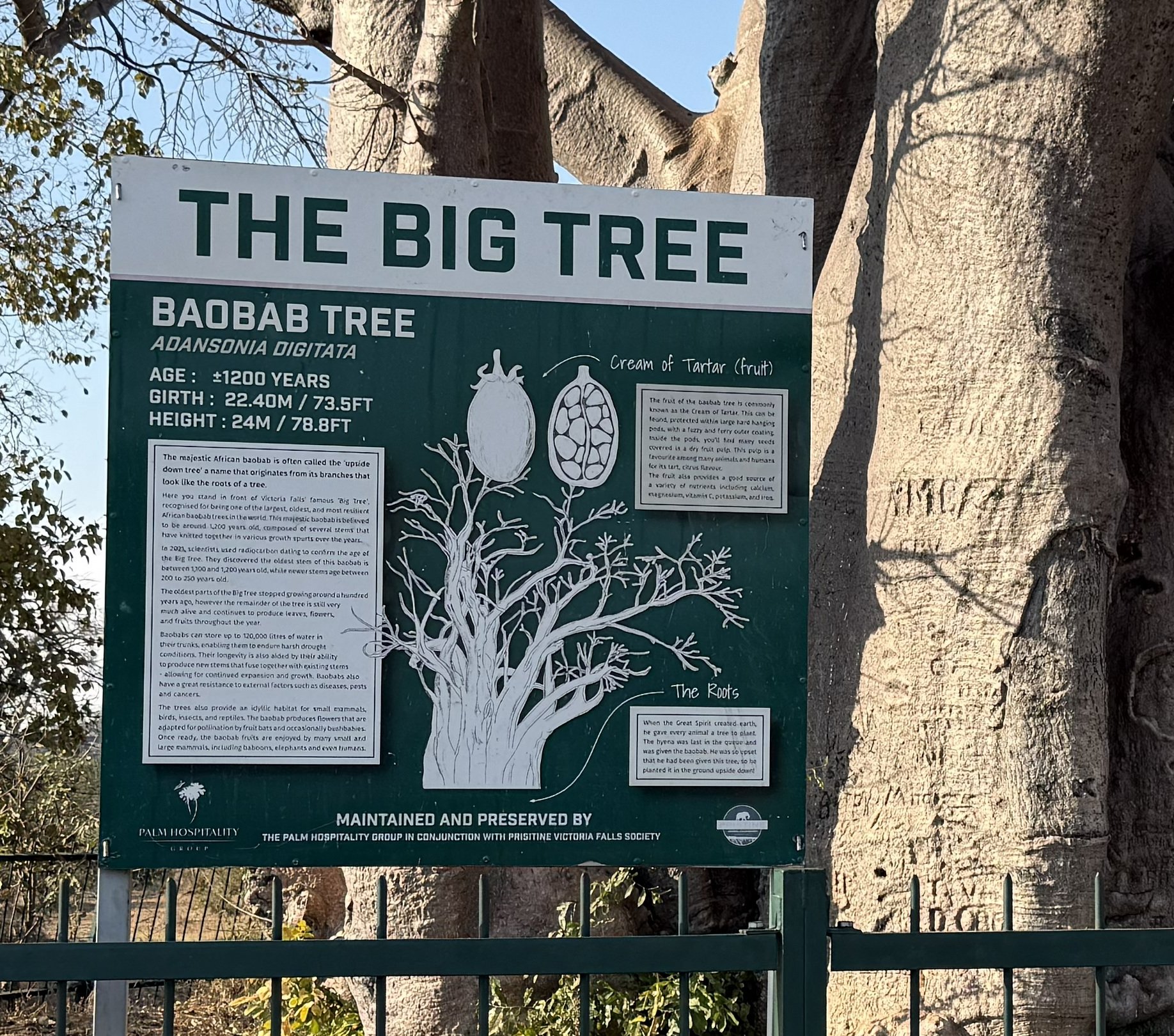
The sign at the Big Tree, with the baobab's vital statistics: age, height, girth. All of them absurd.
And the tree itself. The fence is not to protect you from the tree; it is to protect the tree from us.

Hwange Safari Lodge

We reached the Hwange Safari Lodge in the afternoon — and I have no photograph of it, which I regret, because it is exactly the kind of place that deserves one. It sits on the edge of a large waterhole, and the whole design of the lodge points at that water. The rooms look at it, the lawn runs down toward it, the bar faces it, and the animals come and go all day as they please — elephants and impala and baboons drifting in to drink while you have your breakfast, close enough to watch without moving from your chair. We had barely arrived before we spotted our first impala grazing in the brush behind the lodge, which was the first of many hundred.

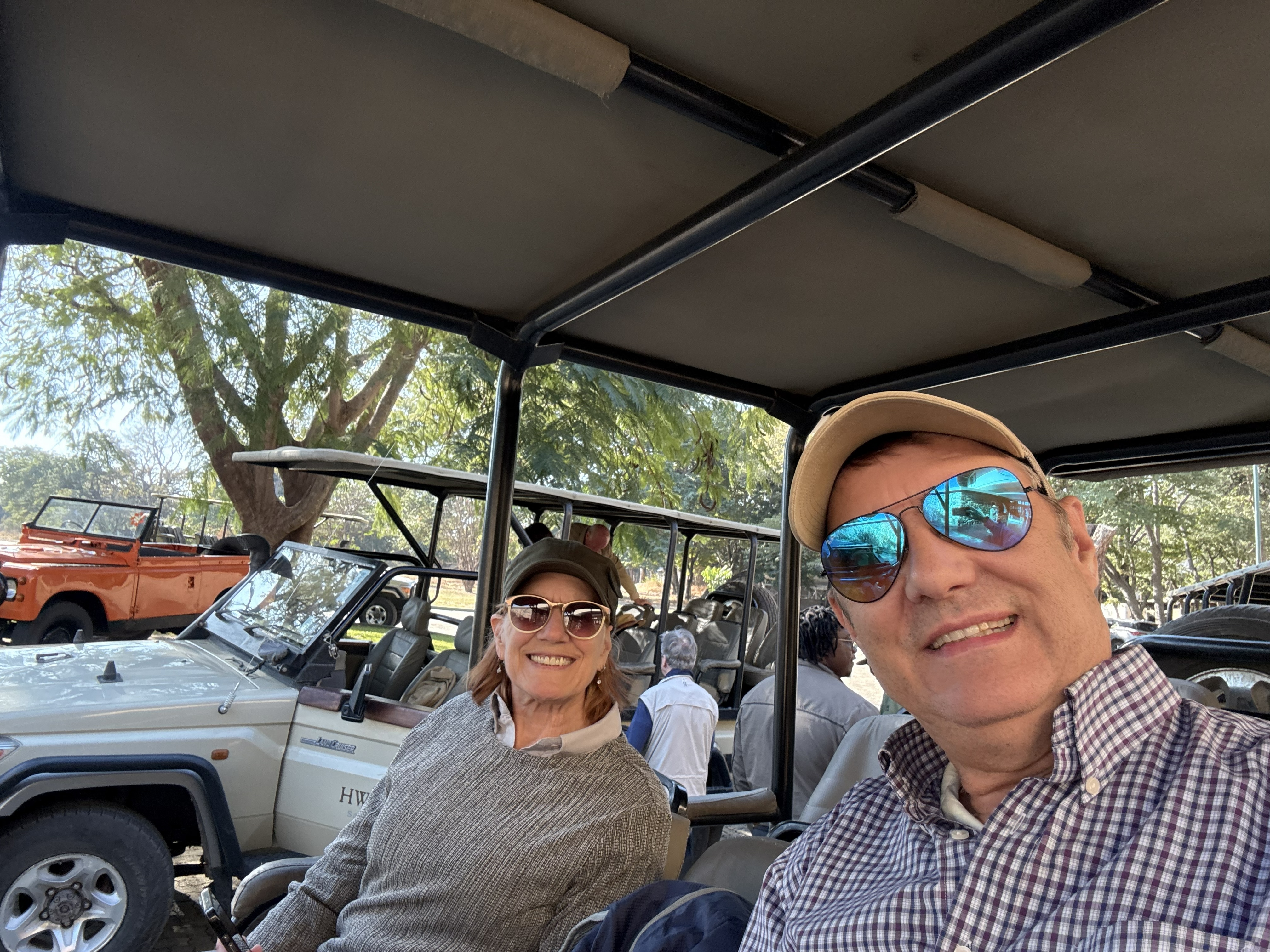
Under the canopy of the safari vehicle, at the start of the afternoon drive. Everyone still clean, still cool, still able to feel their own spine.

The First Game Drive

Our driver and guide for Hwange — for both days of it — was Lazarus. He introduced himself with a built-in mnemonic: “Lazarus,” he said, “not the one who rose from the dead.” You would think a man handing you a biblical memory aid, free of charge, would be impossible to forget. You would be wrong. I lost it anyway, and had to text Dylan weeks later to recover it, which is a small and permanent embarrassment I have chosen to record here rather than hide. He met the jeeps at the lodge, drove us to the park gate and in through it, and spent the next two days finding us animals with the quiet, unshowy competence of someone who has been doing this his whole life. (The second jeep, carrying the other half of our group, had Bryan.) And then the park delivered. It began, as everything in this part of the world begins, with impala — so many, so early, that by the end of the trip we would stop pointing them out at all.
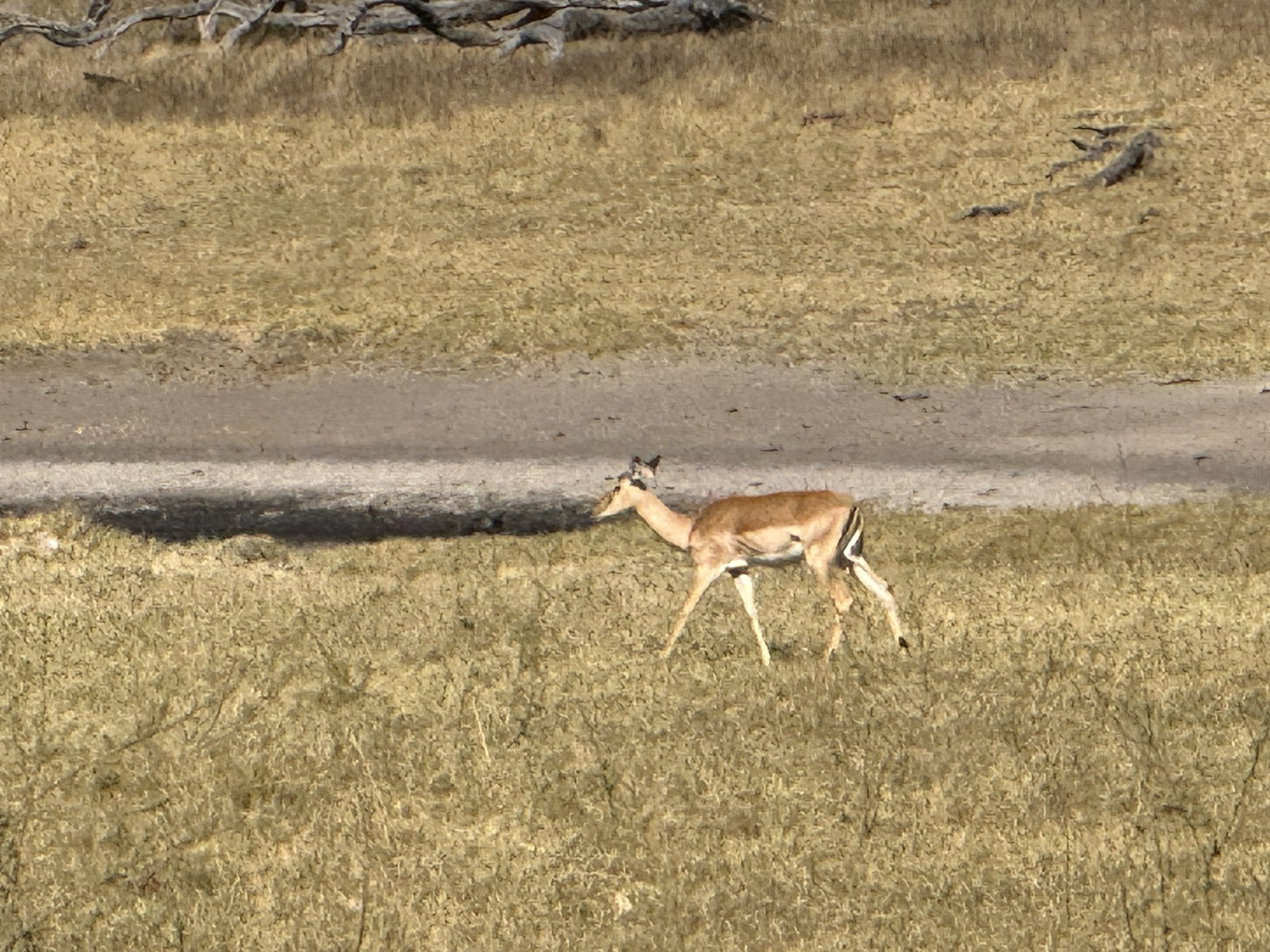
Impala, just outside the park. The first animal you see and the last one you photograph, because there is always another one.
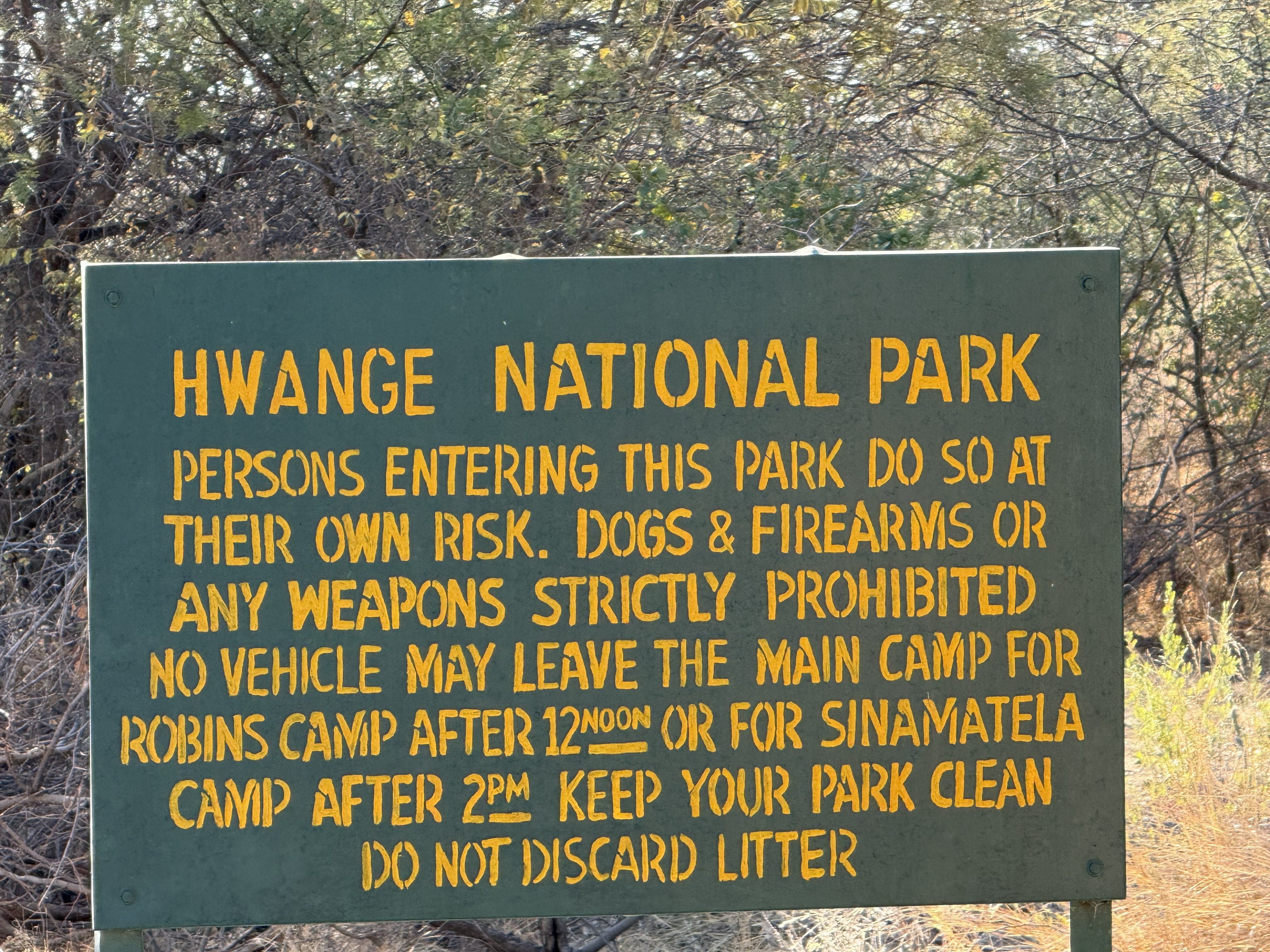
The gate. “Persons entering this park do so at their own risk” — which, in a park with this many lions, is not boilerplate.

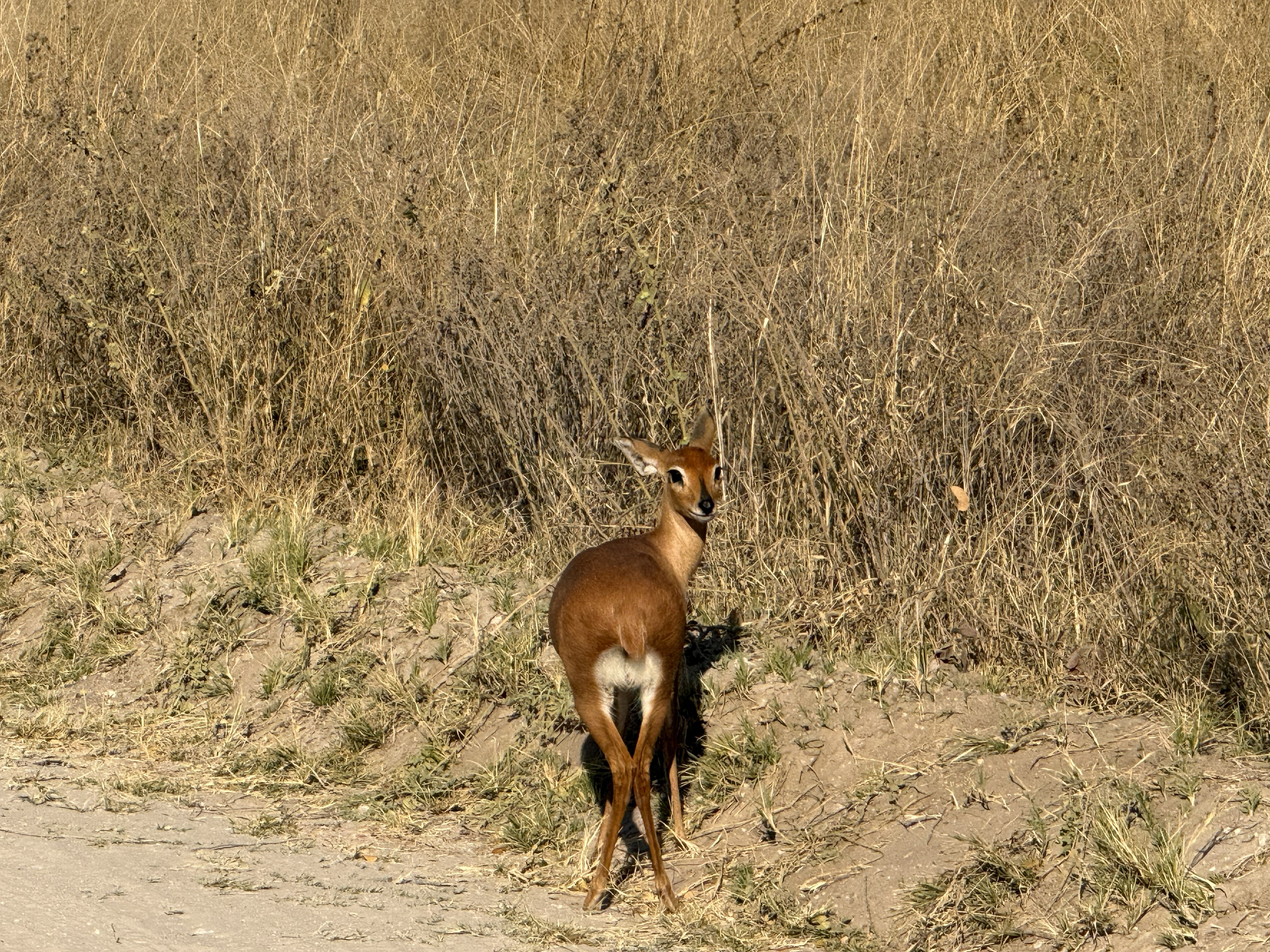
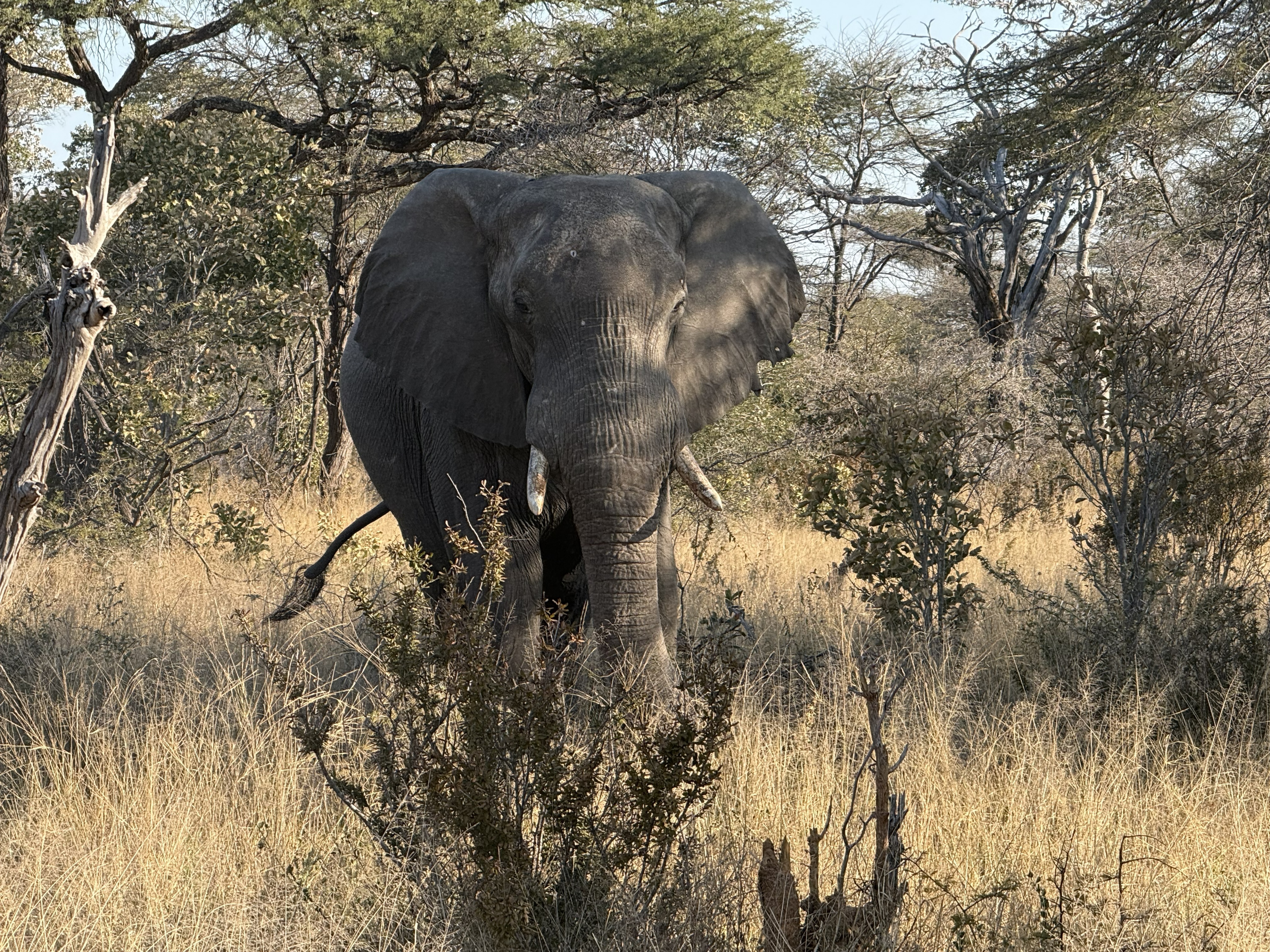
Then the park started handing us animals. A Cape buffalo, black and enormous and entirely unimpressed. An elephant — one of the ones the worried travelers need not have worried about. A steenbok, tiny and alone at the roadside. And then, around a bend, the thing that made the afternoon.
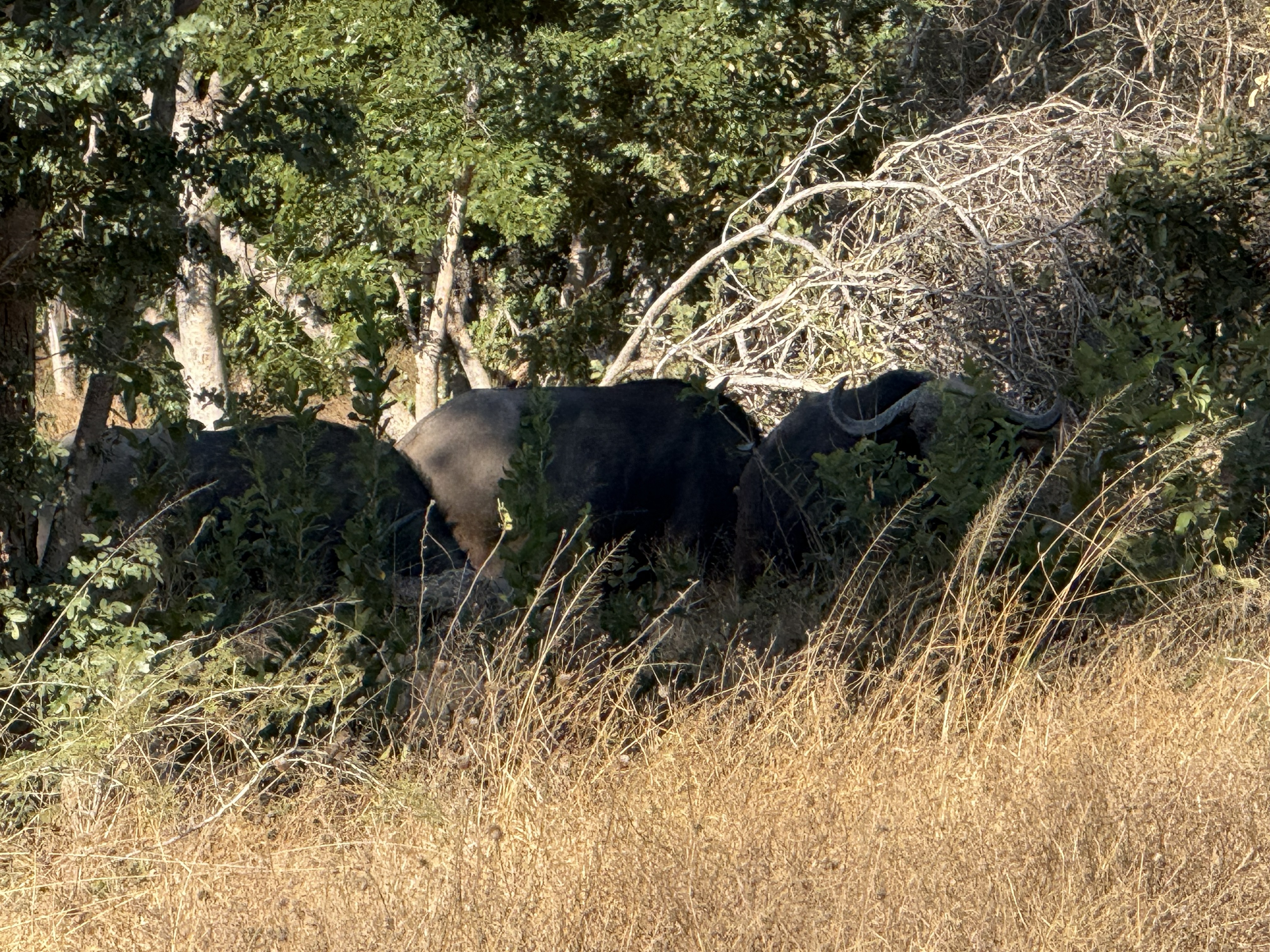
Cape buffalo. Not a cow. Ask anyone who works here which animal they fear, and watch how fast they answer.
An elephant, in the flesh, for the benefit of everyone who had listed it as a hoped-for sighting.
A steenbok — one of the smallest antelope in Africa, fully grown at about knee height, and always, always alone. Where impala move in crowds, the steenbok keeps its own company.
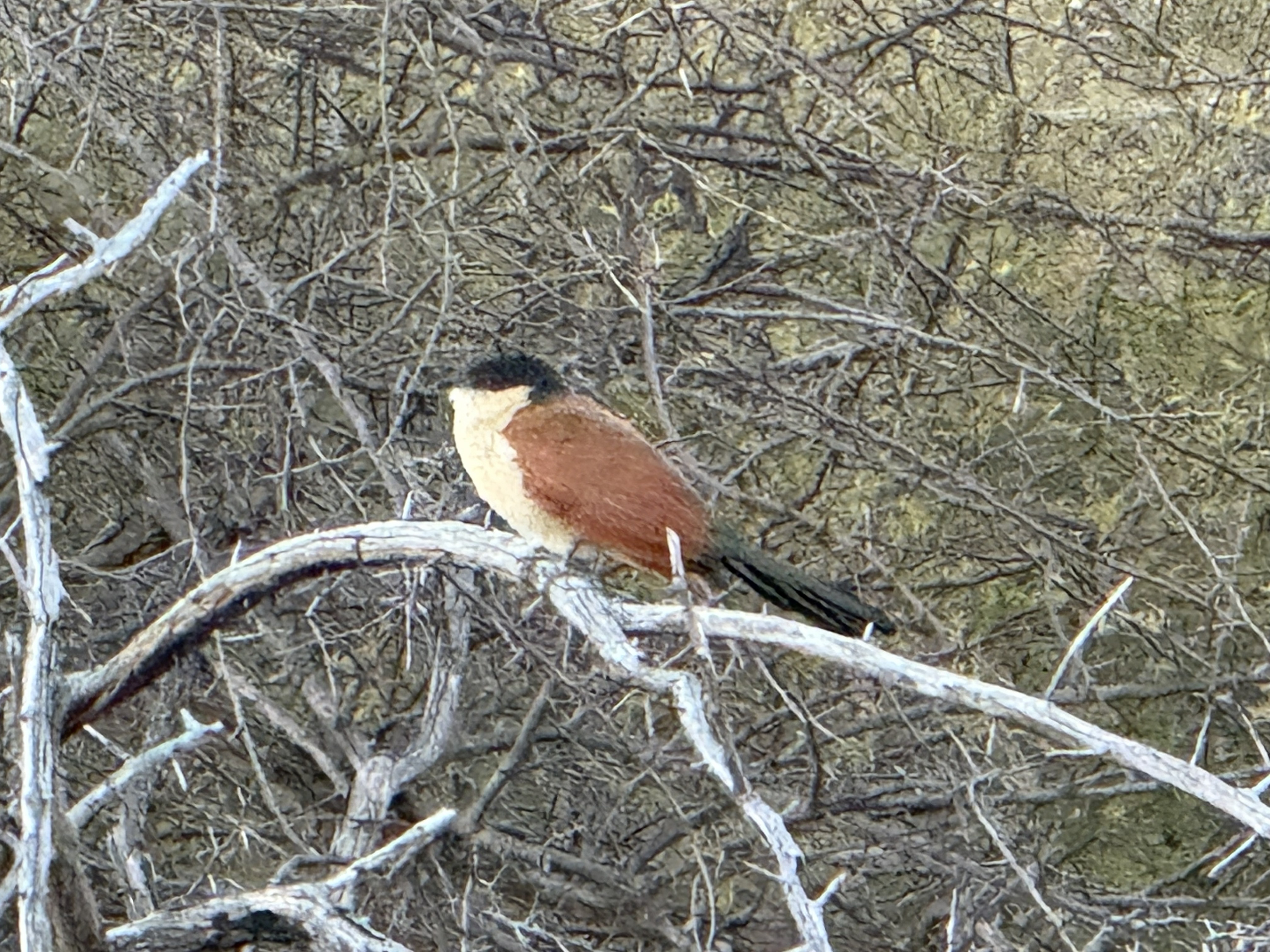
A Senegal coucal, rust and cream and black-capped, tucked into the thornbush. We saw this one earlier, before the hippos — a proper bird, for once, rather than a walking one.

The Lions

We came around a corner and there was a pride of lions. At first they did nothing at all, which is what lions do for twenty hours of every day. They were flat in the grass, a heap of tawny bodies, asleep or near enough. And then, slowly, over what must have been half an hour, the whole pride came awake in front of us — and it happened in stages, like a piece of theater.
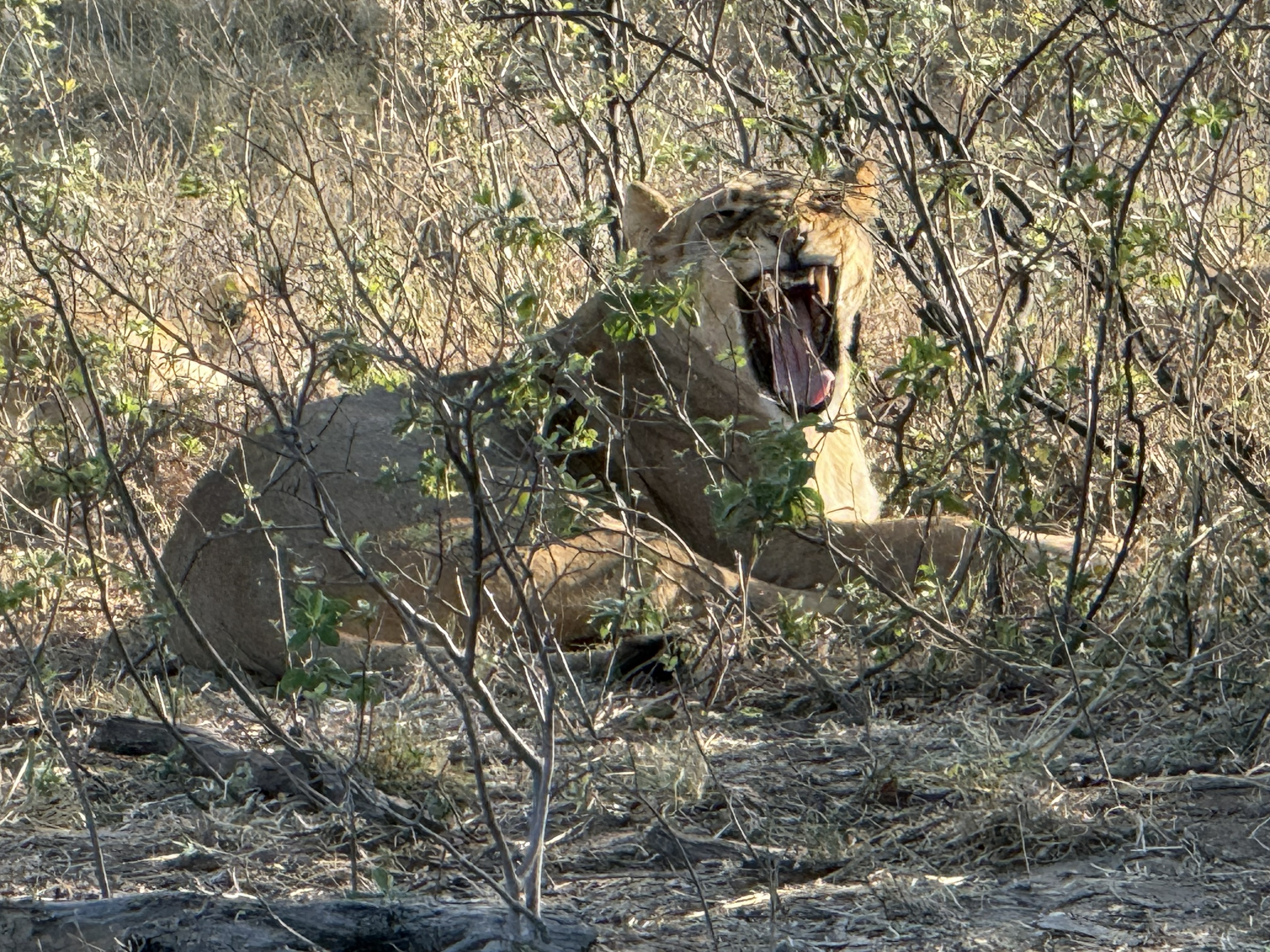
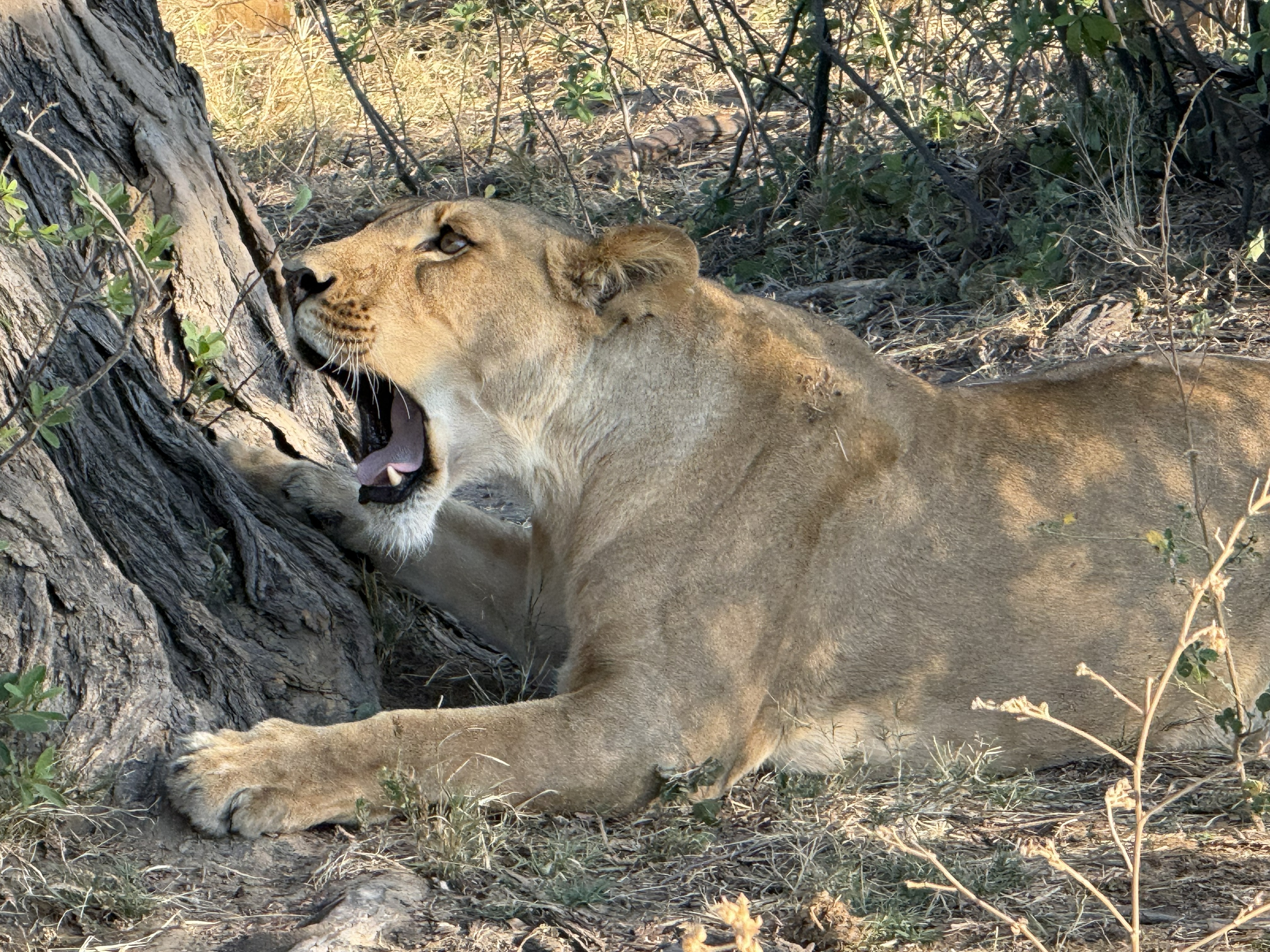
First, the yawning. A lion's yawn is not tiredness; it is the whole cave of the mouth, every tooth — a display that says everything about what this animal is.
Another, against the tree, in the gold light. The whole pride did it, one after another, contagious the way it is in people.

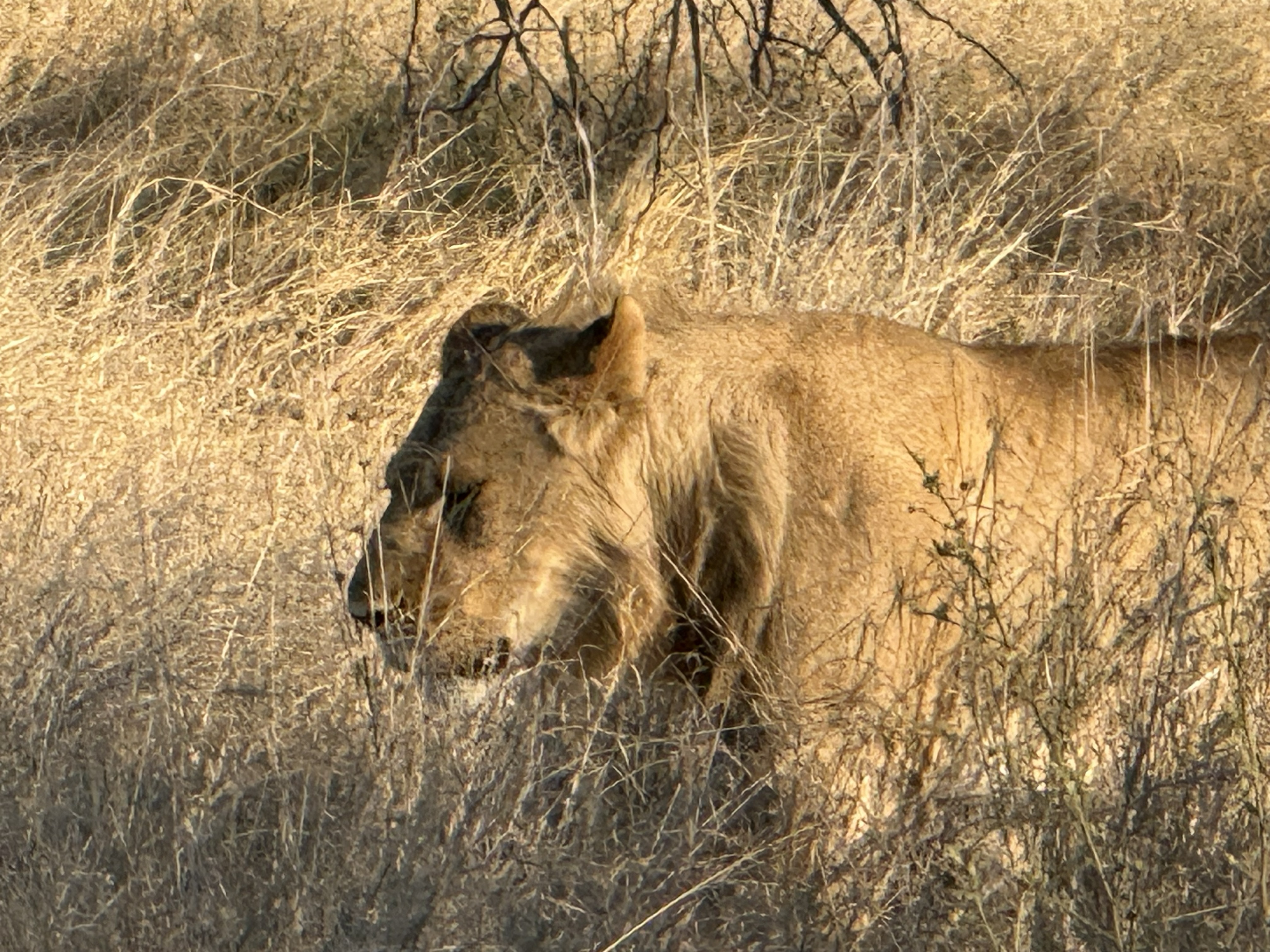
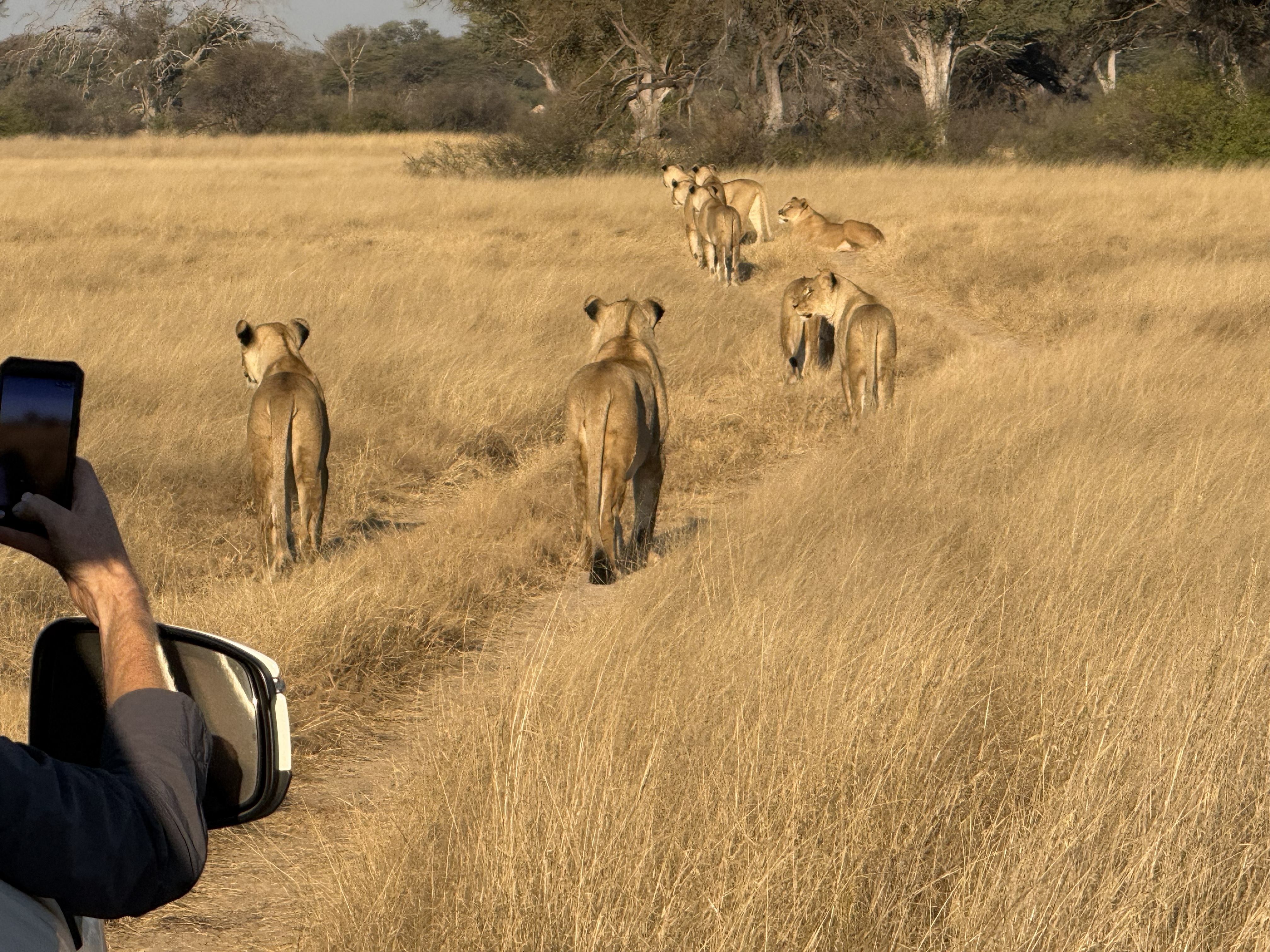
Then the females got up and began to move, unhurried, along the road.
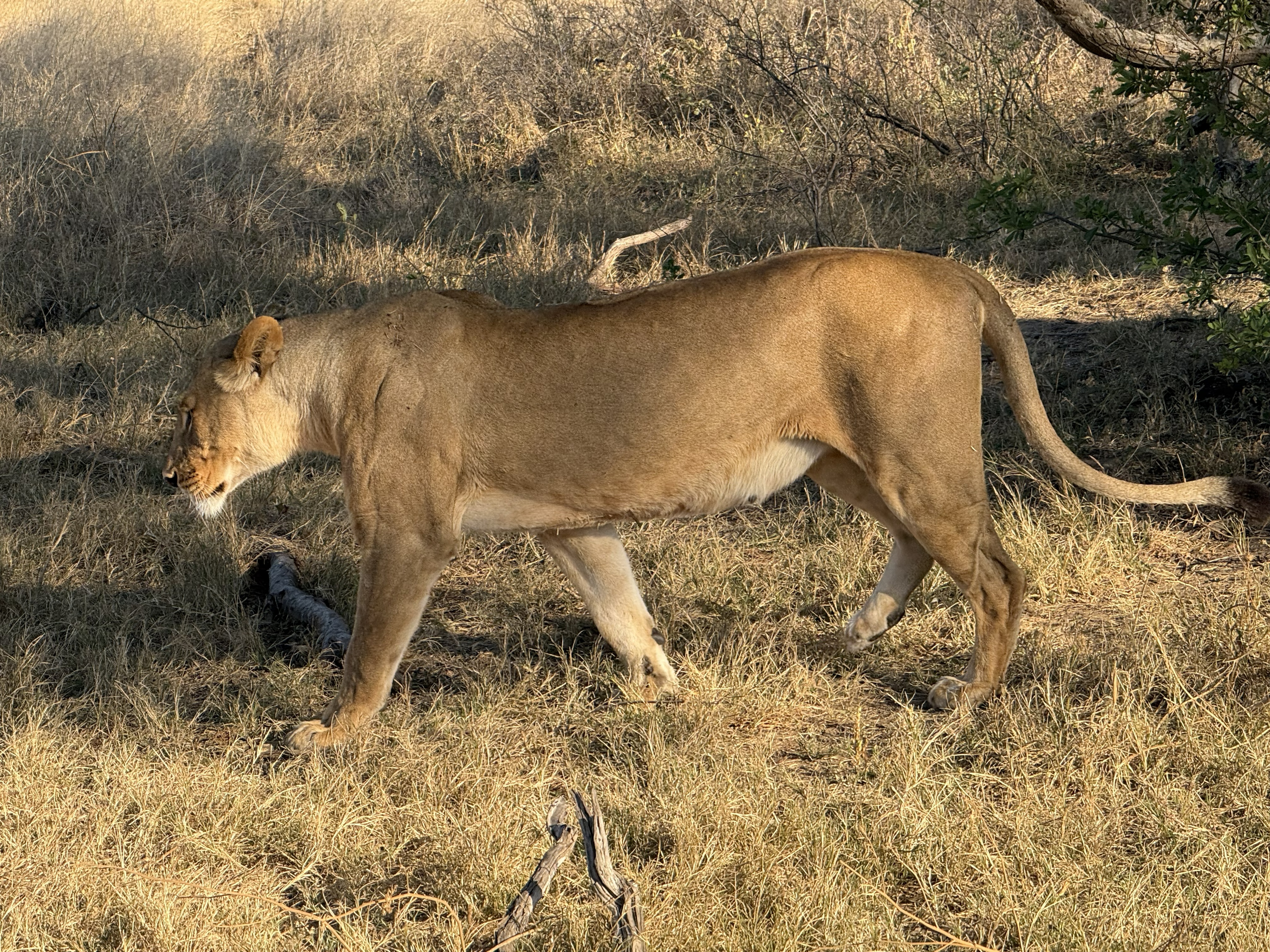
A lioness on the move, low and easy through the grass.
And the male — up at last, mane and all, as though he had been waiting to be sure it was worth the effort.
The pride moving off down the track ahead of us, in single file, in the last of the light. This is the photograph I did not know I wanted until I had it.

They walked a while, and then the male and a female lay down together in the road, close and easy, entirely unbothered by the vehicle a few yards off.
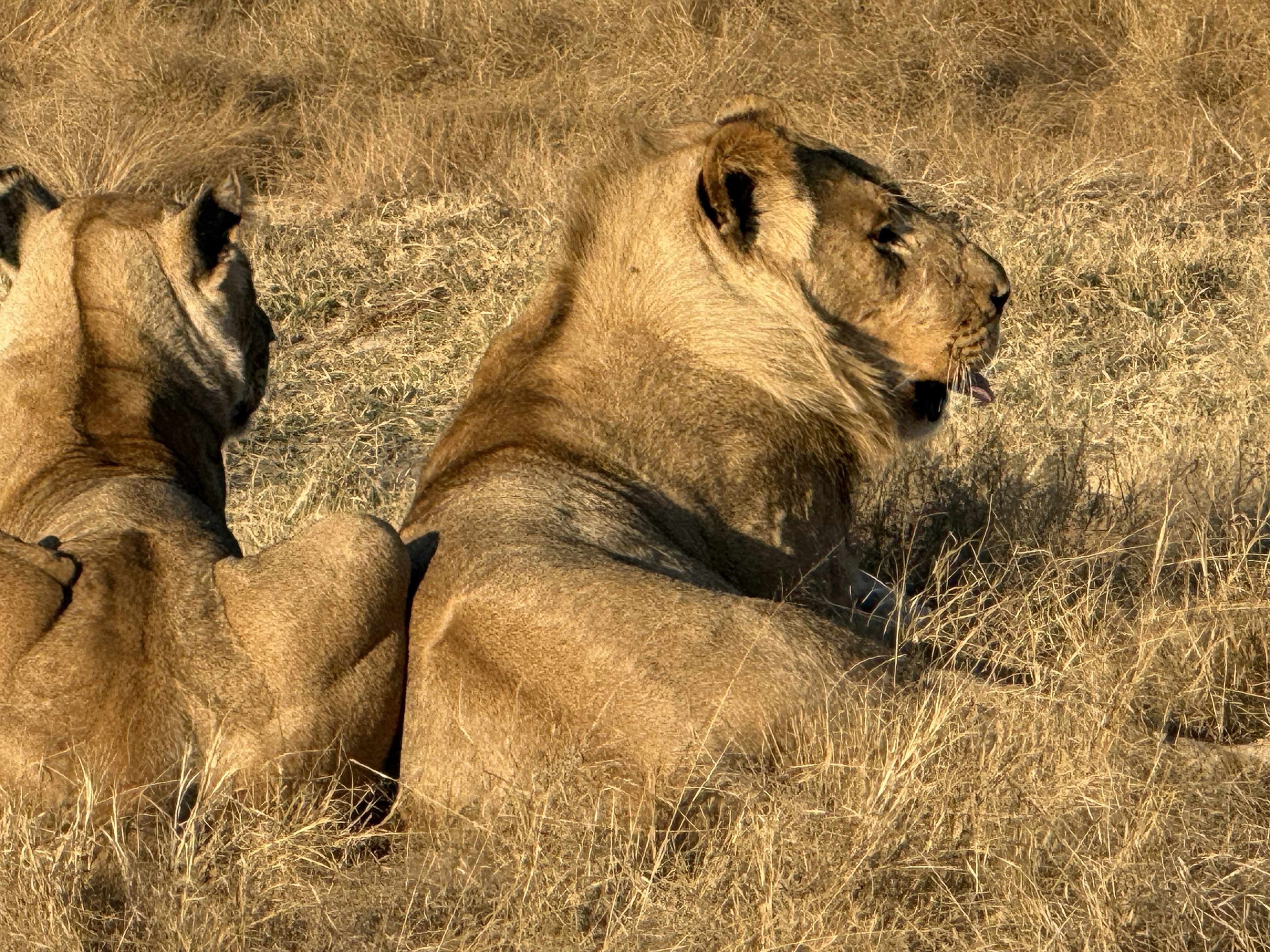
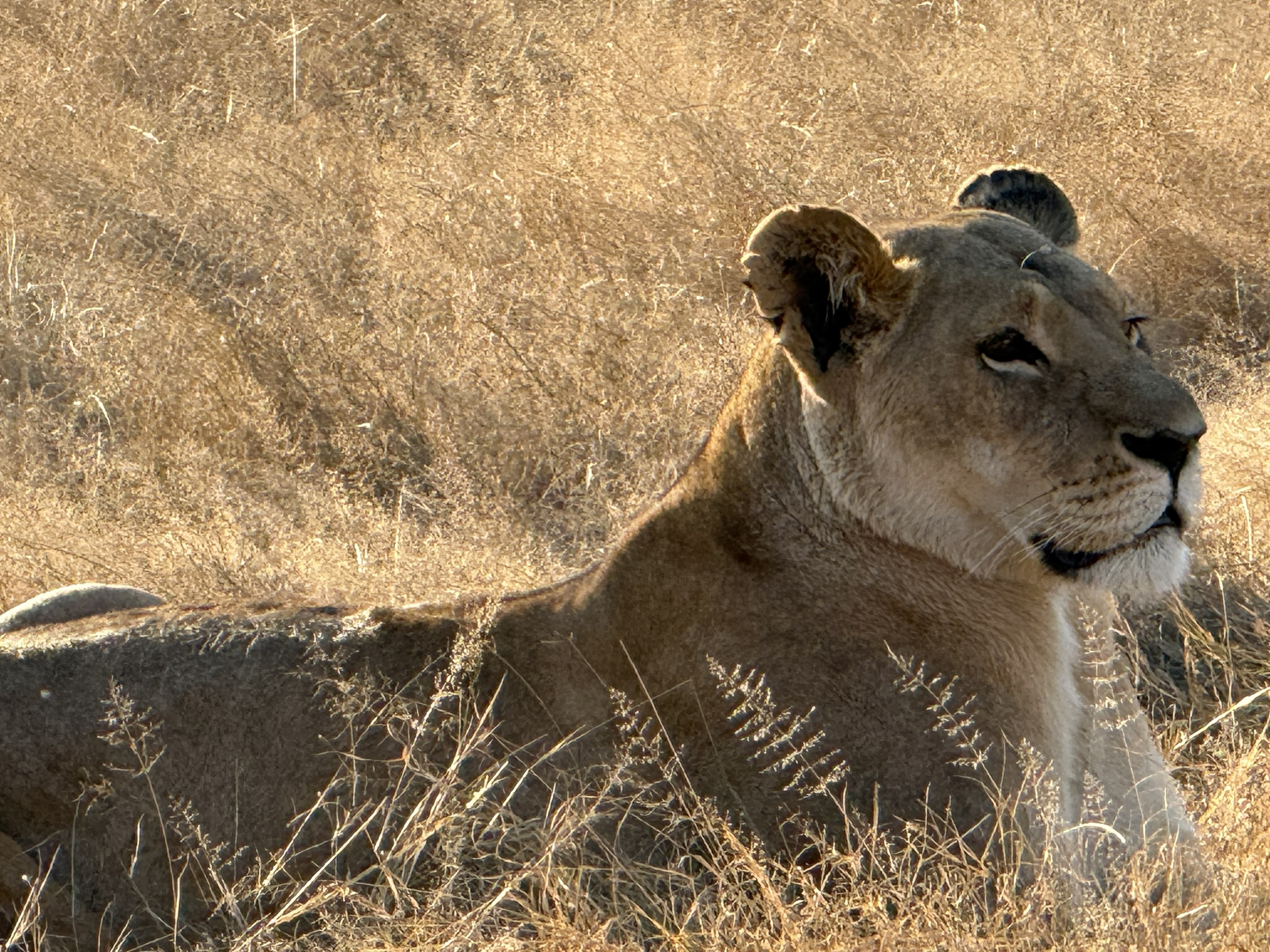
Male and female, down together in the track.
Then the male moved on, and the female stayed. She watched him go, did not follow, and then looked at us instead — the flat gold stare that every one of these animals has, and that
Then the male moved on, and the female stayed. She watched him go, did not follow, and then looked at us instead — the flat gold stare that every one of these animals has, and that never stops being unnerving. Then she looked away. We were not worth getting up for.

And the Rest of the Cast

The lions were the event, but the drive kept giving after them.
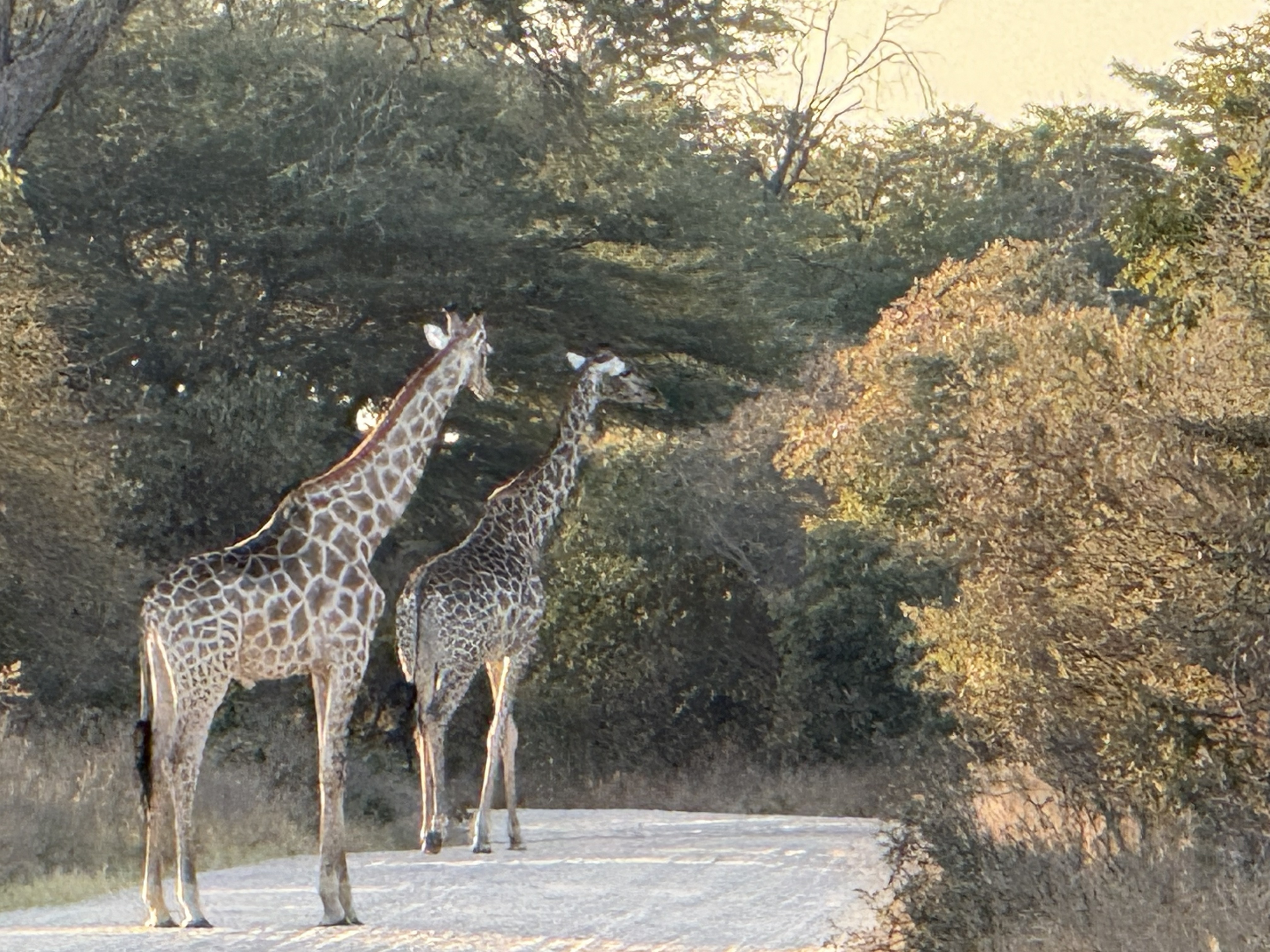
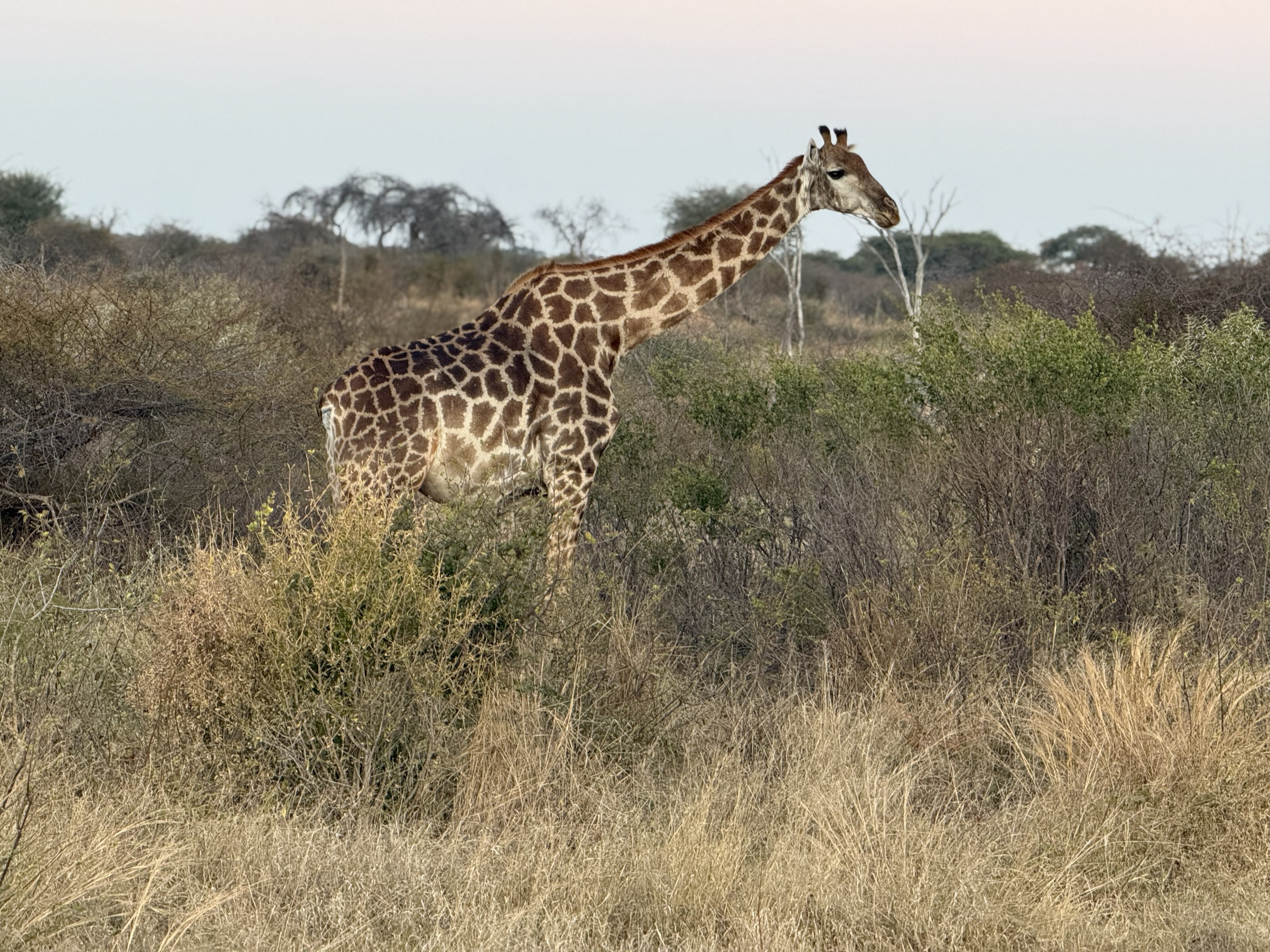
Two giraffe in the road. We had to stop and wait for them to cross, which is the correct order of priority: the giraffe were here first, and they are taller.
And a third, further down the road, browsing the thornbush on its own — doing the ungainly, magnificent thing giraffes do.
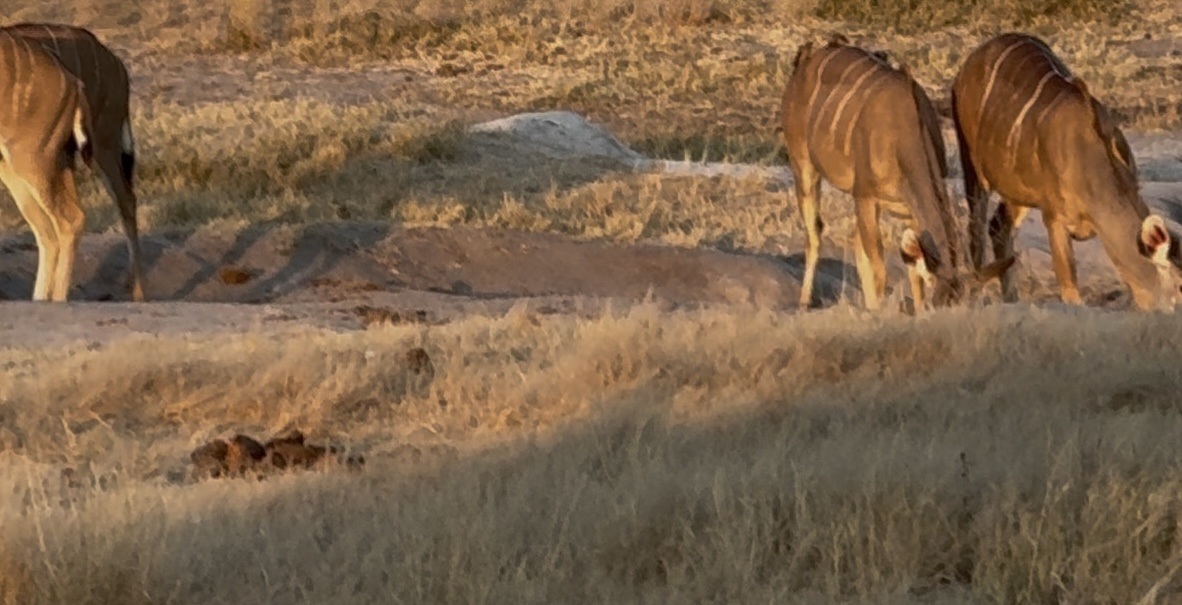
Kudu. The spiral horns and the thin white body-stripes are the giveaway, once you know to look — and by the end of the trip we did, more or less.
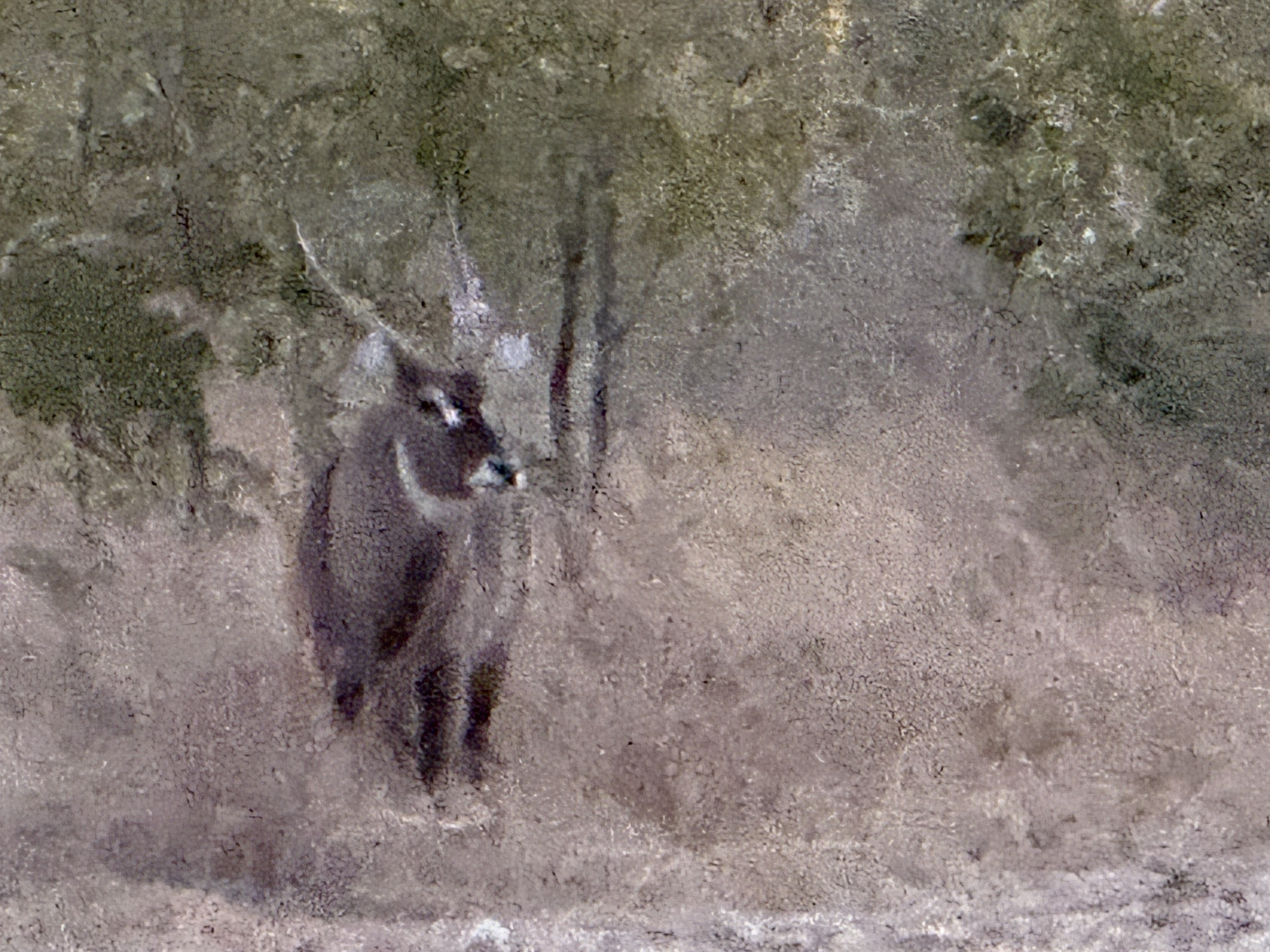
A waterbuck, head-on, in murky light. Shaggy, solid, and built like it means it.
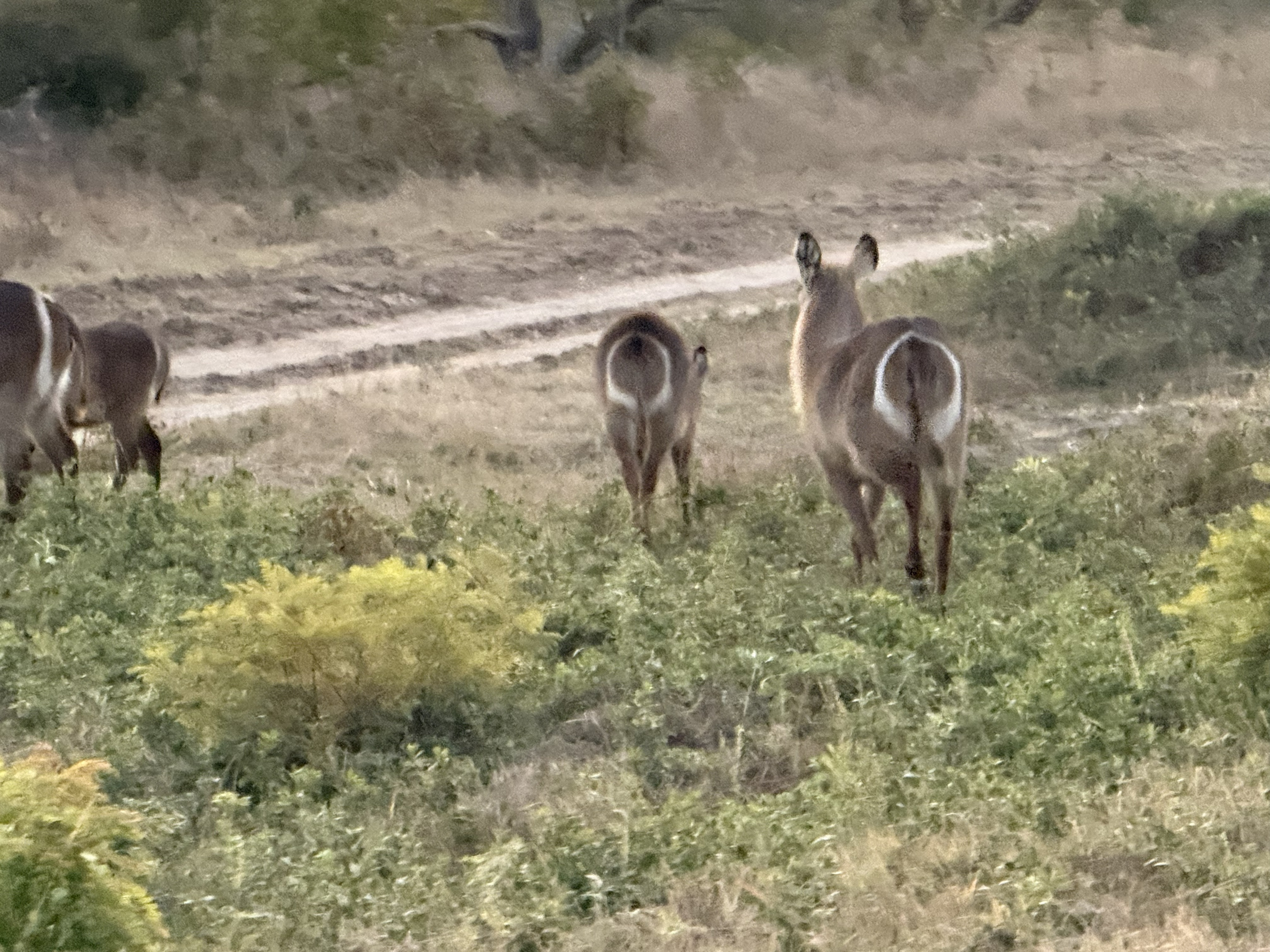
The same animal's best-known feature, which is only visible from behind: a white ring on the rump that looks exactly like it sat on a freshly painted toilet seat. That is, I a
The same animal's best-known feature, which is only visible from behind: a white ring on the rump that looks exactly like it sat on a freshly painted toilet seat. That is, I am assured, the actual field-guide way to remember them, and once you have heard it you cannot unhear it.
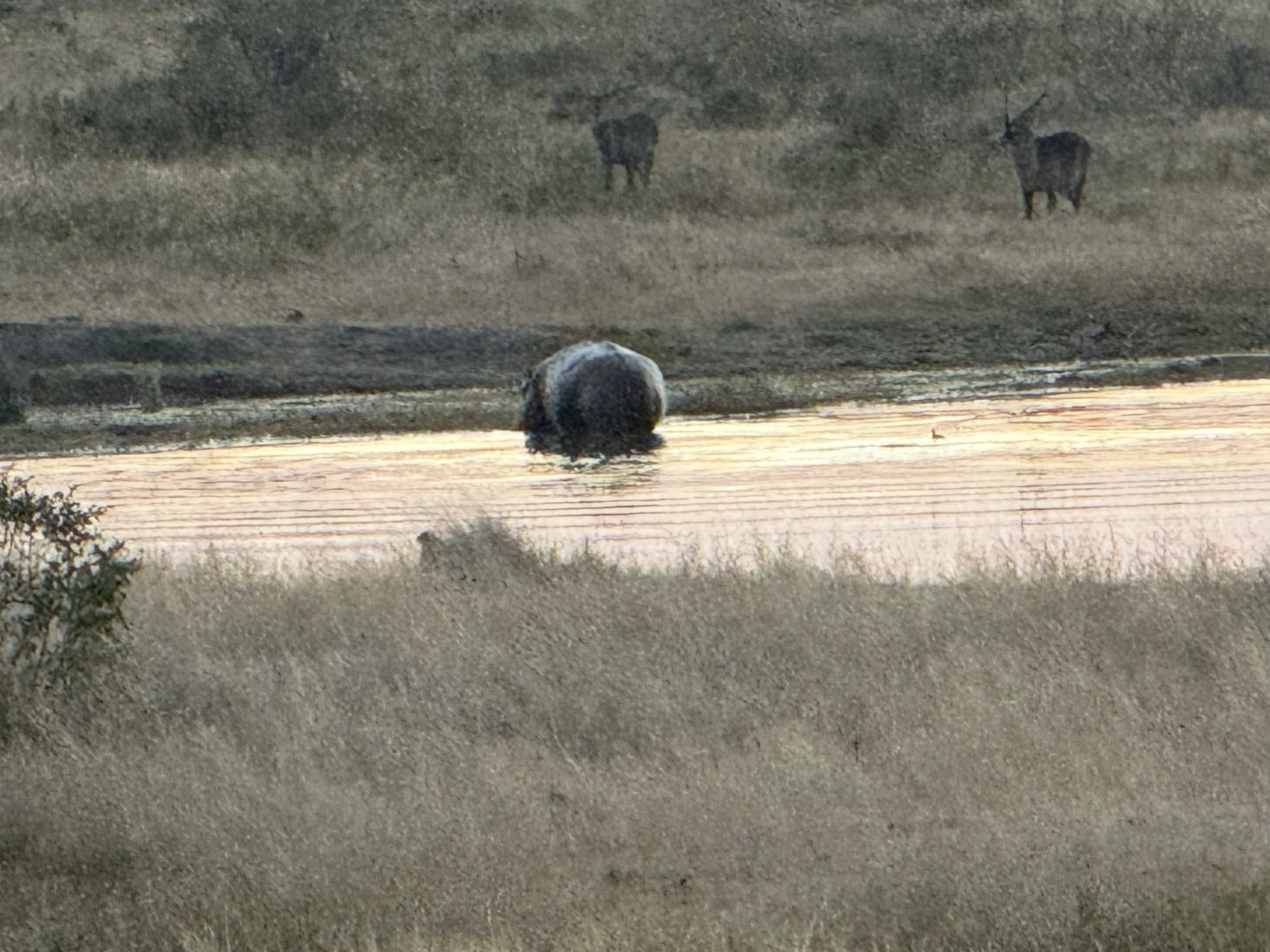
And the distant hippo — the dark bulk in the lit water at sundown, with a pair of waterbuck watching from the far bank. Not close, but the only hippo of the day, and after Victoria
And the distant hippo — the dark bulk in the lit water at sundown, with a pair of waterbuck watching from the far bank. Not close, but the only hippo of the day, and after Victoria Falls we were not going to complain about a hippo at a distance.

Learning to See

That is the real story of a first game drive, and it is not the lions. It is that you arrive unable to tell one brown animal from another, and you leave having started to sort them. The progression, over a single afternoon, went roughly like this. “That's an impala” — said with confidence, because impala are the first thing anyone learns. Then: “what's that little one?” (the steenbok). Then, of a distant cluster: “I think those are kudu.” Then, a beat later and firmer: “yes, definitely kudu.” And finally, of the bird: “and apparently we saw a… bustard? I'm fairly sure they said bustard.” By the end of the drive we were doing, badly and with enormous satisfaction, the thing that everyone who spends time in the bush eventually does without thinking: reading the grass, sorting the shapes, turning “some kind of deer” into a name.
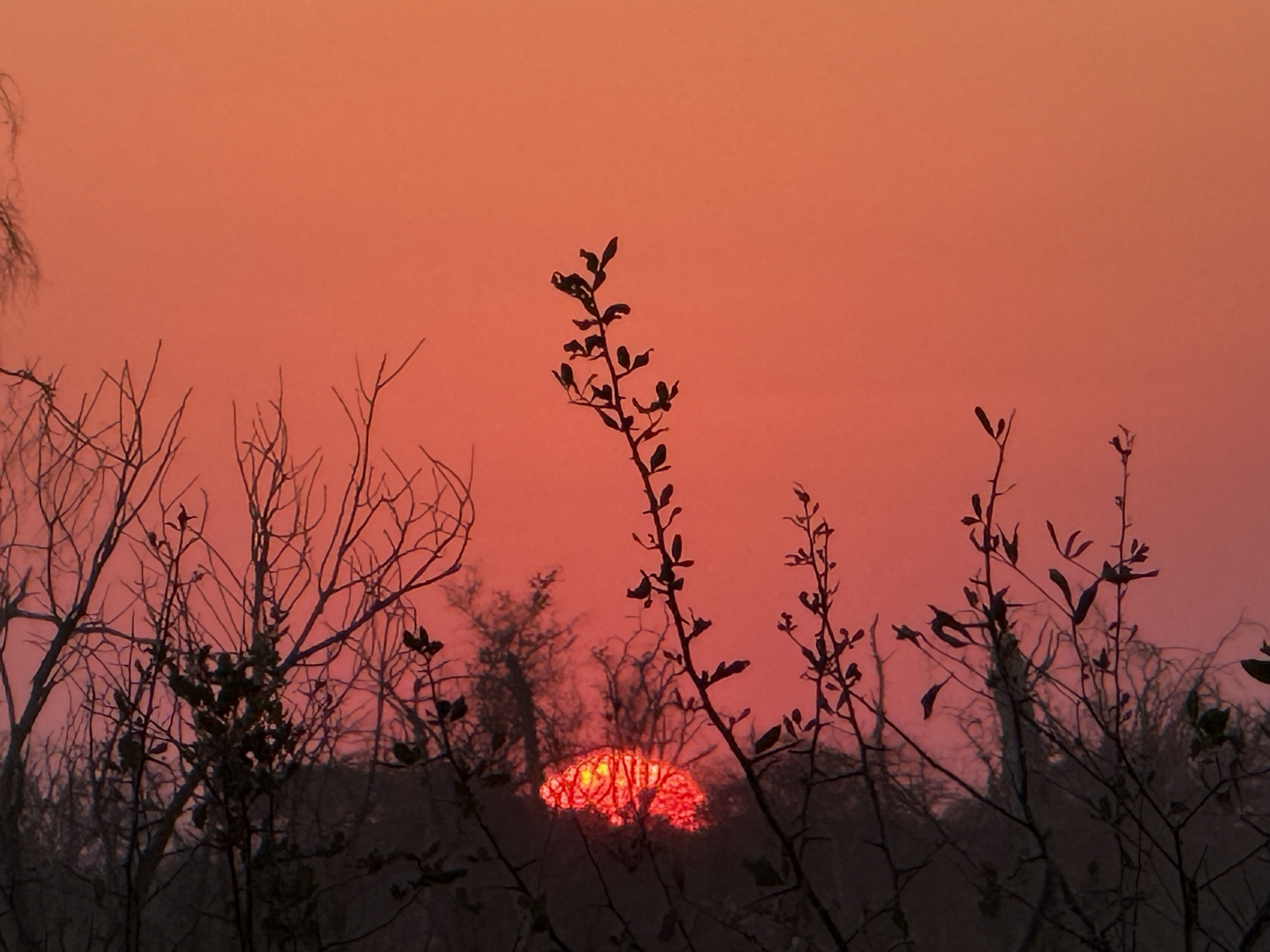
Sunset over Hwange. In winter it comes early and drops fast, and it takes the temperature with it. We drove back to the lodge in the cold and the dark, having seen, in one short af
Sunset over Hwange. In winter it comes early and drops fast, and it takes the temperature with it. We drove back to the lodge in the cold and the dark, having seen, in one short afternoon, most of a continent's worth of animals.

One Left

That night I did the tally, and it was a long one: lion, elephant, buffalo, hippo (distant), giraffe, kudu, waterbuck, steenbok, impala beyond counting, and a bustard that sounded like a swear word. One animal was missing. The one I had asked for. Dylan said we had two more drives tomorrow, and that if the painted dogs were going to happen, tomorrow was when.
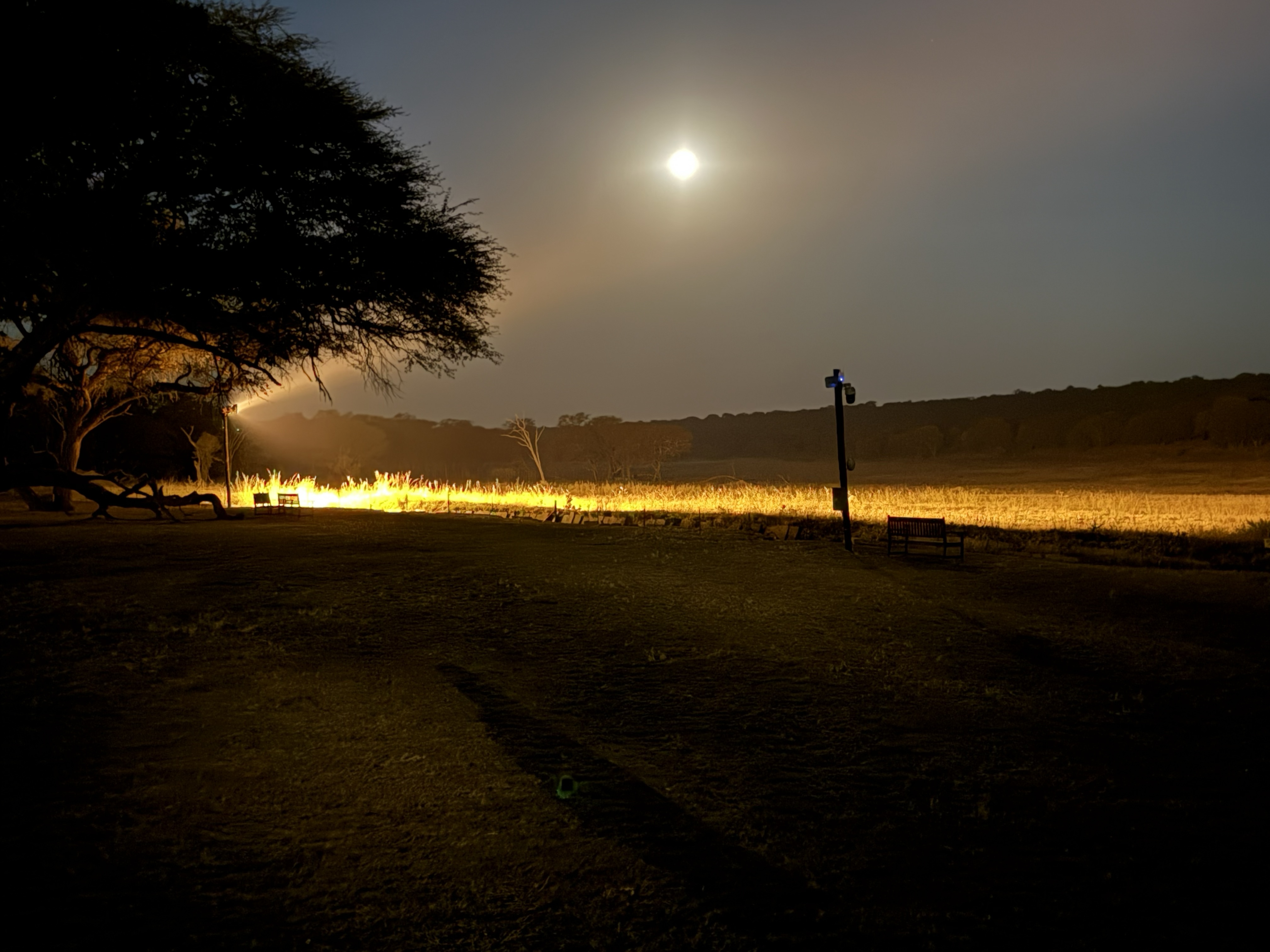
The back of the lodge that night. The waterhole is lit after dark — the pale gold strip along the tree line — because that is when the animals come, and people sit out on those ben
The back of the lodge that night. The waterhole is lit after dark — the pale gold strip along the tree line — because that is when the animals come, and people sit out on those benches in the cold to watch whatever walks in under the moon.

I went to bed in a cold room at the edge of that water, the full moon up over the tree line, listening to something large drink in the dark, hoping for dogs.