South Africa & Botswana

Day 11

Friday, July 3, 2026

Hwange to Chobe — across the border into Botswana

DawnA last quick game drive at Hwange. Not much.
MorningNorth, and out of Zimbabwe.
BorderShoes on the mat. Smile at the officers.
MiddayChobe Safari Lodge. A burger, eventually.
AfternoonThe first Chobe game drive, with Nature.

A Quiet Last Drive

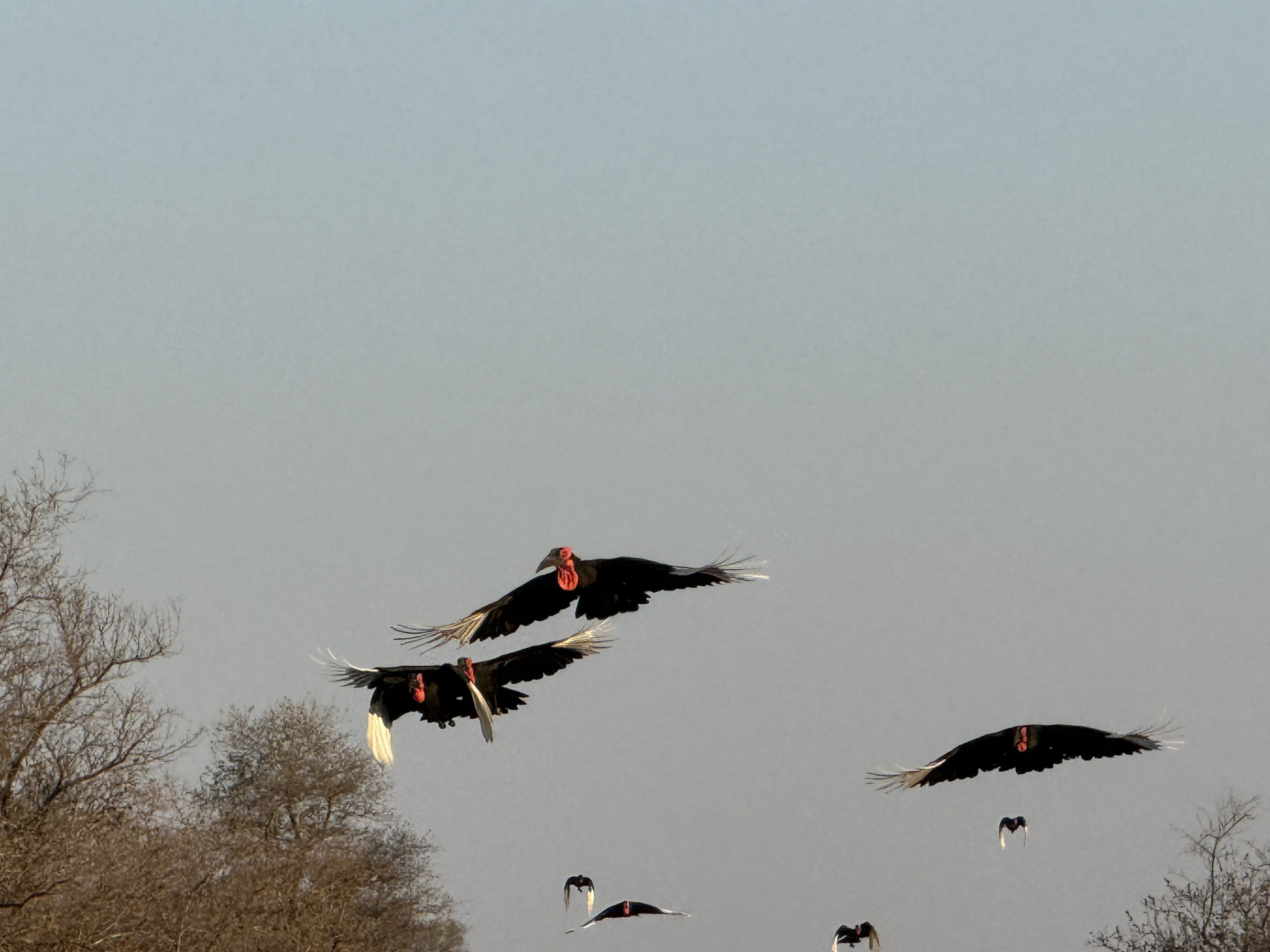
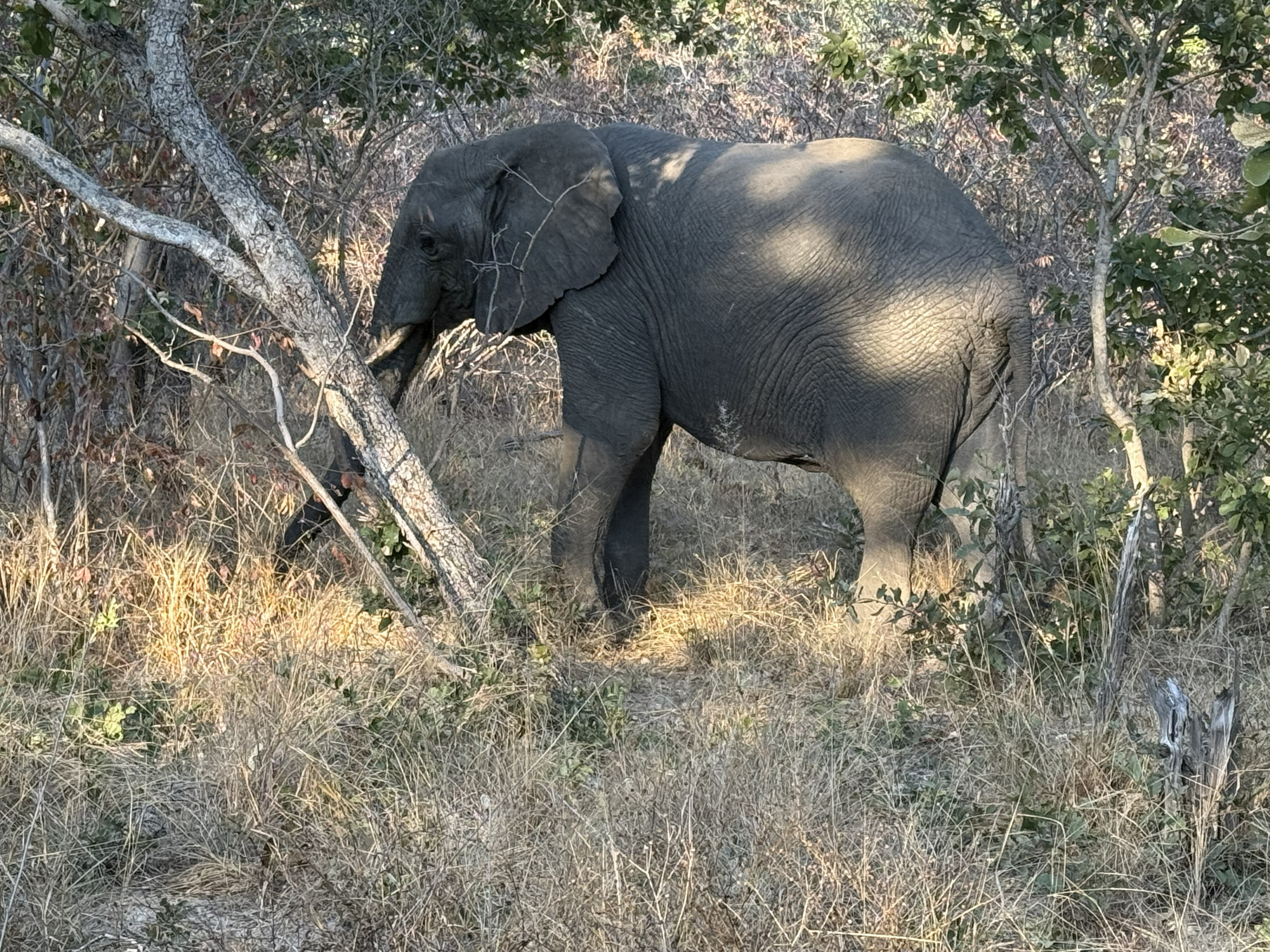
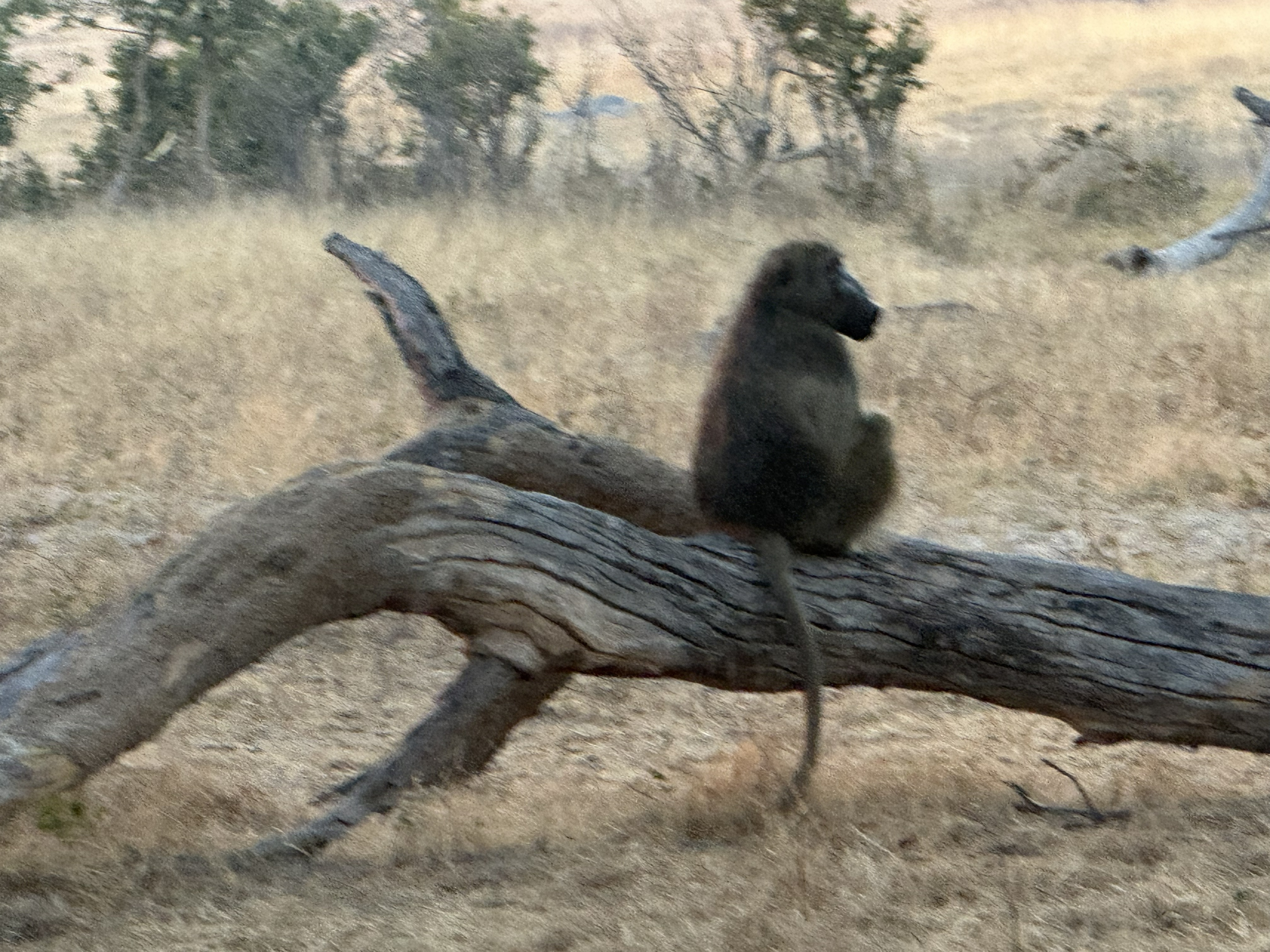
We took one more game drive at Hwange before leaving, early and quick, and it was — after two days of lions and a cheetah twice over — almost comically uneventful. The sun came up. A baboon sat on a log and considered us. A pair of ground hornbills went over. We saw an elephant, agreed that it was an elephant, and turned back toward the lodge and the long road north.
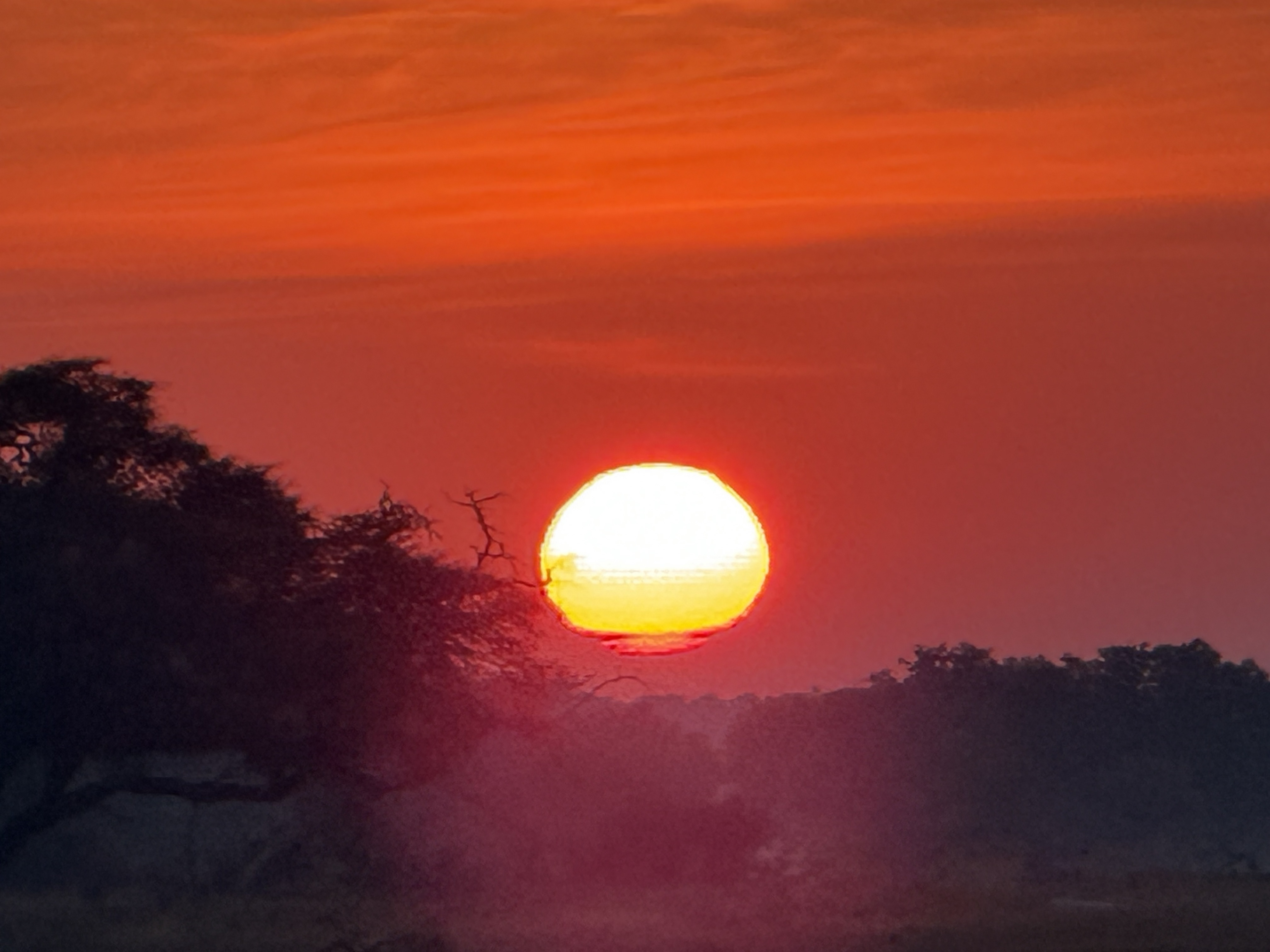
Sunrise, which the bush hands out free every morning and which never quite stops being worth getting up for.
A baboon on a fallen log, doing the thing baboons do best, which is sit and judge.
Southern ground hornbills going over — big, black, red-throated, and much longer-lived than they have any right to be.
And an elephant, browsing the tree line. By now the phrase “an elephant” had lost most of its power to move us, which is a strange and slightly sad thing to be able to say.

We were, of course, still looking for a leopard. Everyone always is, at some level; you rarely find one, and that is the whole point of a leopard. My own standing question was a different animal. I had been asking, at every camp and of every guide, about the painted dogs — and getting, at every camp and from every guide, the same kind and unhelpful answer.

The Border

Then we drove north, out of Zimbabwe and toward Botswana, and the border turned out to be the best story of the day — almost entirely because of Dylan. Botswana is serious about foot-and-mouth disease. It has to be: its beef exports depend on staying free of it, and its neighbors do not always cooperate. There had, in fact, been an outbreak in Zimbabwe's Matabeleland South earlier that same year. So the crossing includes a veterinary control: you walk your shoes across mats soaked in disinfectant, and the vehicle's tires are dipped too, to make sure nothing crosses the line on a sole or a tread. Dylan briefed us on the bus, and the briefing was a small masterpiece of practical wisdom. First, the shoes. He asked how many pairs each of us was bringing across. Paul and I each had one pair — the ones on our feet — and Dylan said that was fine, because “they don't expect too much from the men.” Several of the women had three pairs or more. And here was the strategy: we wanted to present as many shoes as possible to the screening. If the border officers see a big, cooperative pile of shoes going across the mats, they relax — they can see the group is taking it seriously, that somebody clearly told everyone the rules. If they see too few, they get suspicious that nobody was briefed, and then they start opening bags to check, and then everything stops for an hour. So the women's shoe collections, which might have been a liability, became the group's cover. We put every shoe we had on those mats. Second, the people. “Smile,” Dylan said. Be warm, be pleasant, be easy with the passport officers. Whatever it takes to move through cleanly — because we had a game drive to catch on the other side, and a game drive does not wait for a slow border.

We smiled. We dipped every shoe. We got through.

The Burger That Took Longer Than the Border

We reached the Chobe Safari Lodge in Kasane — on the river, in Botswana, our home for the next two nights — and here is the joke of the day. Back on the bus, hours earlier, Dylan had passed around the lodge's lunch menu so he could phone our order ahead and have it waiting when we arrived. Smart. It would save the time we had just spent smiling our way across the border.
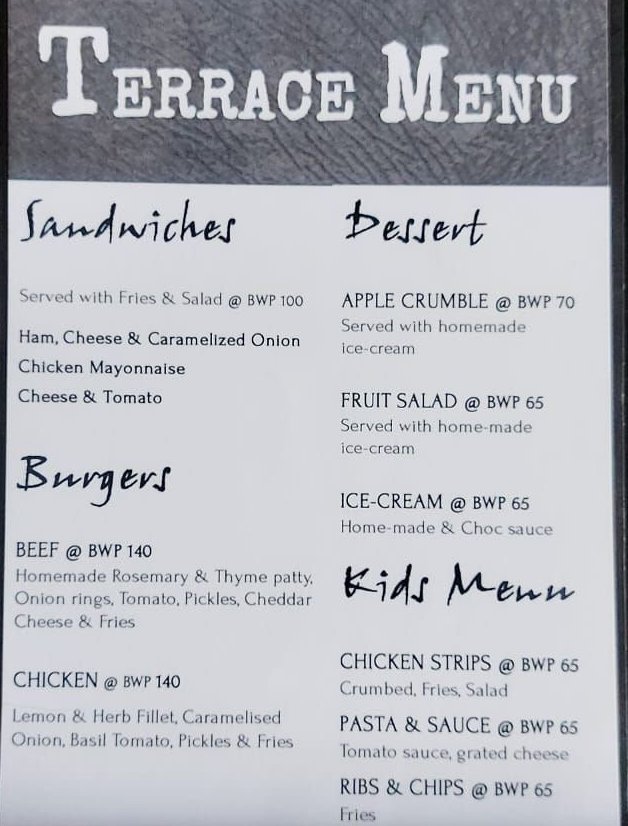
The menu Dylan passed around on the bus. Most of us picked the burger.

We studied the menu, and most of us chose the burger. And then Dylan could not get a signal. The order never went through. So we arrived at the lodge having pre-selected our lunch with military efficiency, and then sat down and waited for the burgers to be cooked from scratch like anybody else, having gained precisely nothing from the planning. It was the lunch, in the end, and not the border, that cost us time. We had smiled and shoe-dipped our way across an international boundary without any trouble at all, and then sat waiting on the burgers long enough that we set out on the afternoon's game drive a little later than we had meant to.

Chobe

We had made it: Botswana, the river, a bush room with our name on the card, a burger finally in us. And we still had a game drive to catch.

Nature

Our guide at Chobe was named Nature. That is not a nickname or a translation; it was simply his name. No novelist would risk a safari guide named Nature — it is too neat by half — and yet there he was, and the only sensible thing was to enjoy it. A little behind schedule, thanks to the burgers, we set out with Nature along the Chobe riverfront, where the dry season pulls every living thing down toward the water.
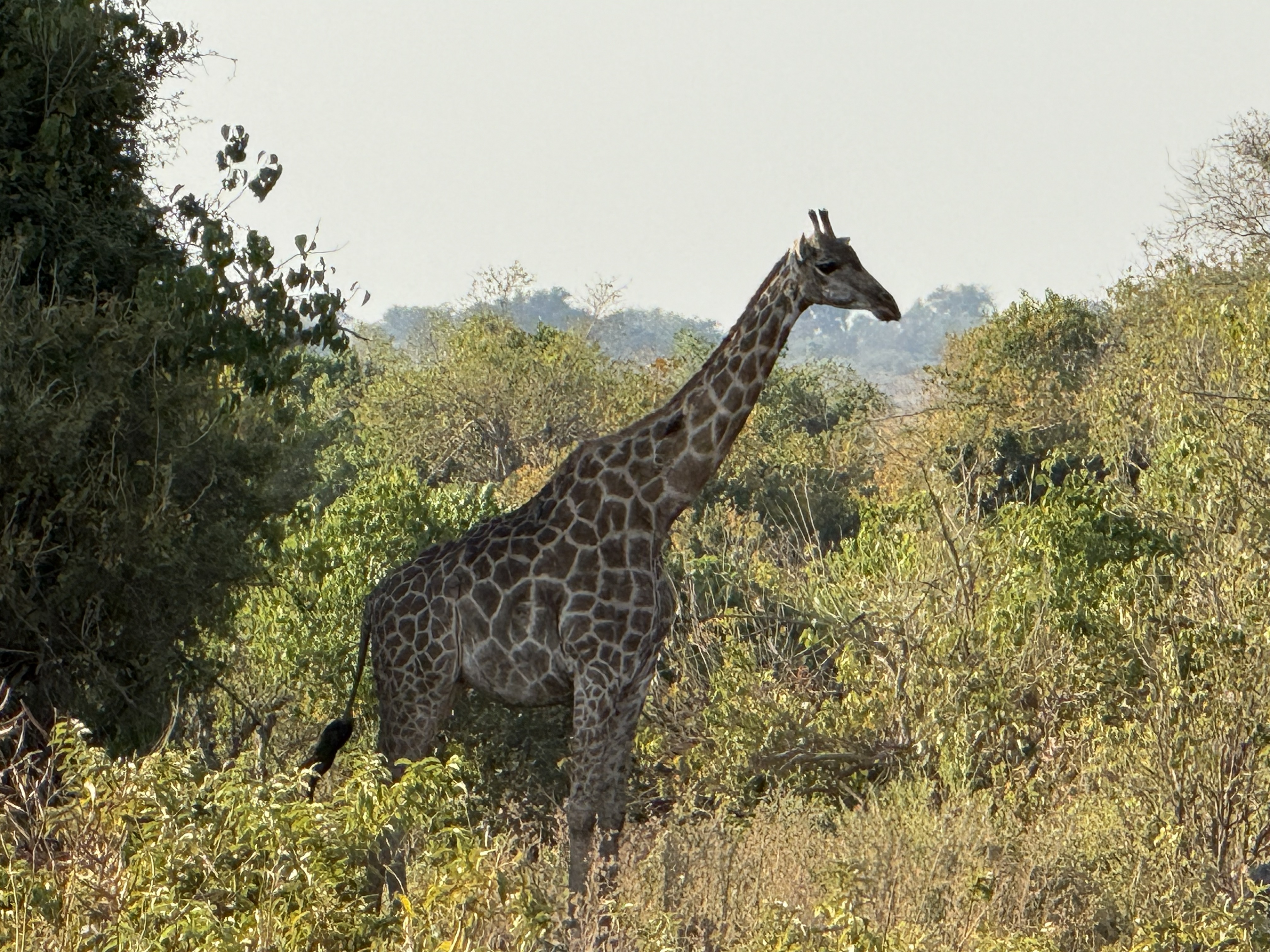
A giraffe to start. Chobe eases you in gently.
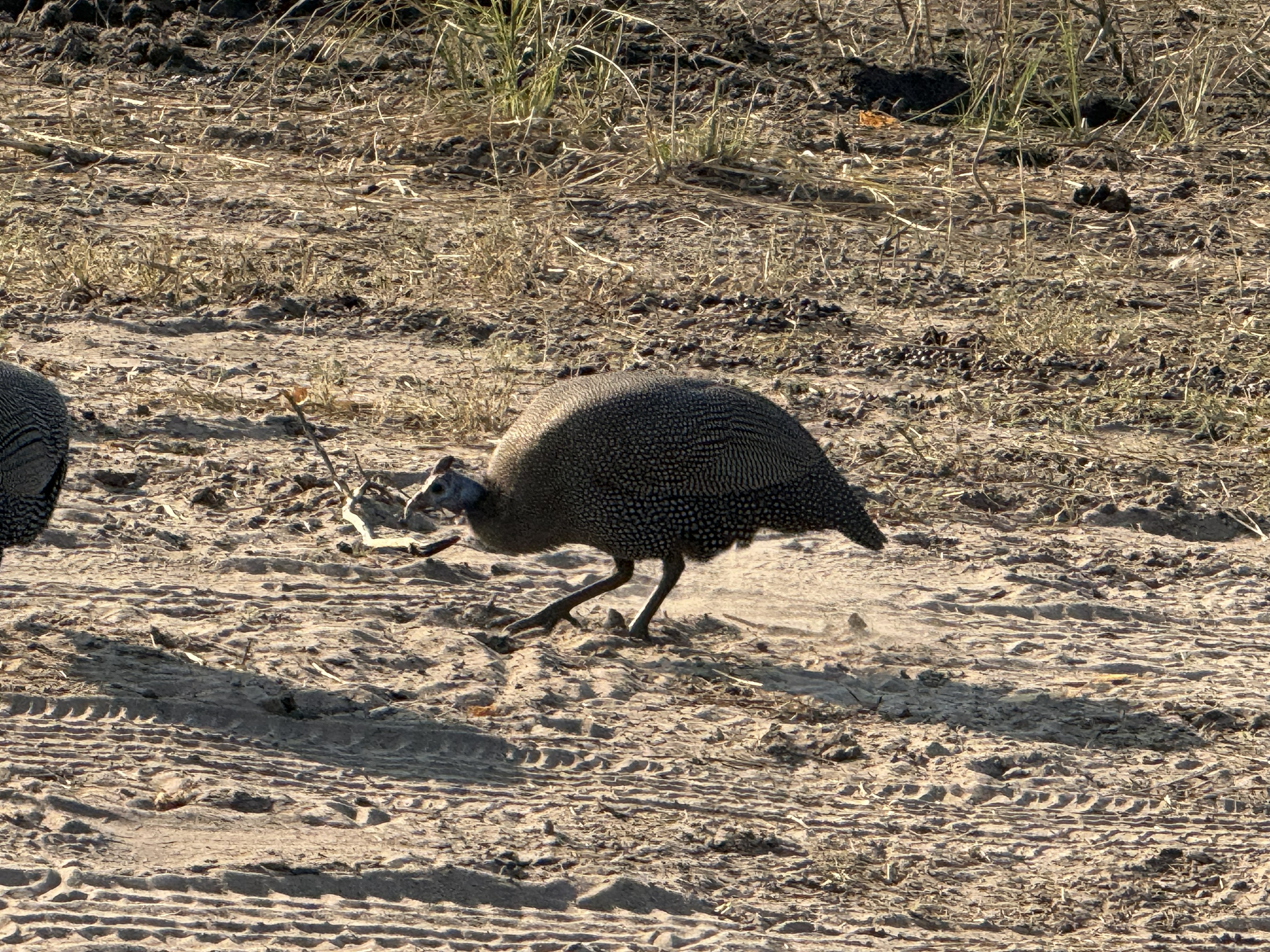
Helmeted guineafowl, which were everywhere, all afternoon, in absurd polka-dotted committees. You stop photographing them around the fourth one and then never quite stop noticing t
Helmeted guineafowl, which were everywhere, all afternoon, in absurd polka-dotted committees. You stop photographing them around the fourth one and then never quite stop noticing them.
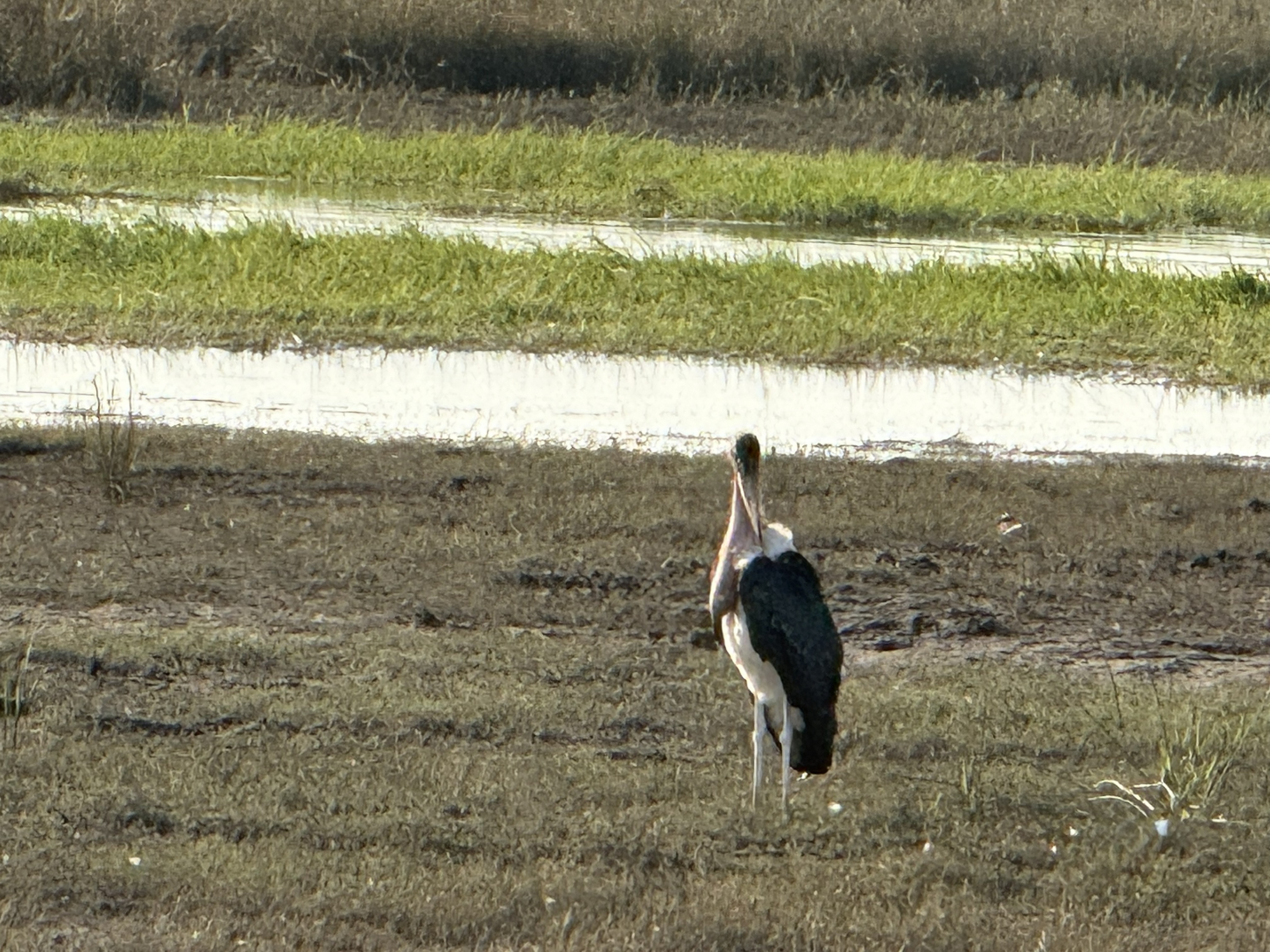
And this, which I will not defend: a marabou stork, quite possibly the ugliest bird in Africa, bald and hunched and undertaker-grim. Nature seemed fond of it. Someone has to be.

Then the riverfront produced the big grey animals, which is what one comes here for.
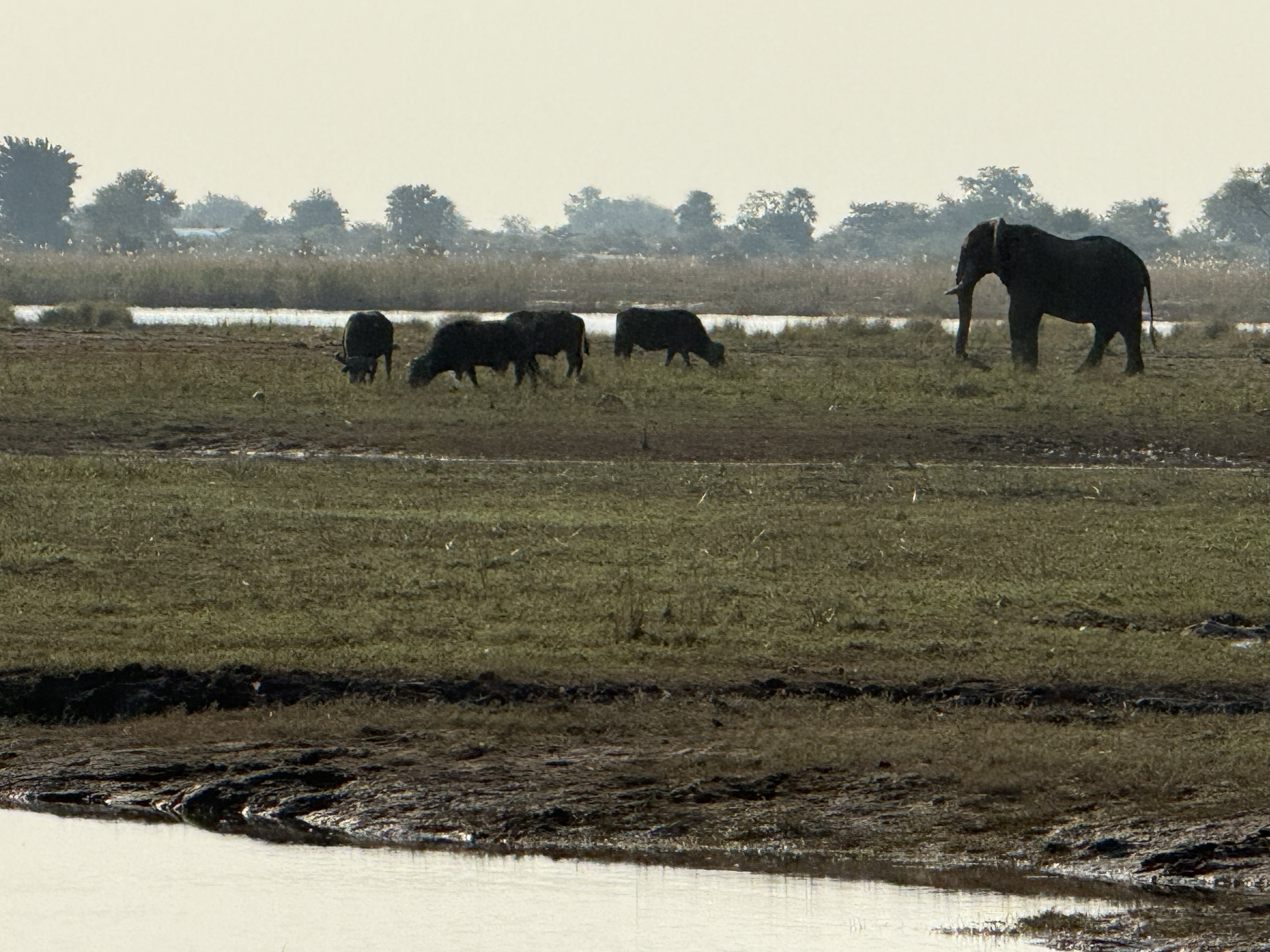
A Cape buffalo and an elephant sharing one patch of floodplain — two of the heaviest, least negotiable animals on the continent, ignoring each other with enormous dignity.
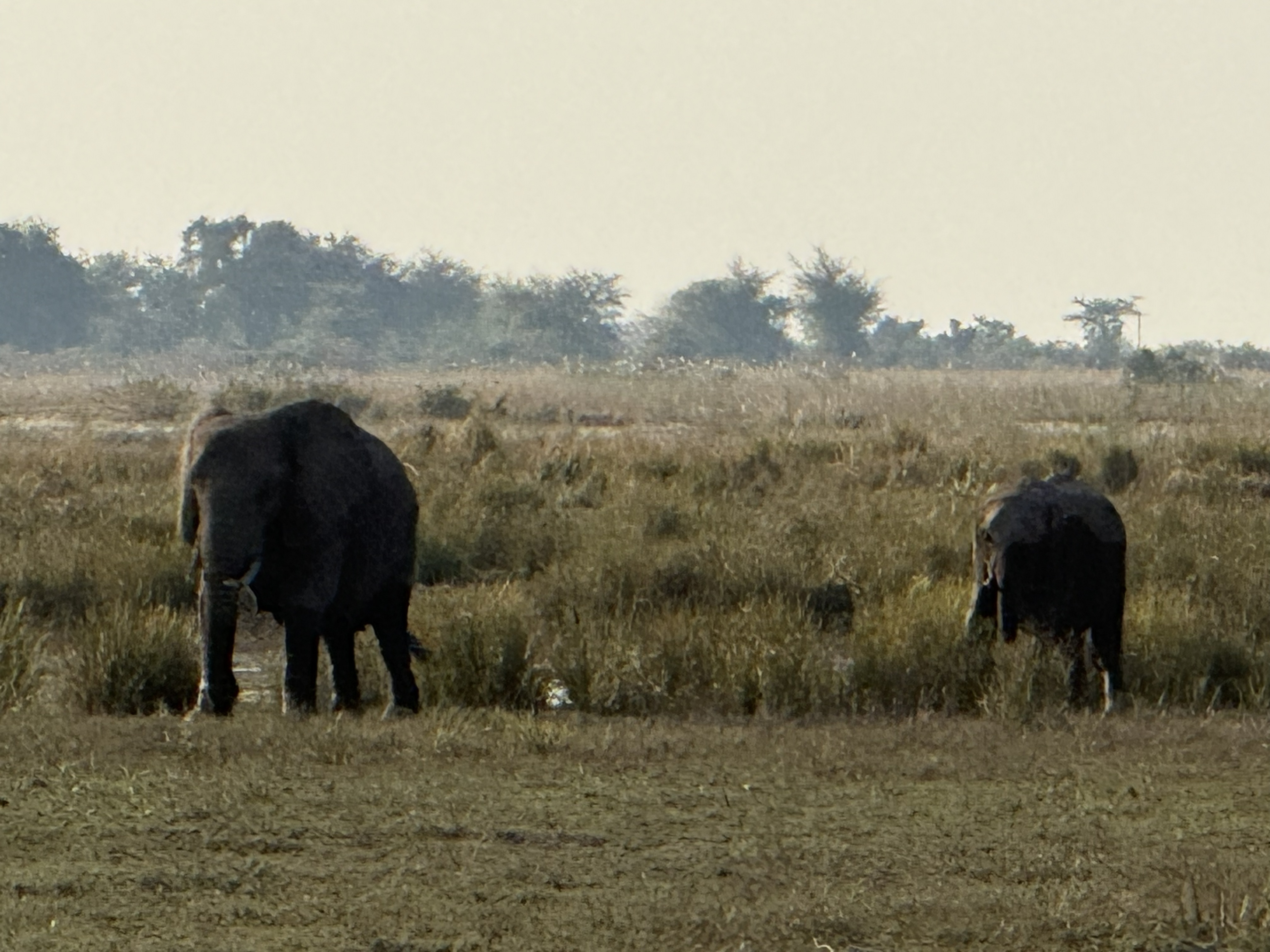
Elephants, out on the green flush of grass the river keeps alive while everything back from the water goes to dust. This is the thing Chobe is famous for, and we were only getting
Elephants, out on the green flush of grass the river keeps alive while everything back from the water goes to dust. This is the thing Chobe is famous for, and we were only getting started.
A tower of giraffe — which is, wonderfully, the actual collective noun. A tower.
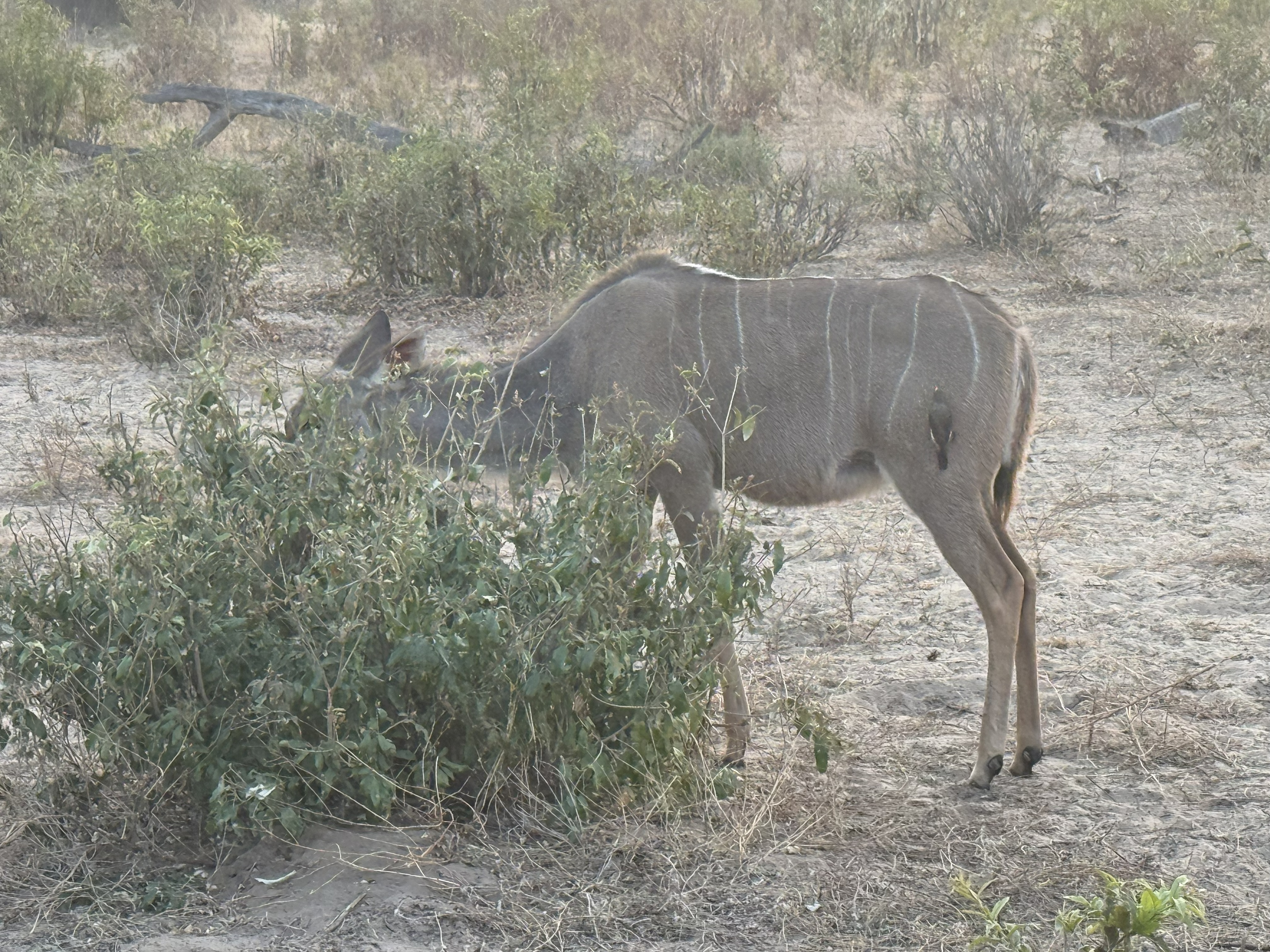
A kudu, grey and faintly chalk-striped, working through a bush with that slow, deliberate browsing.
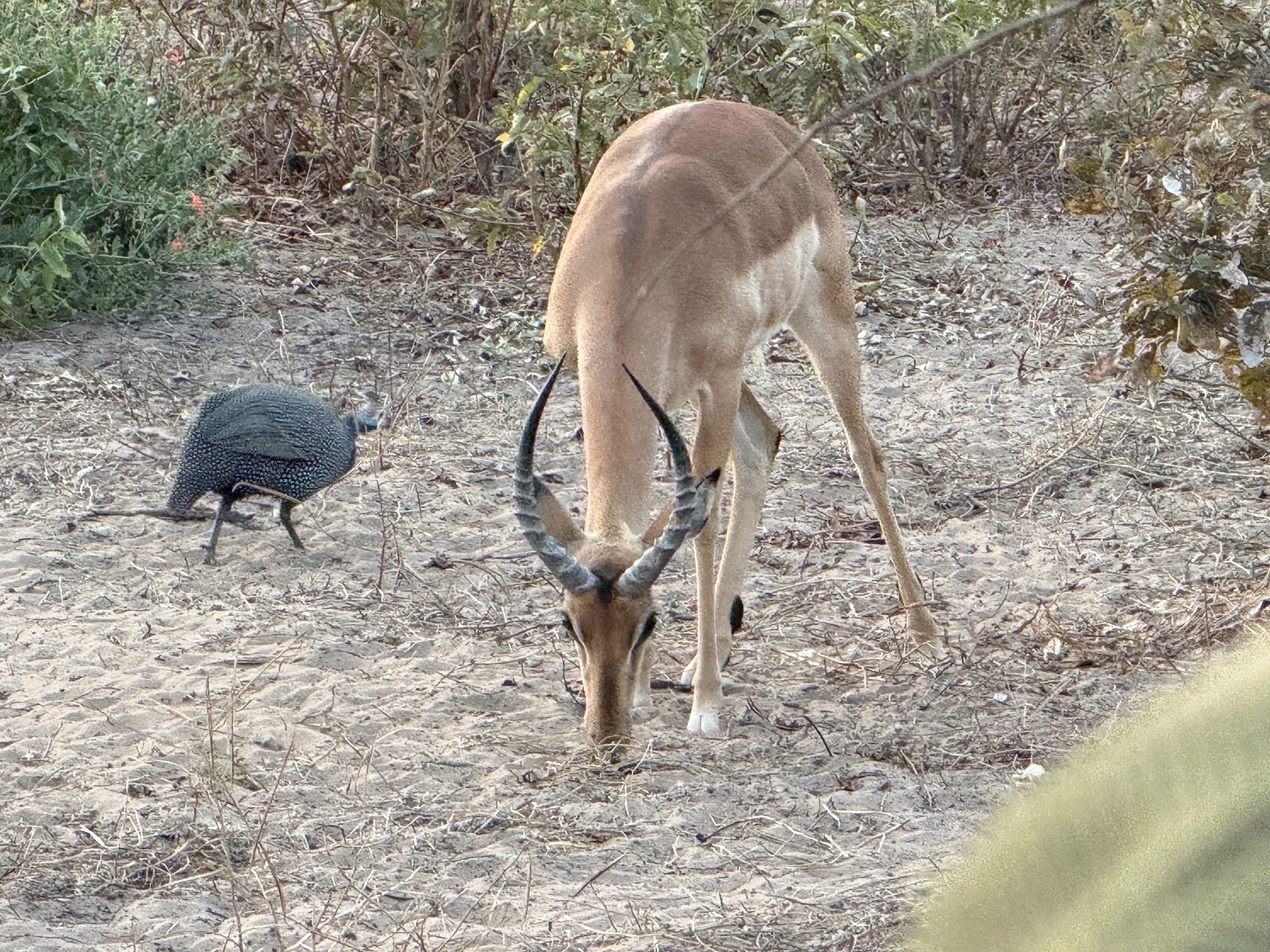
An impala grazing, a guineafowl in attendance. The impala is the animal you stop photographing first and probably should photograph most: it is beautiful, it is everywhere, and the
An impala grazing, a guineafowl in attendance. The impala is the animal you stop photographing first and probably should photograph most: it is beautiful, it is everywhere, and the everywhere does it a disservice.
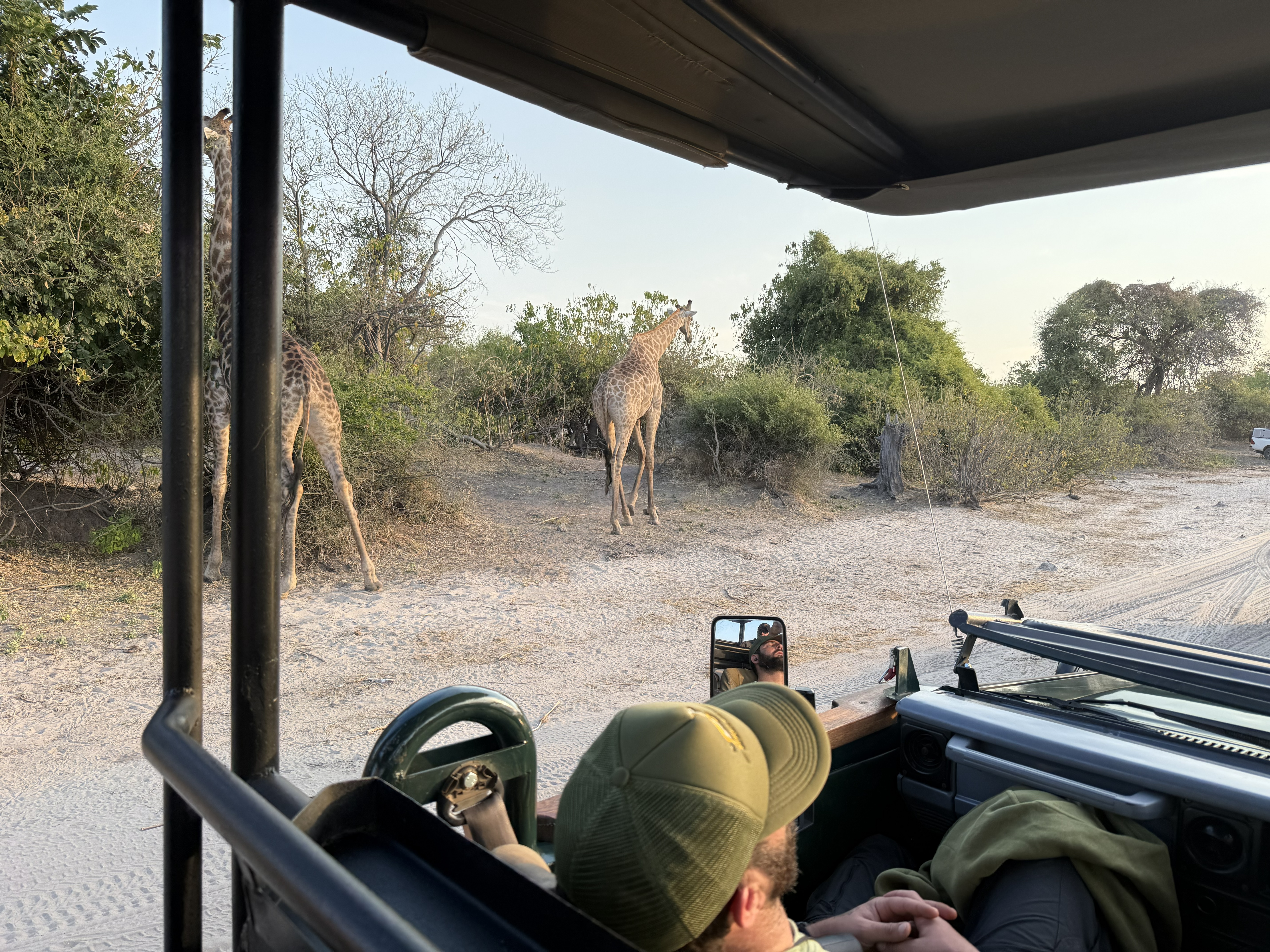
Dylan, asleep. He lives in Cape Town; he has seen all of this more times than he could count, and somewhere in the gold of a Chobe afternoon he simply, peacefully, checked out. The
Dylan, asleep. He lives in Cape Town; he has seen all of this more times than he could count, and somewhere in the gold of a Chobe afternoon he simply, peacefully, checked out. There is no higher endorsement of how safe and easy he had made the whole thing feel.
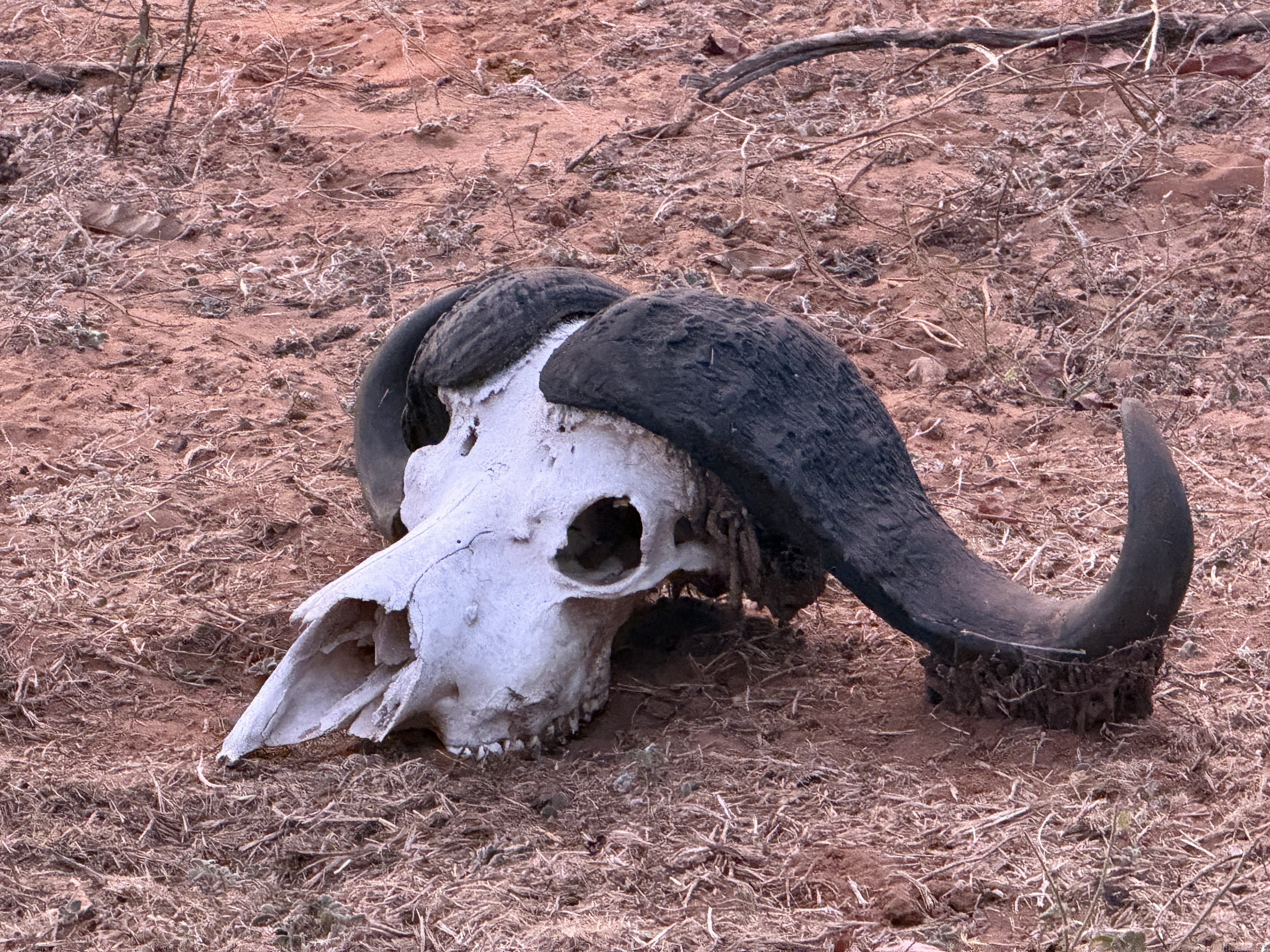
A Cape buffalo's skull in the dirt, the horns still fused to the bone in the heavy boss they call a helmet. Paul, I am fairly sure, wanted to take it home. Paul wants to take
A Cape buffalo's skull in the dirt, the horns still fused to the bone in the heavy boss they call a helmet. Paul, I am fairly sure, wanted to take it home. Paul wants to take all the bones home.

The Light Goes

And then the afternoon did the thing that African afternoons do, which is turn to gold, and then to fire.
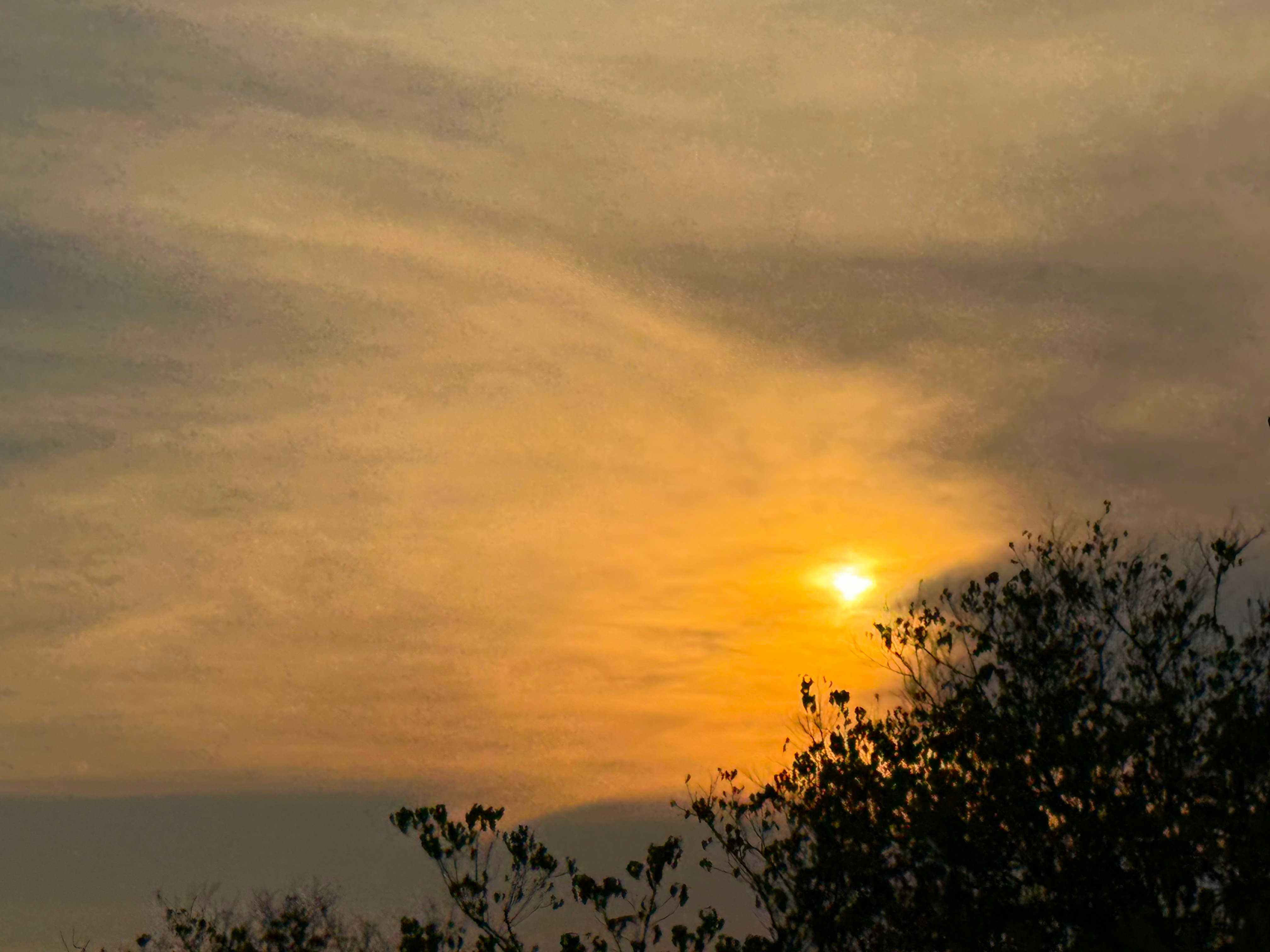
The light going long and gold over the bush.
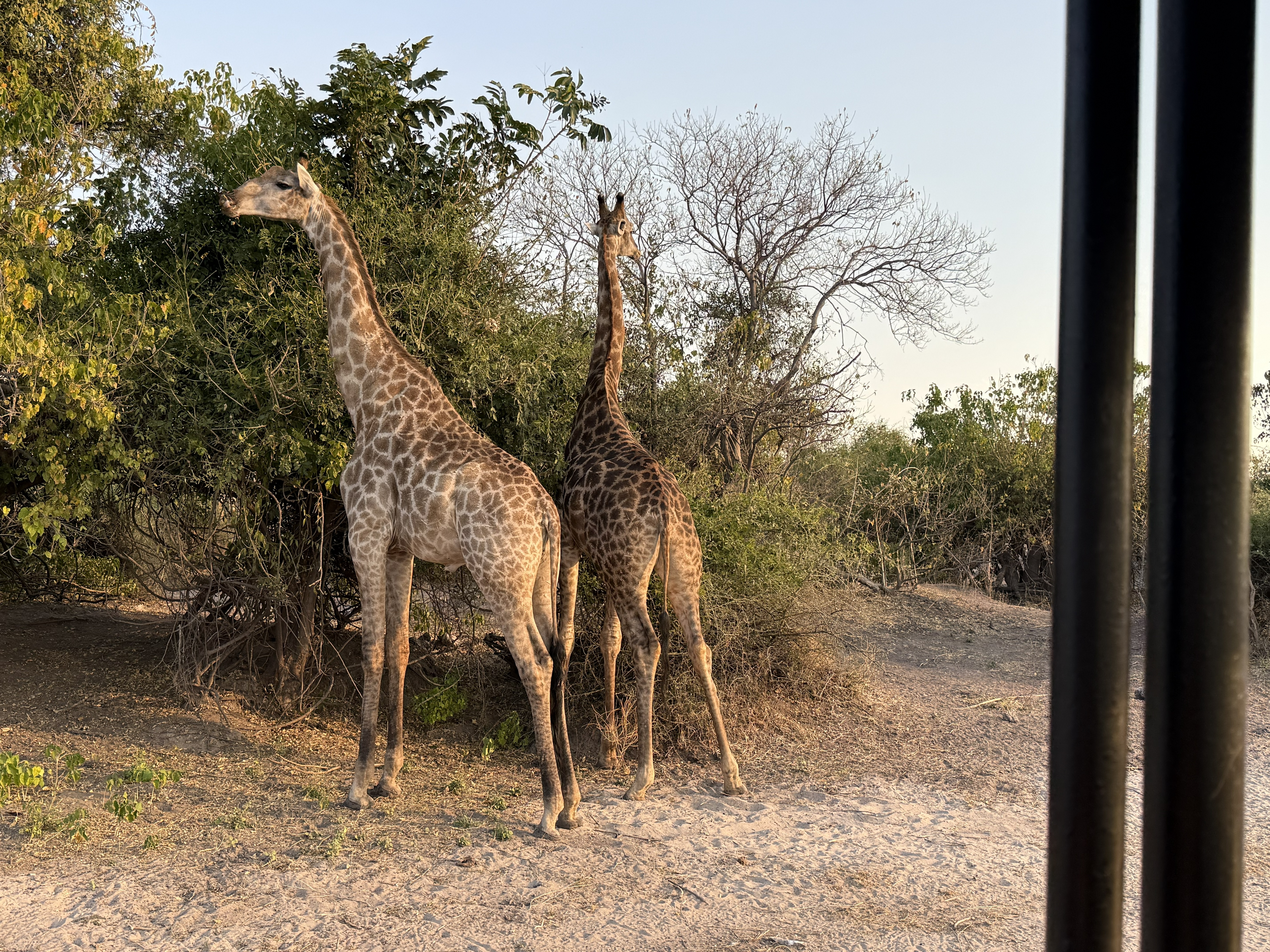
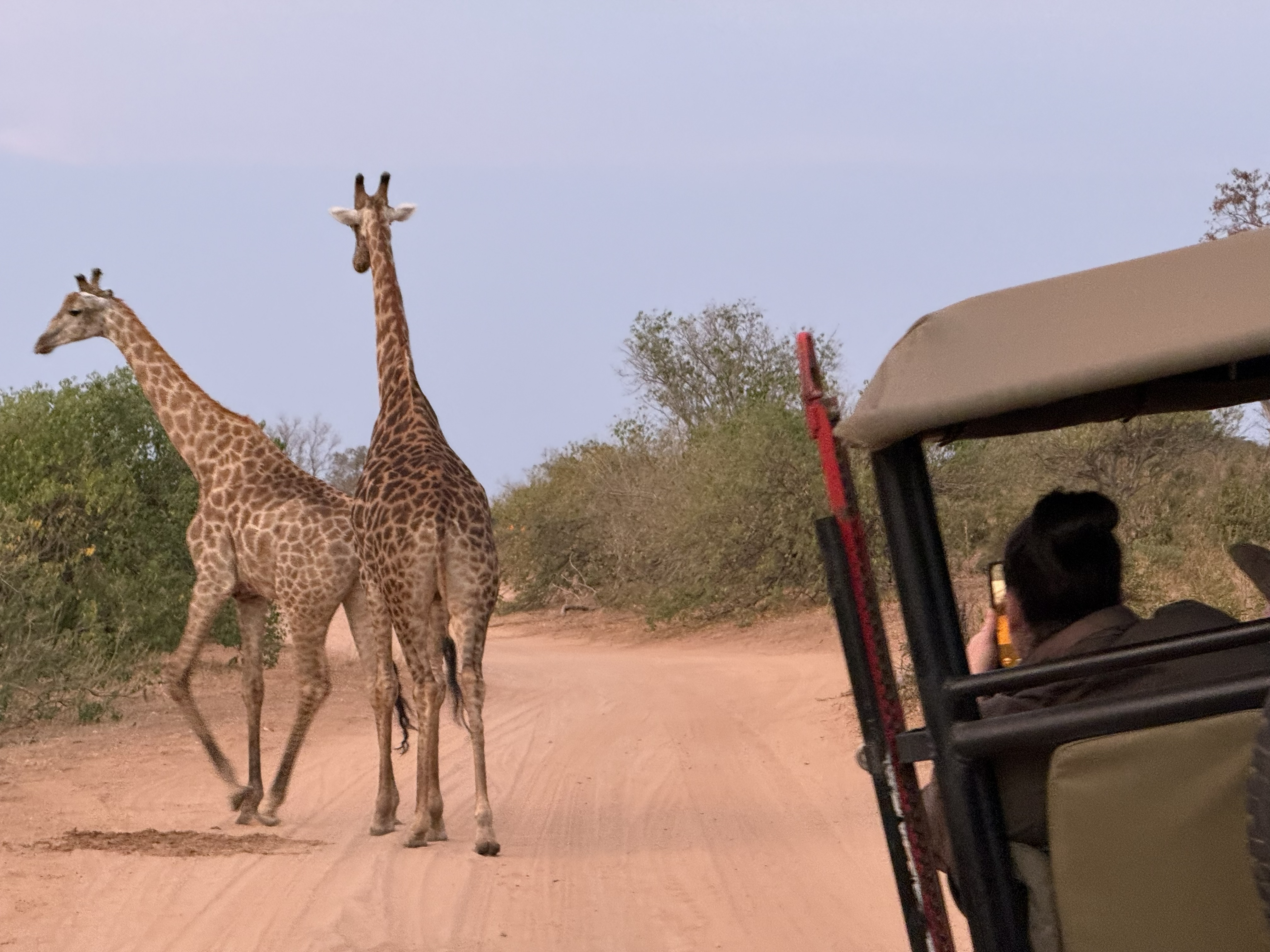
Two giraffes crossing the track directly in front of the truck — close enough that the whole vehicle went quiet. This, for the record, was a game drive, on wheels, on land. The riv
Two giraffes crossing the track directly in front of the truck — close enough that the whole vehicle went quiet. This, for the record, was a game drive, on wheels, on land. The river and its boats were tomorrow's business.
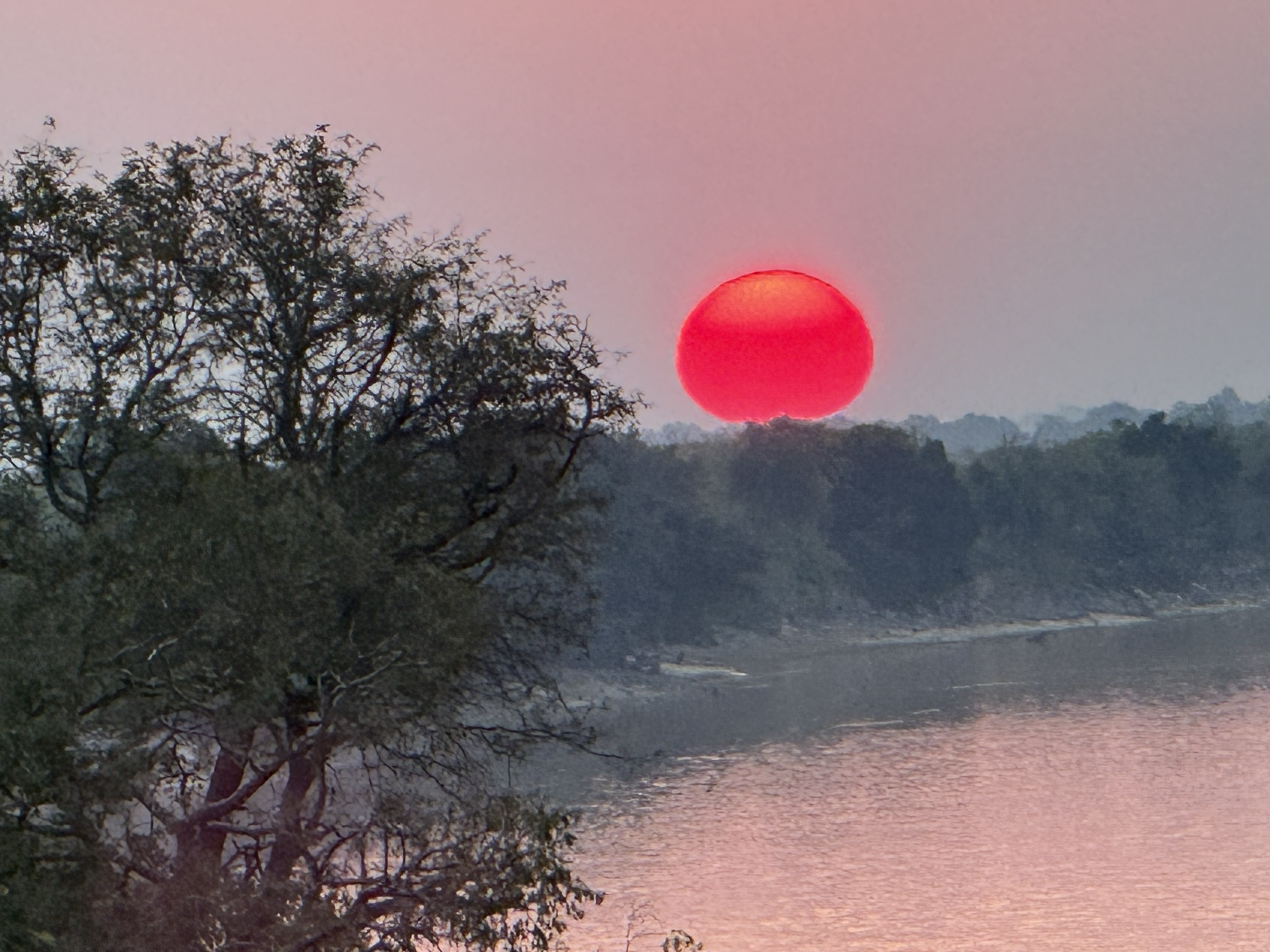
And the sun coming down over the Chobe River, gone red and enormous in the smoke-hazed winter air. This is the photograph you fly around the world hoping to take and almost never d
And the sun coming down over the Chobe River, gone red and enormous in the smoke-hazed winter air. This is the photograph you fly around the world hoping to take and almost never do — and then one ordinary Friday, the burger still settling, there it simply is.
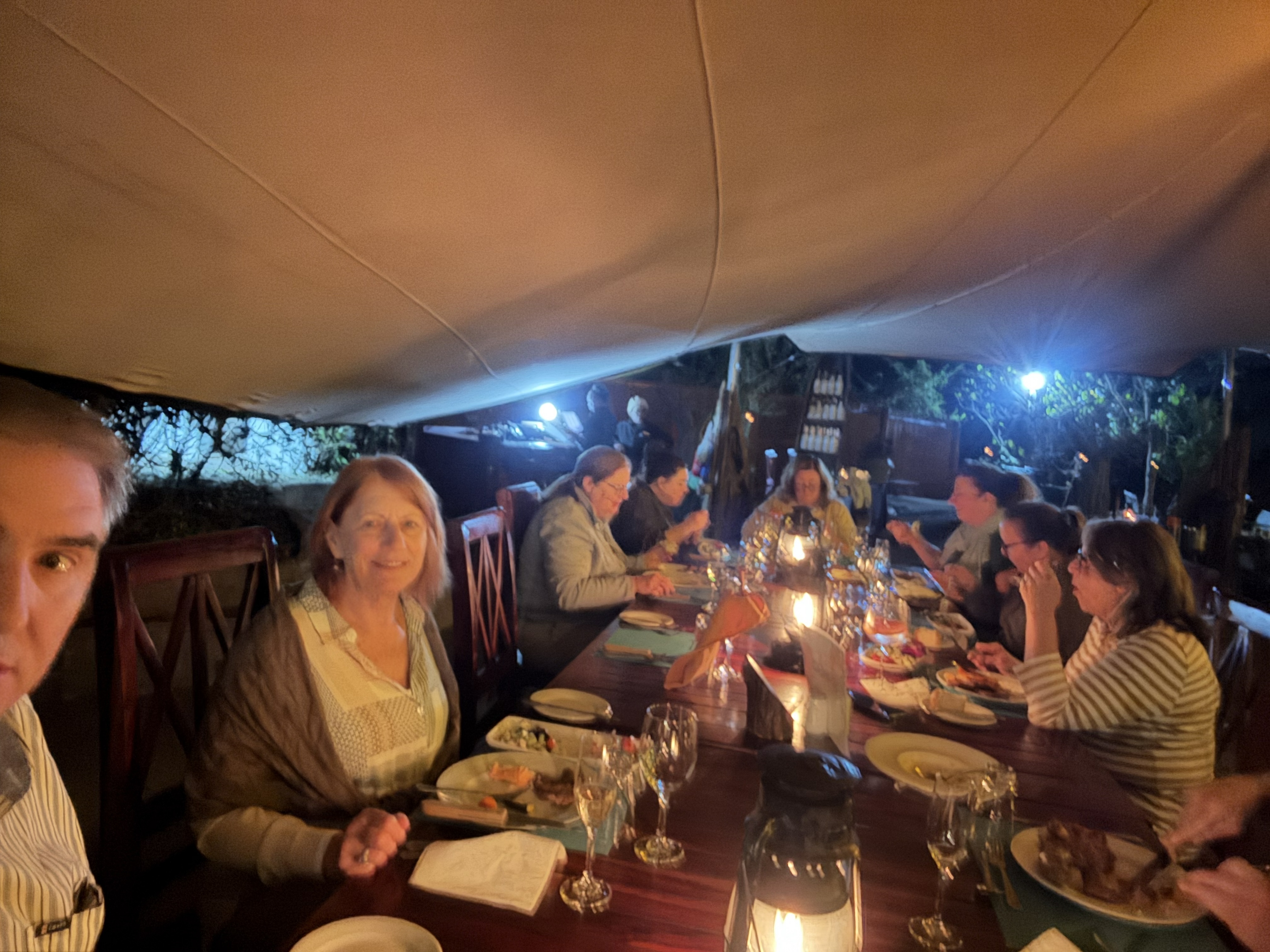
Dinner that night: the group around one long table off in another part of the lodge, candles and wine and the particular good tiredness of a day spent outdoors. We had crossed a bo
Dinner that night: the group around one long table off in another part of the lodge, candles and wine and the particular good tiredness of a day spent outdoors. We had crossed a border, spent the afternoon on a game drive, and watched the sun go down over Botswana.

We had a full day of Chobe already behind us and had not even touched the water yet. Tomorrow we would trade the truck for a boat and meet the river properly — and somewhere out beyond the lodge there was still a pack of painted dogs that did not keep an address, and a leopard nobody had seen either.