Day 8
Tuesday, June 30, 2026
Victoria Falls — from the air and from the ground
▶ Watch the videos from this day
| 03:00 | Hippos on the lawn. Nobody's idea of a wake-up call. |
|---|---|
| Morning | Shuttle to the helipad. The Flight of the Angels. |
| Midday | The walking tour. The falls, up close and soaking. |
| Afternoon | An animal rescue on the way back. |
| Evening | Dinner at the lodge. |
Three in the Morning
The day did not begin gently. At three o'clock in the morning, the phone rang. It was Bonnie. She had not been able to sleep. There was a noise outside her room — a heavy, wet, tearing-and-chewing sound in the dark — and it had kept her awake and then made her curious. She got up, looked out, and there they were: hippos, out of the river and up on the lawn, grazing in the dark, right outside her sliding door. This is exactly why the lodge covers the pool at night, and exactly why the river sign says fifteen feet — and here they were, on the grass between the rooms, several of them, at arm's reach from the glass.
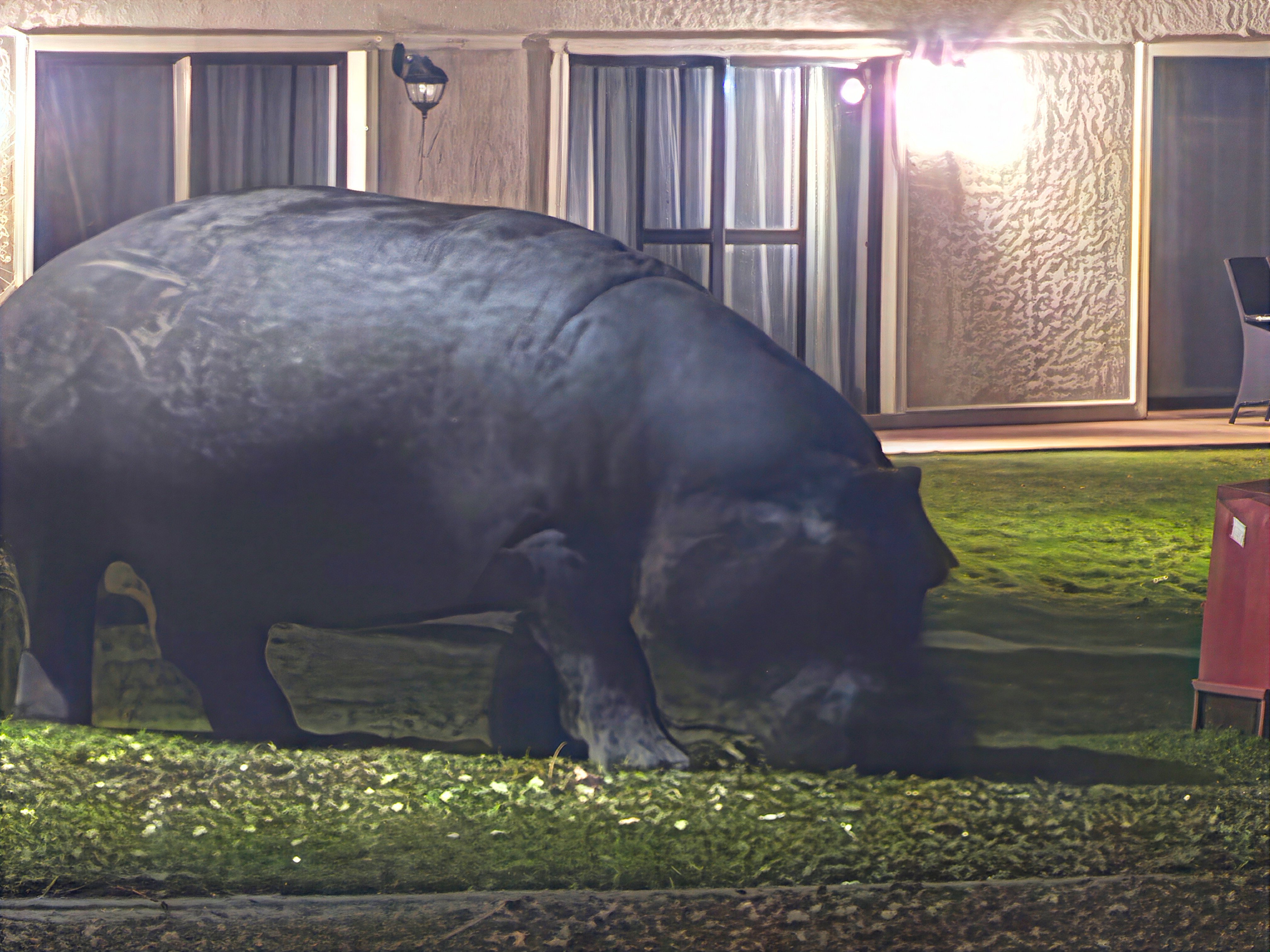
She watched them for a while. And the hippos kept moving — down along the grounds, room by room, until they were directly outside my sliding door. That is when she called: to tell me that the most dangerous animal in Africa was, at that moment, on the other side of my glass. Natasha was up by now as well, and for a while we all watched the same dark shapes move across the same lawn. I tried the glass first — the door threw back the room behind me, reflections across the whole frame, no angle would clear it — so I stepped out, and then I followed them a little way across the grounds in the cold and the dark. I kept well back, much more than the fifteen feet the river sign had demanded, with a clear line to a door the whole time. Everyone thought I was crazy, and I understand why. I will only say that I have a high tolerance for that particular fear, and that there are hippos outside your window at three in the morning perhaps once in a life, and I was not going to spend it behind a reflection.
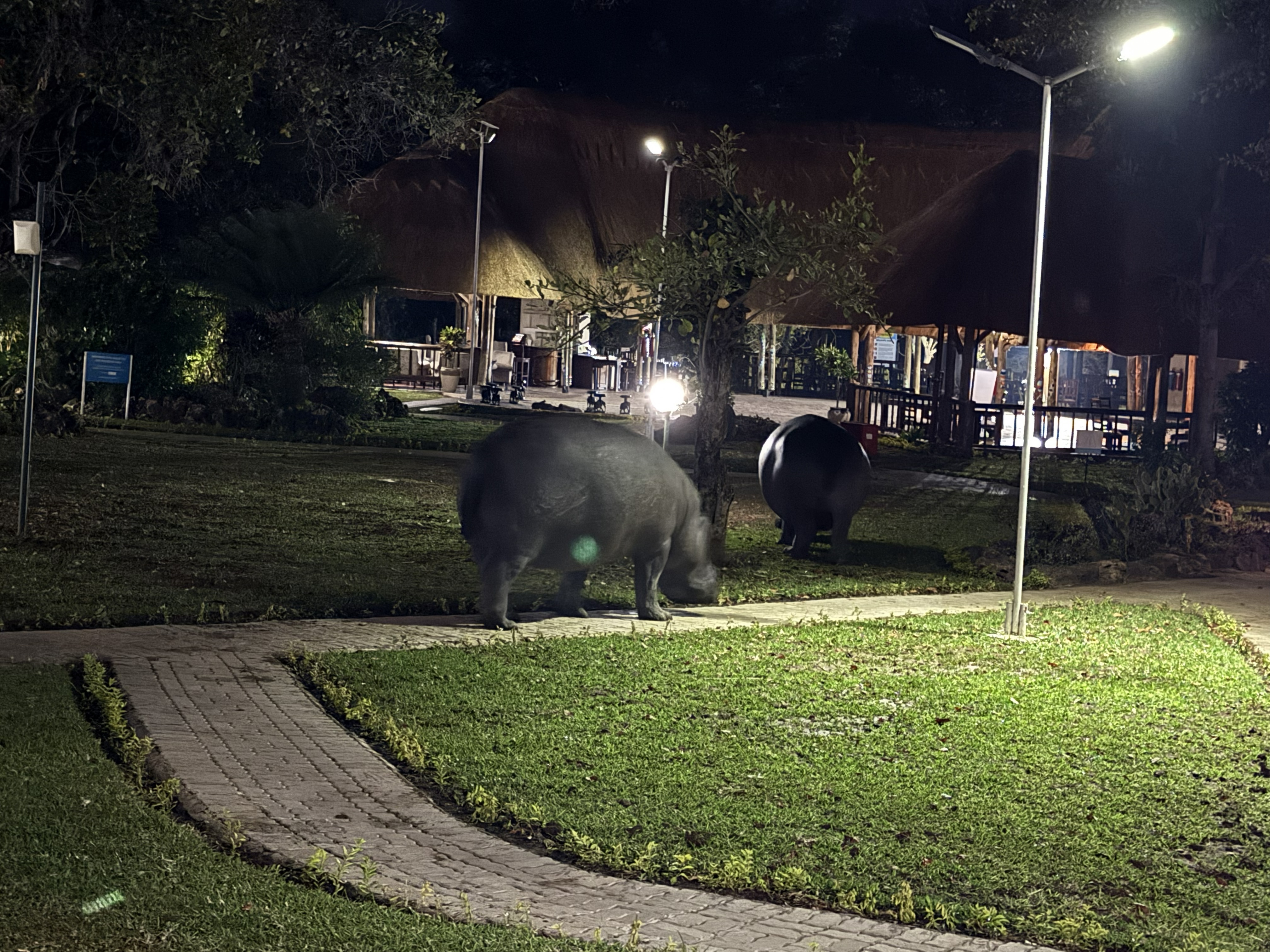
And here is the part that is actually the story. Of all of us, the one person who had most wanted to see a hippo was Debbie. She had said so. And Debbie slept straight through it — the three of us awake in the dark while hippos grazed past the rooms, and the one who would have loved it most never stirred. She was, when she found out in the morning, not entirely at peace about it.
Some days you take a photograph. Some days you get in a helicopter. I had never been in one before. Fifty-odd years on the planet, a fair amount of it spent traveling, and I had never once been in a helicopter — and the first time was going to be over Victoria Falls. There are worse ways to lose that particular virginity.
The Flight of the Angels
In the morning a group of us rode out to the helipad — spirits high, everyone a little giddy about it — and waited our turn in a lodge with big windows overlooking the pad, watching helicopters lift off and set down, which does nothing to calm anybody's nerves and everything to sharpen the anticipation.
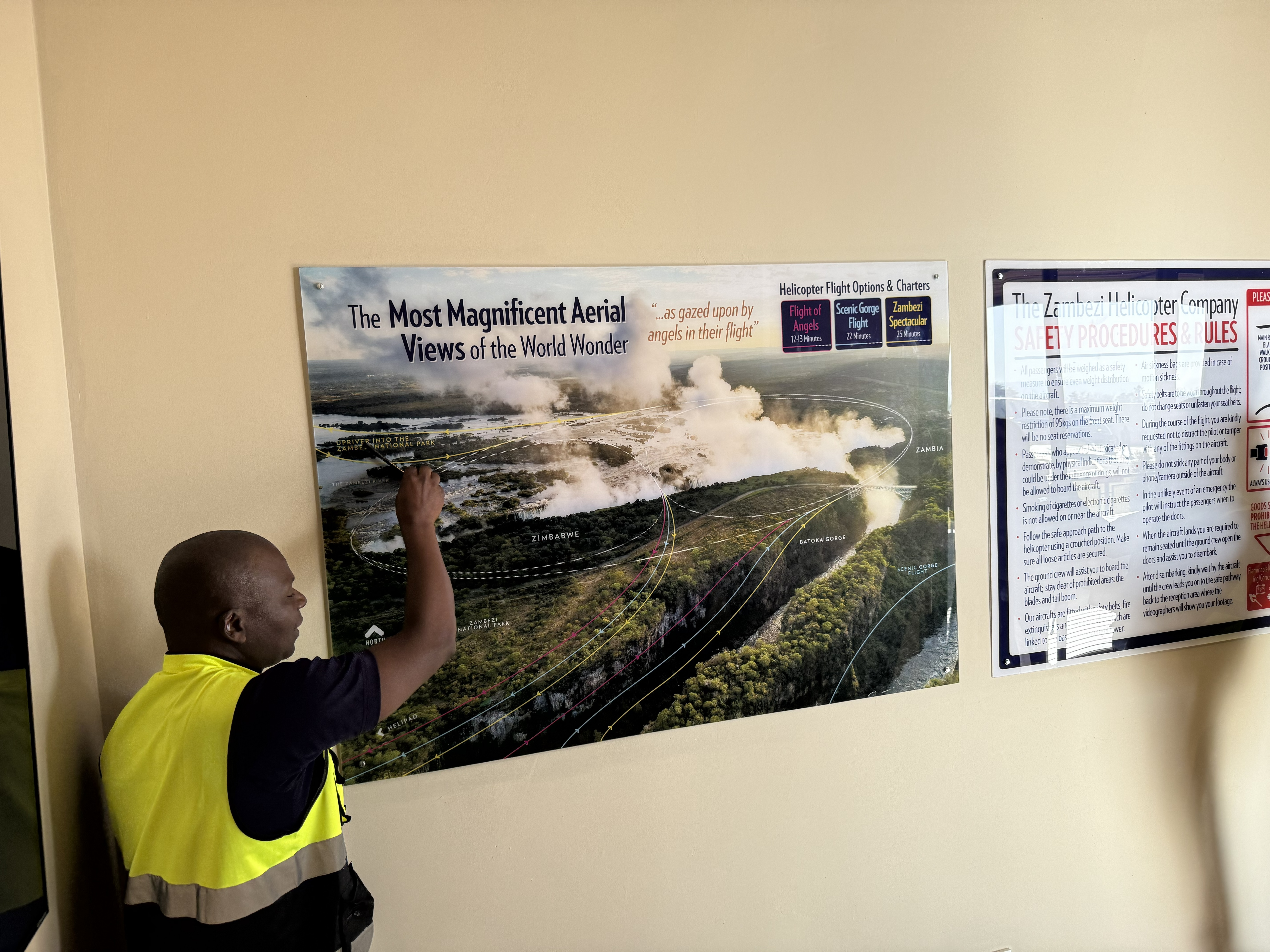
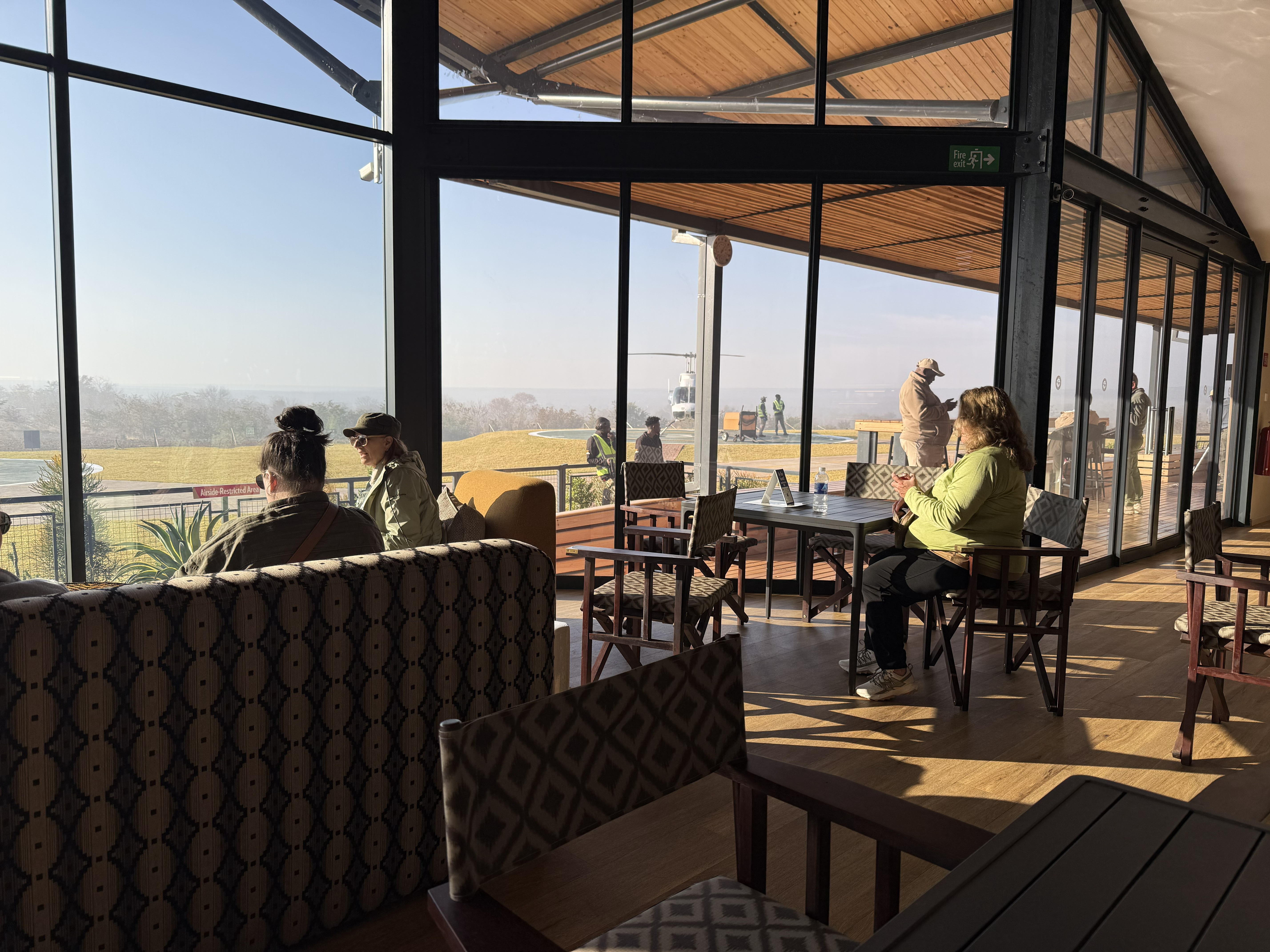
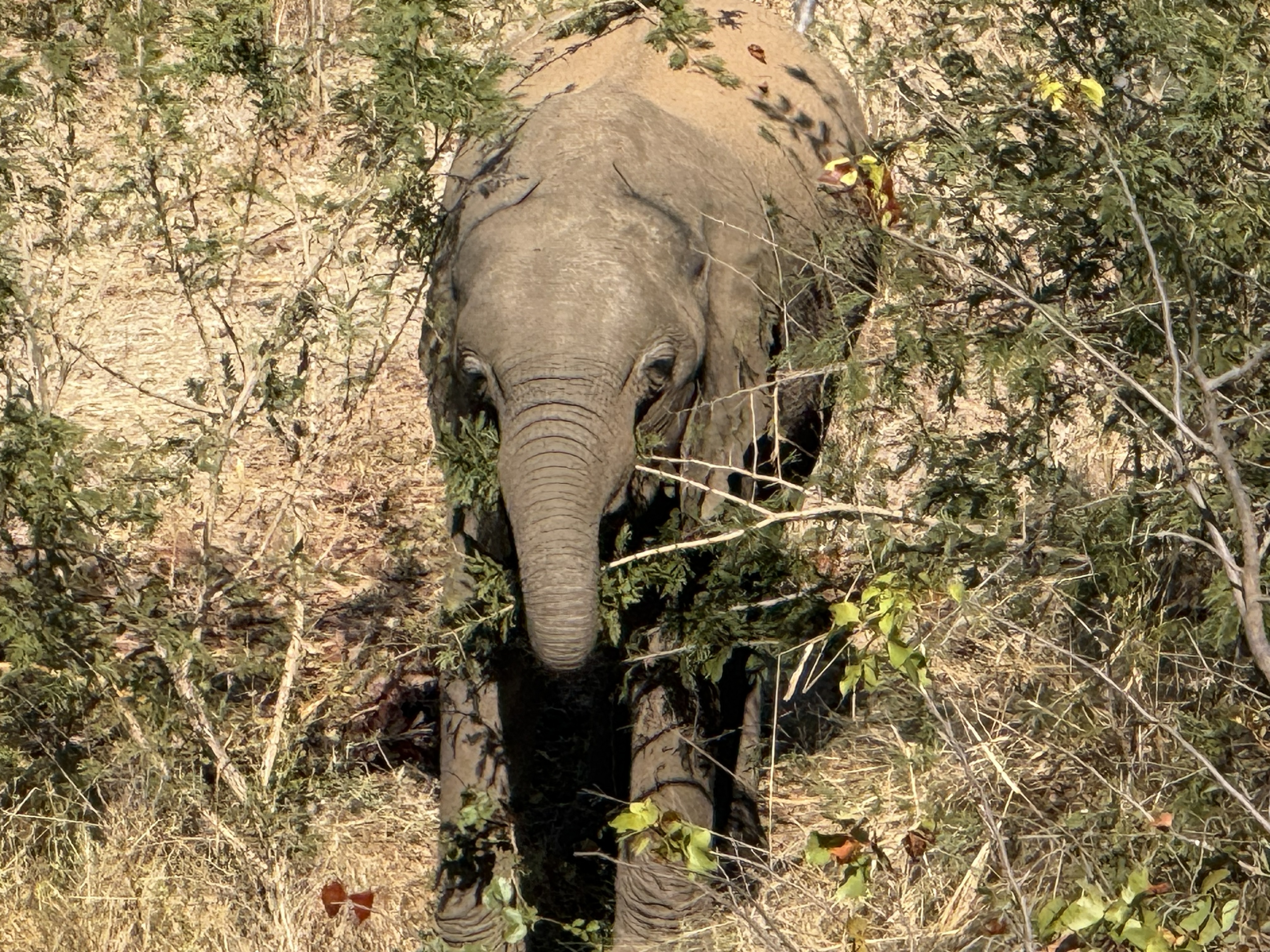
And there was an elephant. Not on the flight — just there, outside the helicopter compound, going about its business at the edge of the parking lot, as though a wild elephant in the car park were an ordinary feature of an ordinary morning. In Zimbabwe, it apparently is.
Then it was our turn. A safety briefing, headsets on, and up.
Bonnie got the co-pilot seat, up front beside the pilot — the best seat in the aircraft. She got it for being the smallest of us: on a helicopter that light the load has to be balanced, so the lightest passenger rides up front, and Bonnie's petite size finally paid a dividend. I sat directly behind her on the left, with two other passengers across the back. And then Victoria Falls came into view, and the whole point of the exercise became immediately, overwhelmingly clear.
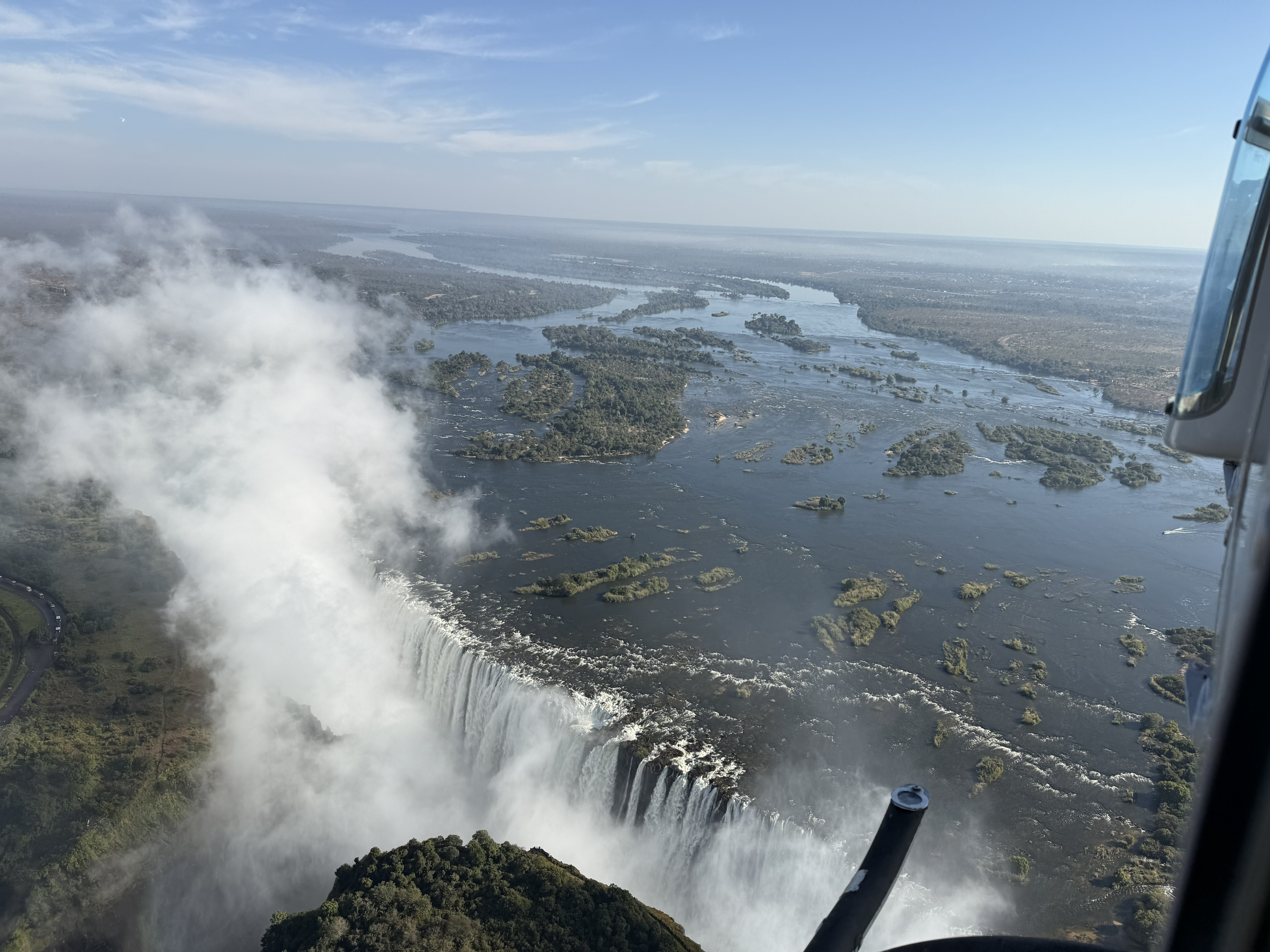
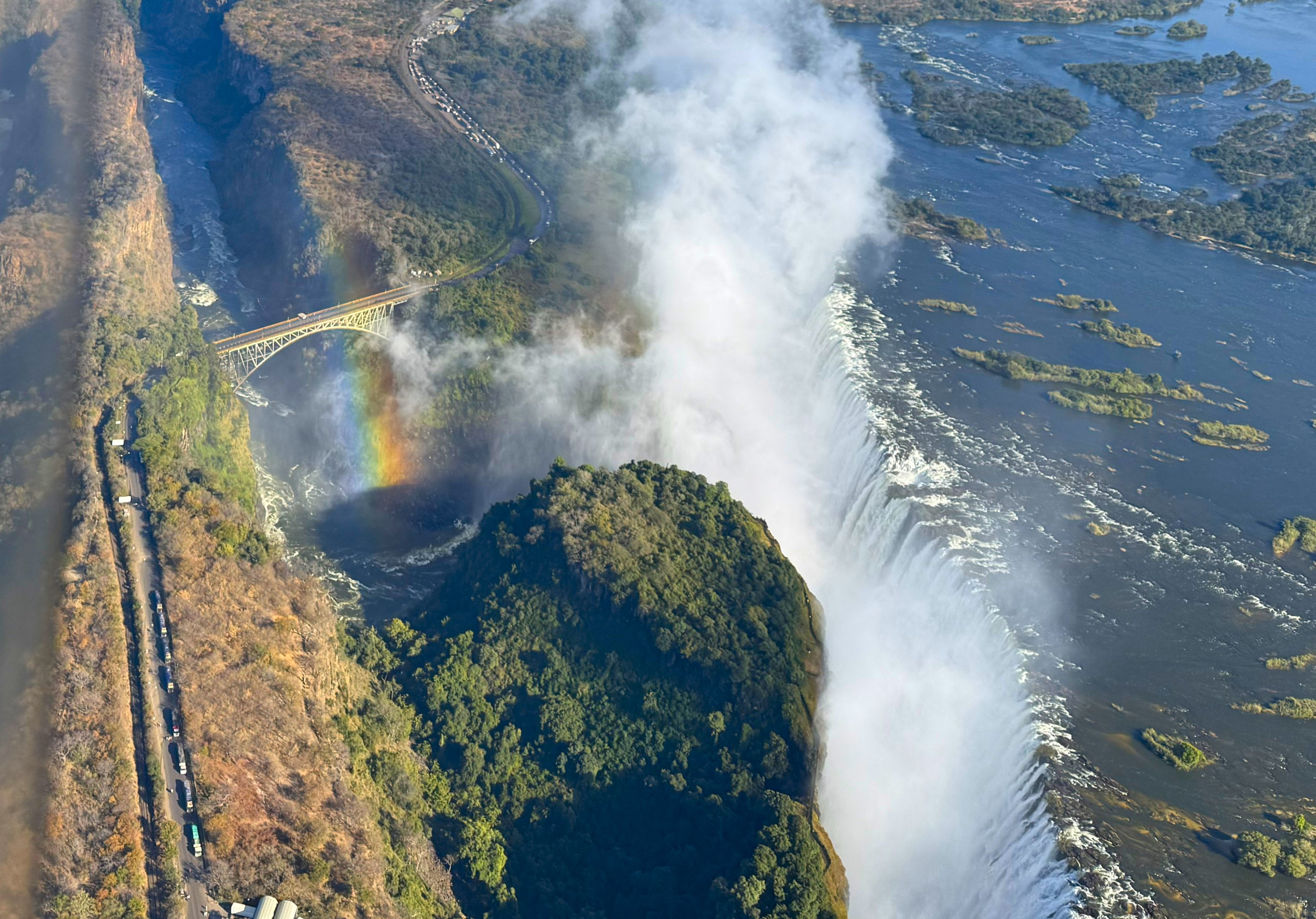
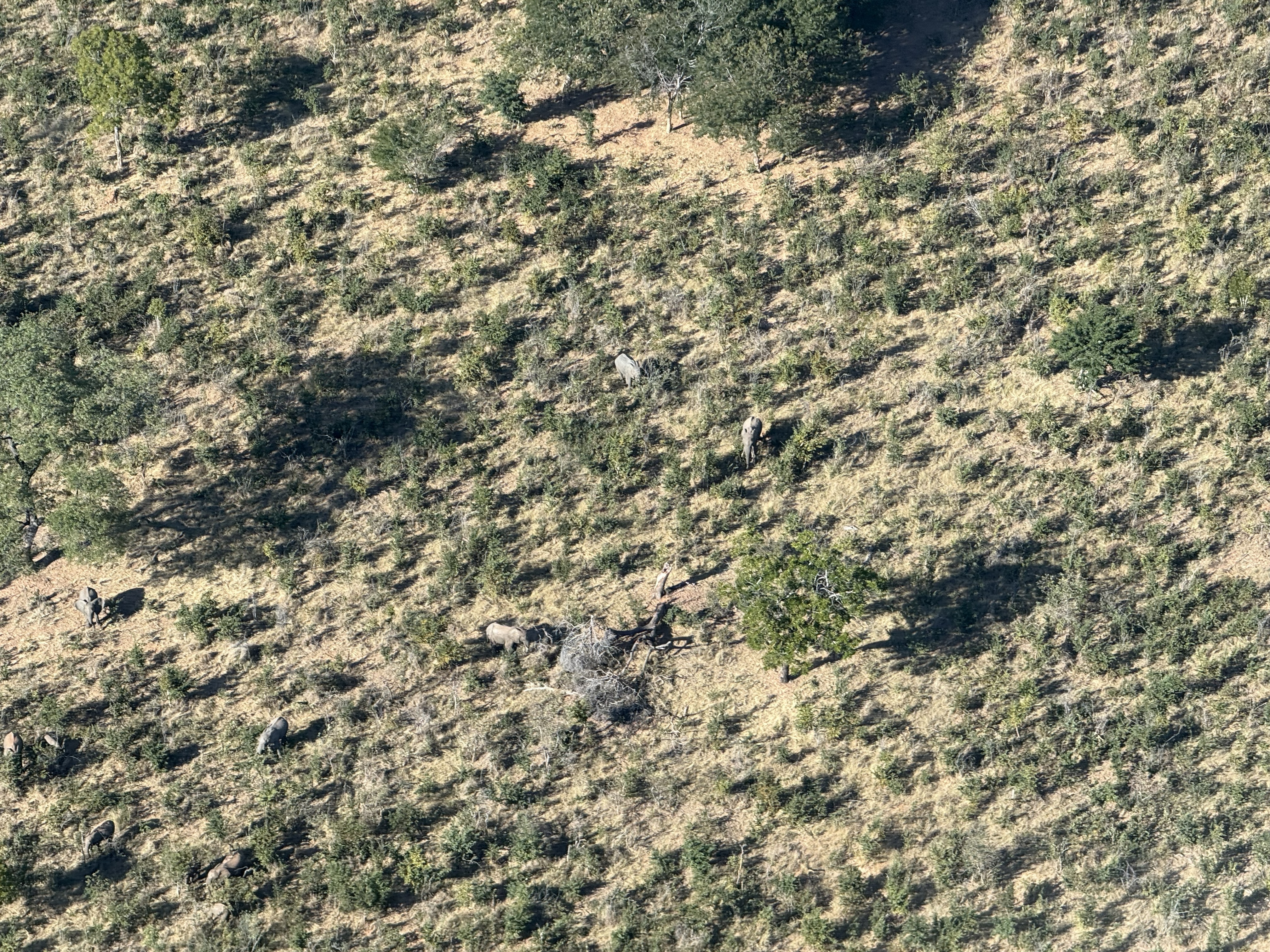
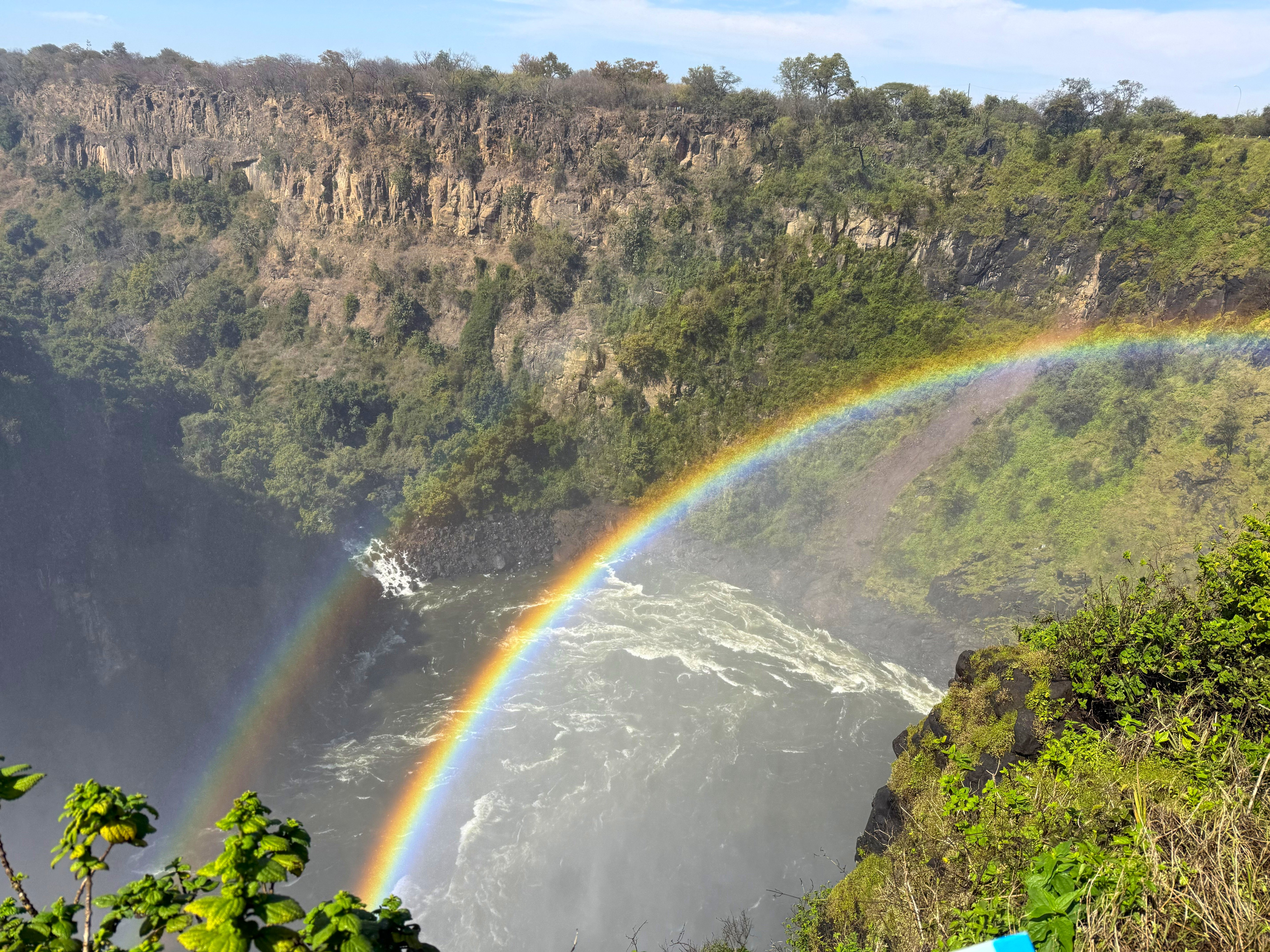
And from up there the rainbows are different. On the ground a rainbow stands up in front of you; from the air it lies flat across the gorge, a complete band of color pooled in the spray below the aircraft, and you look down into it. I did not know a rainbow could be looked down into. Nobody tells you that.
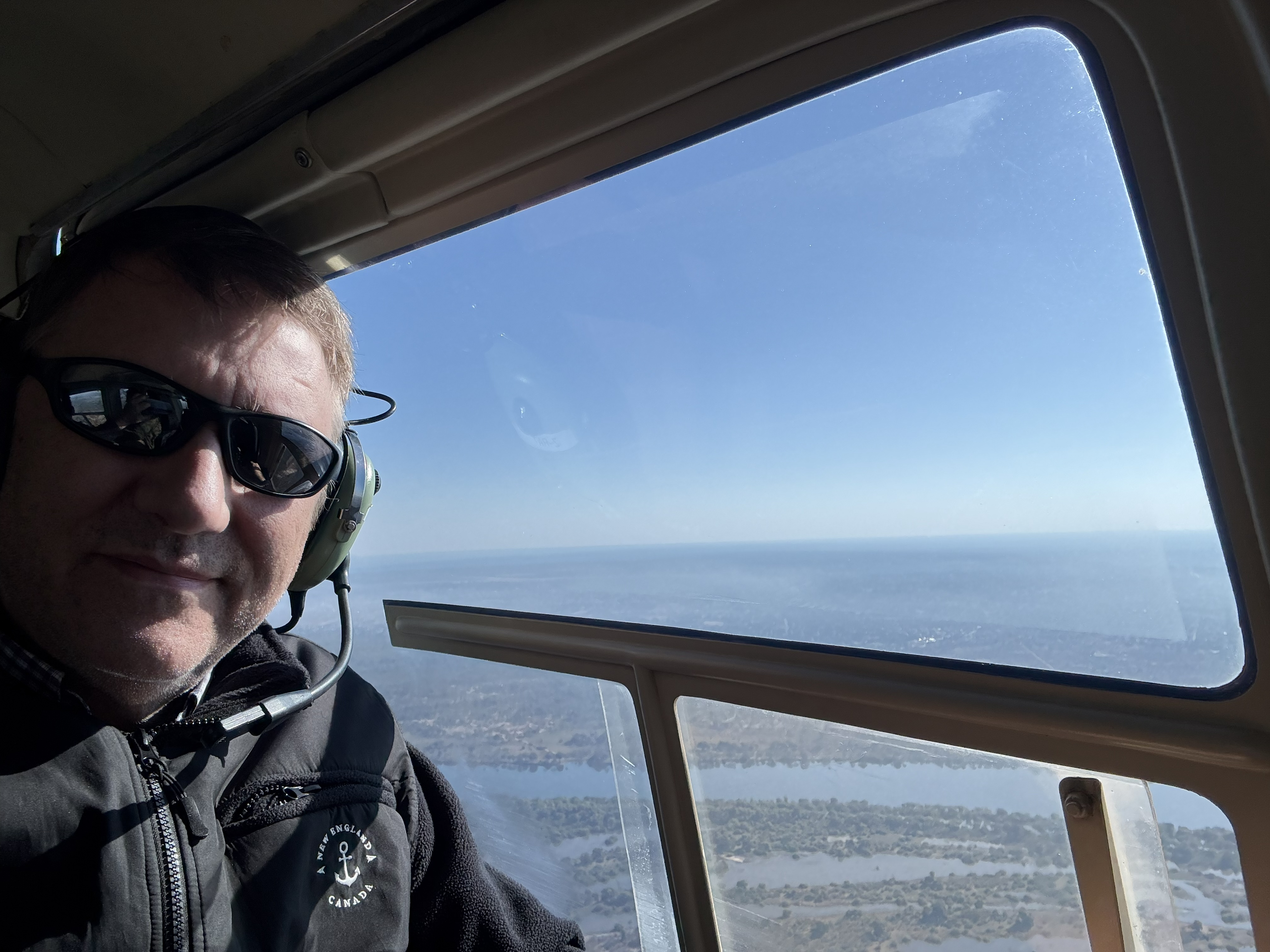
From the air you can finally read the thing whole: the Zambezi spreading into islands and then dropping, all at once, more than three hundred feet into a chasm barely wider than the river; the Victoria Falls Bridge stitching Zimbabwe to Zambia across the First Gorge; the gorges downstream zigzagging away where the water has spent the last hundred thousand years cutting backward through the rock. You cannot get any of that from the trails. You have to leave the ground.
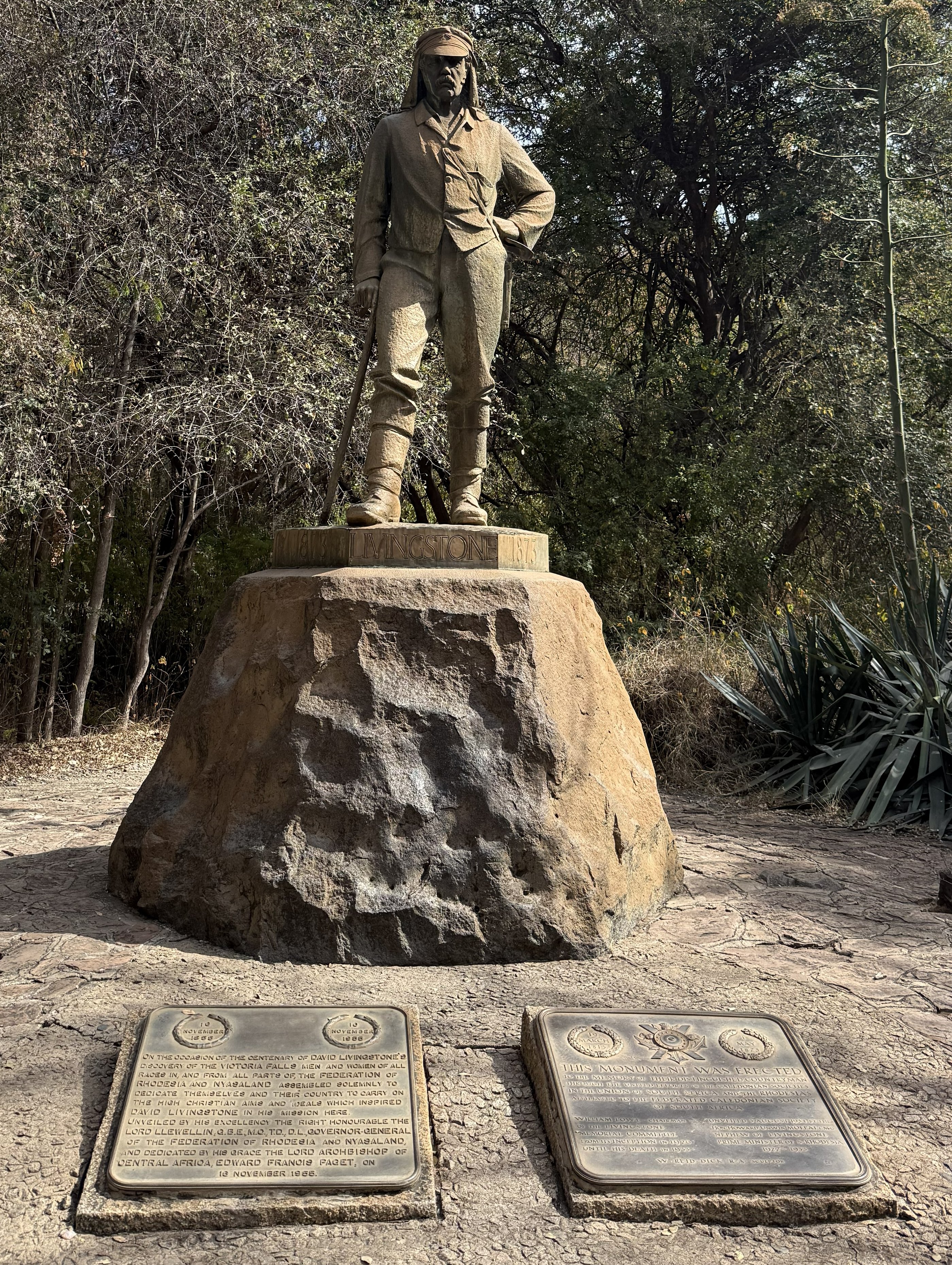
Scenes so lovely must have been gazed upon by angels in their flight.
David Livingstone, 1855, who had not even seen it from up here
The Walking Tour
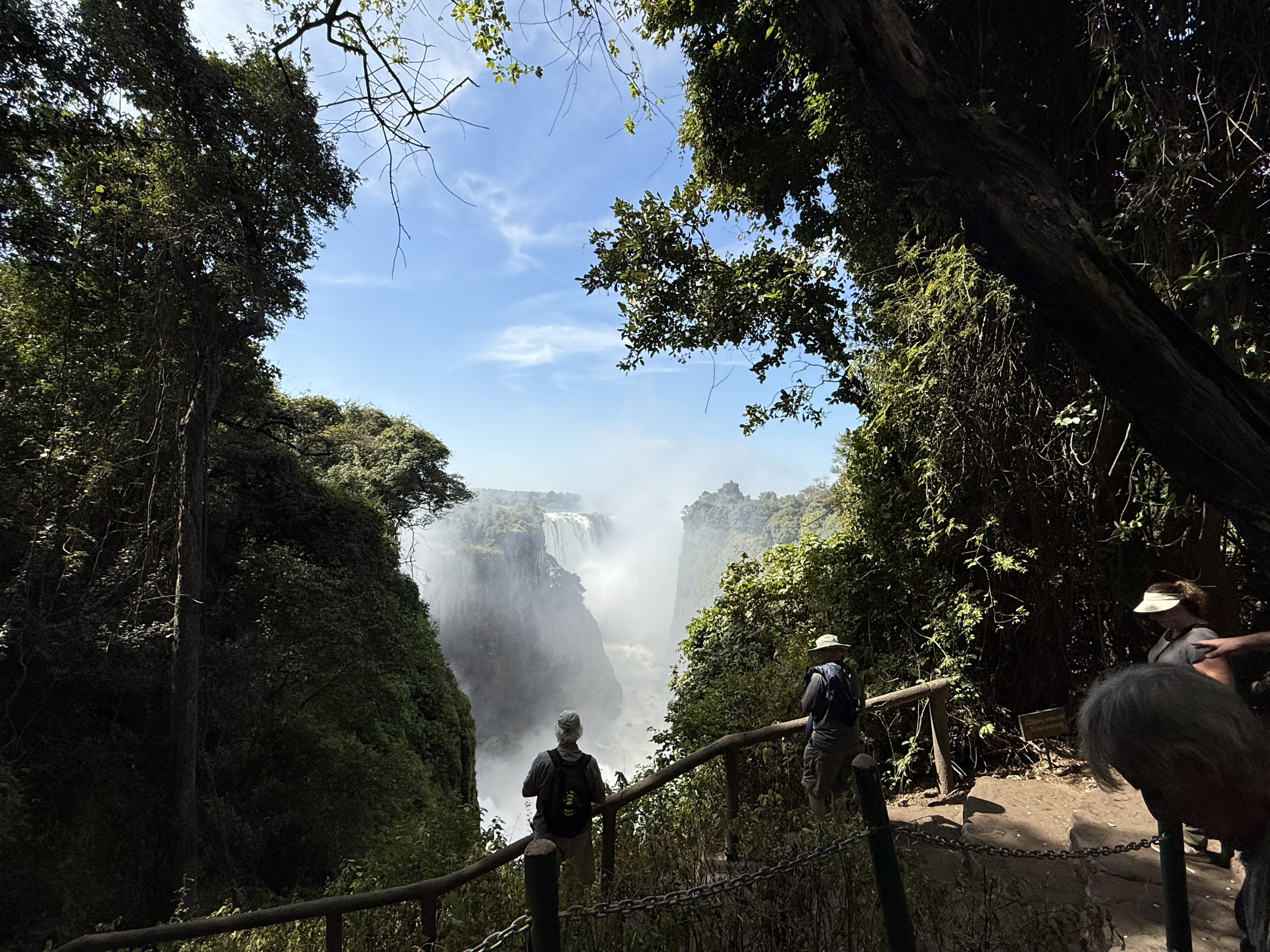
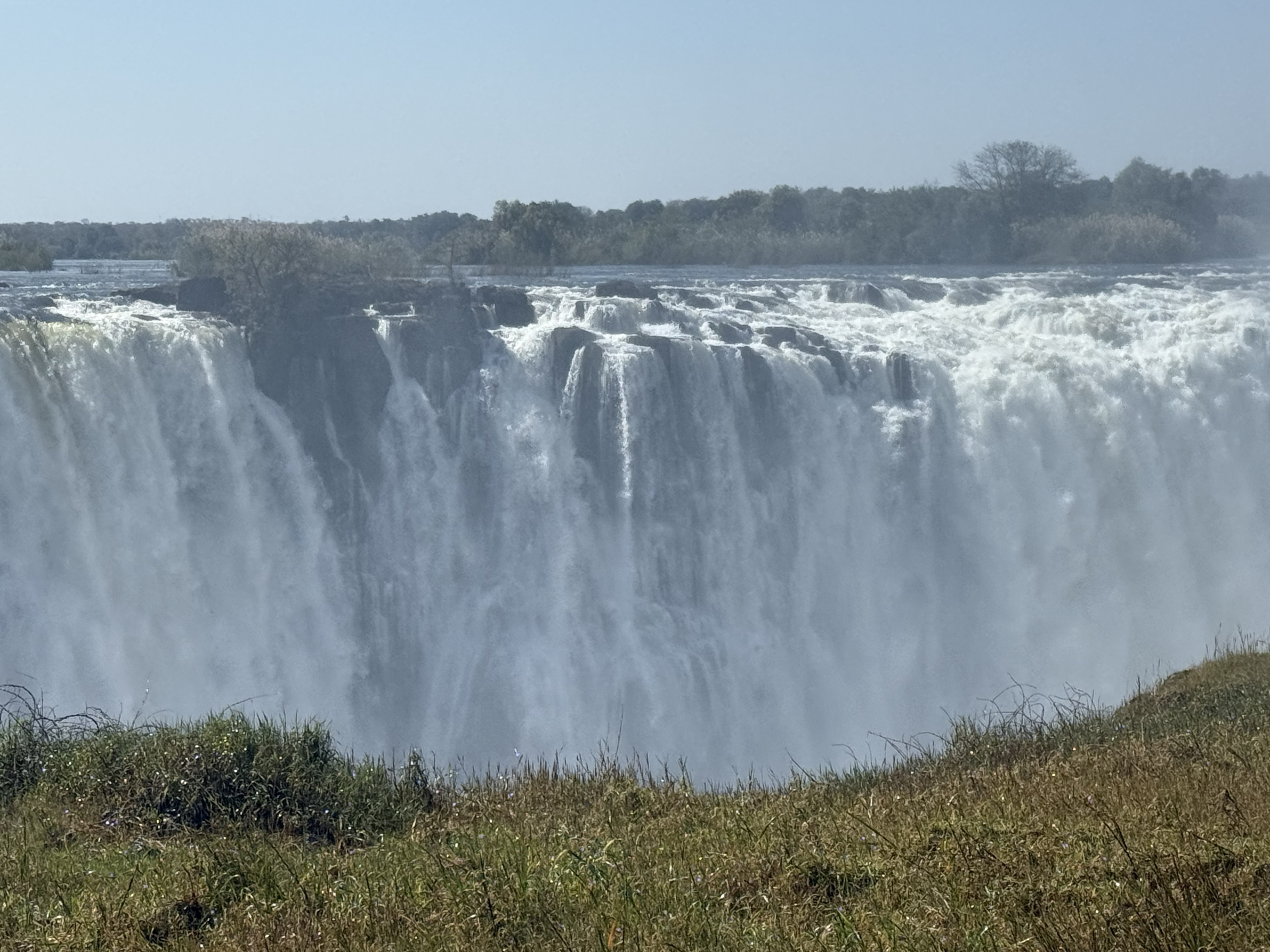
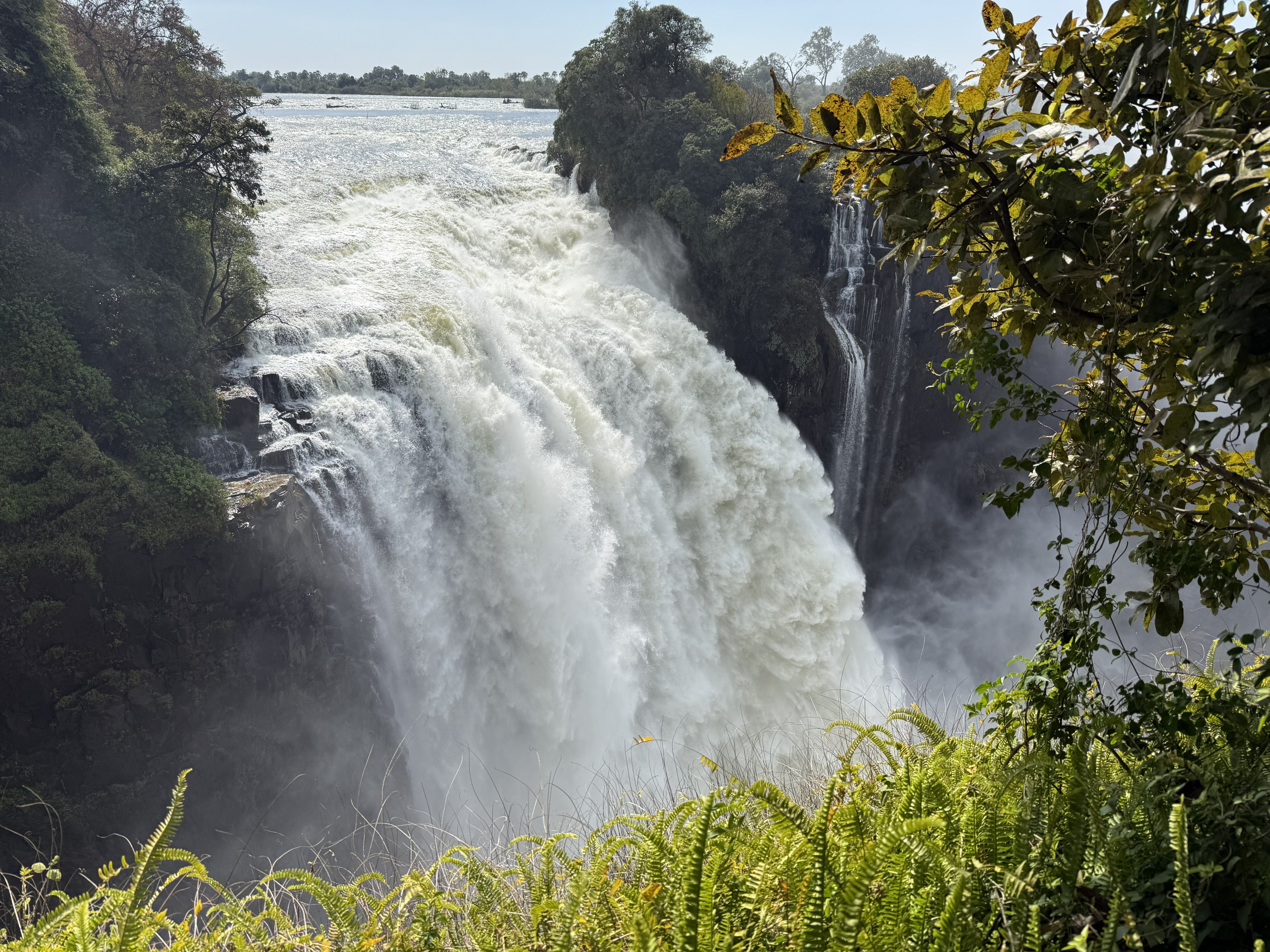
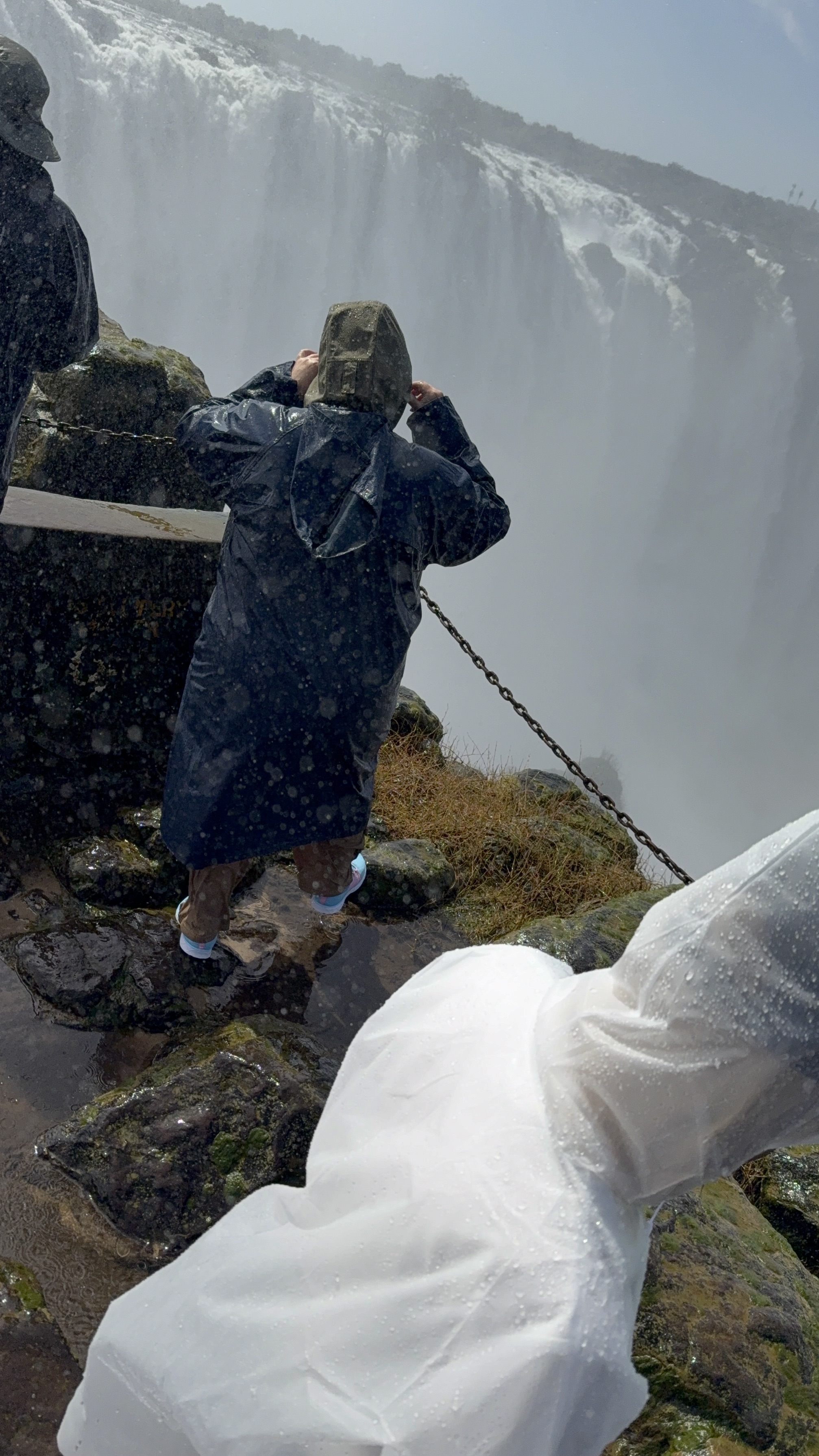
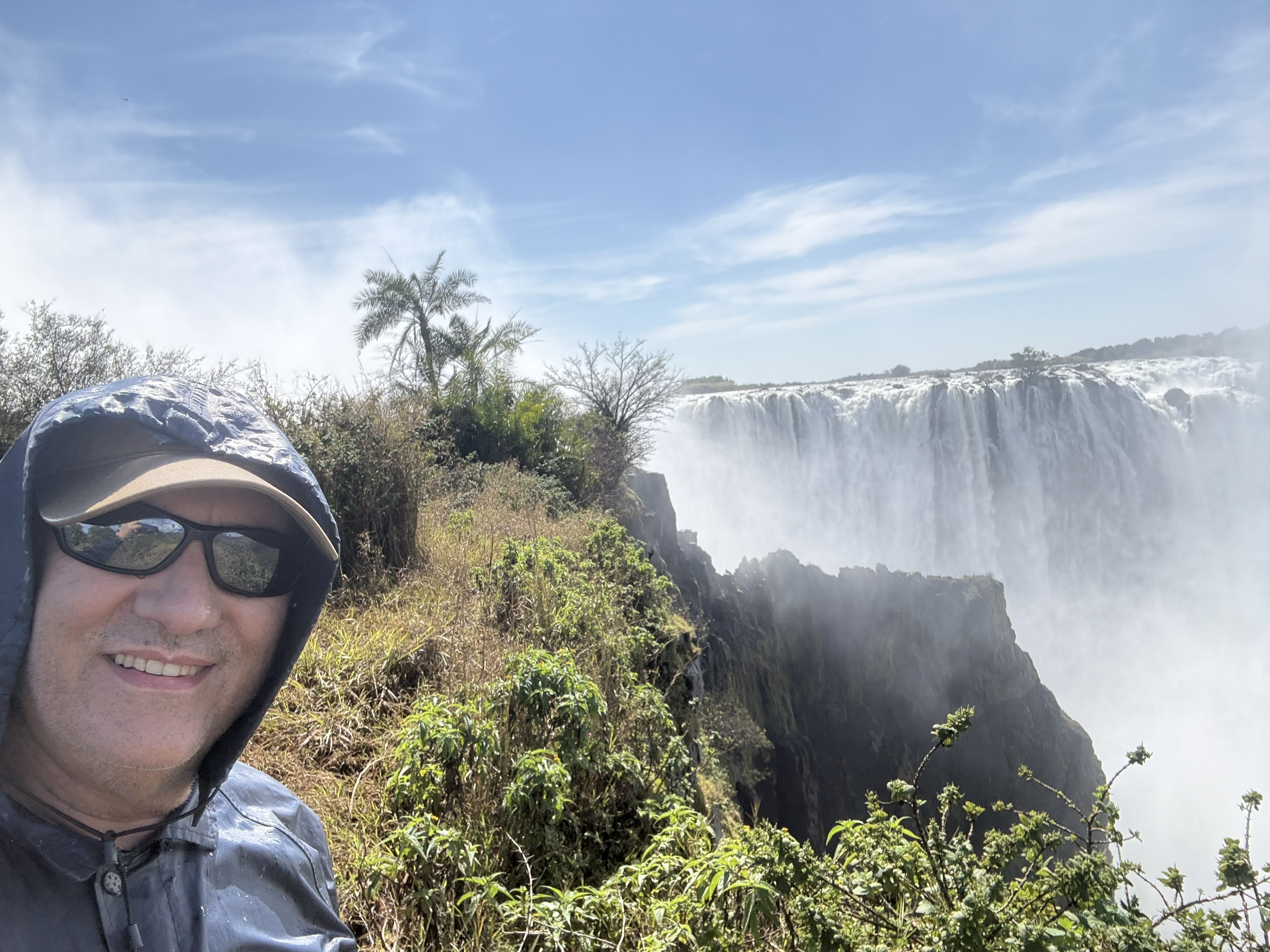
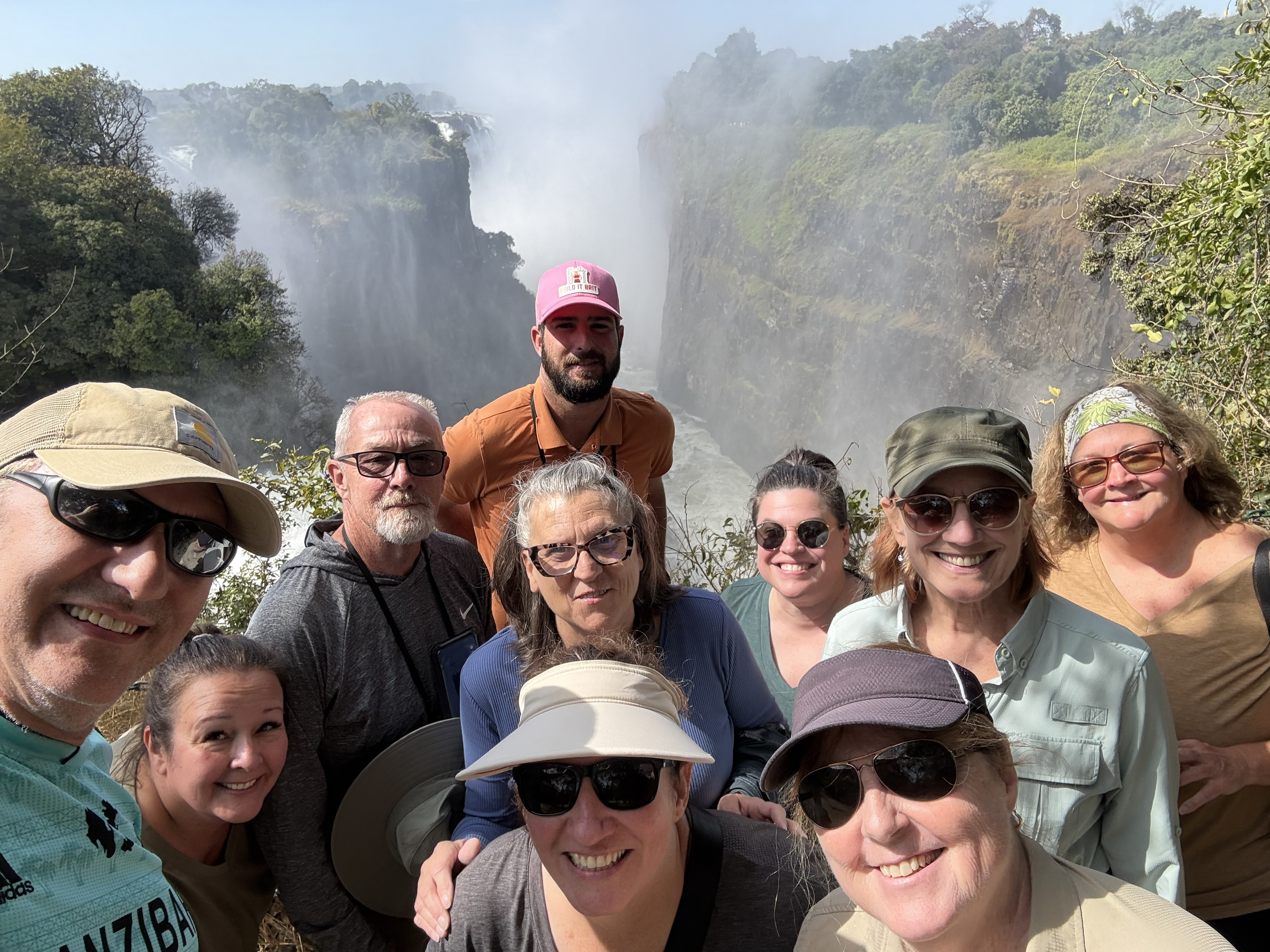
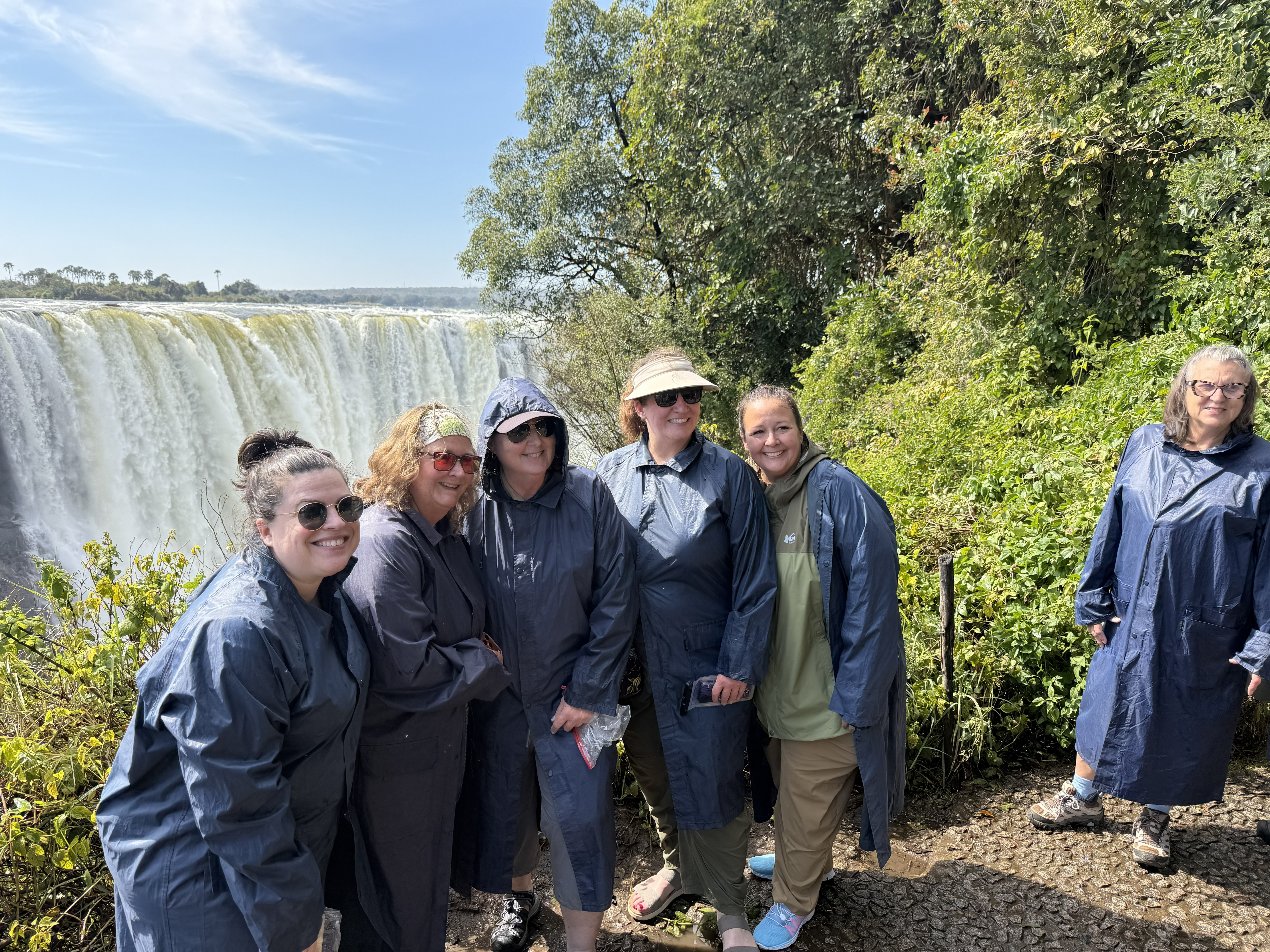
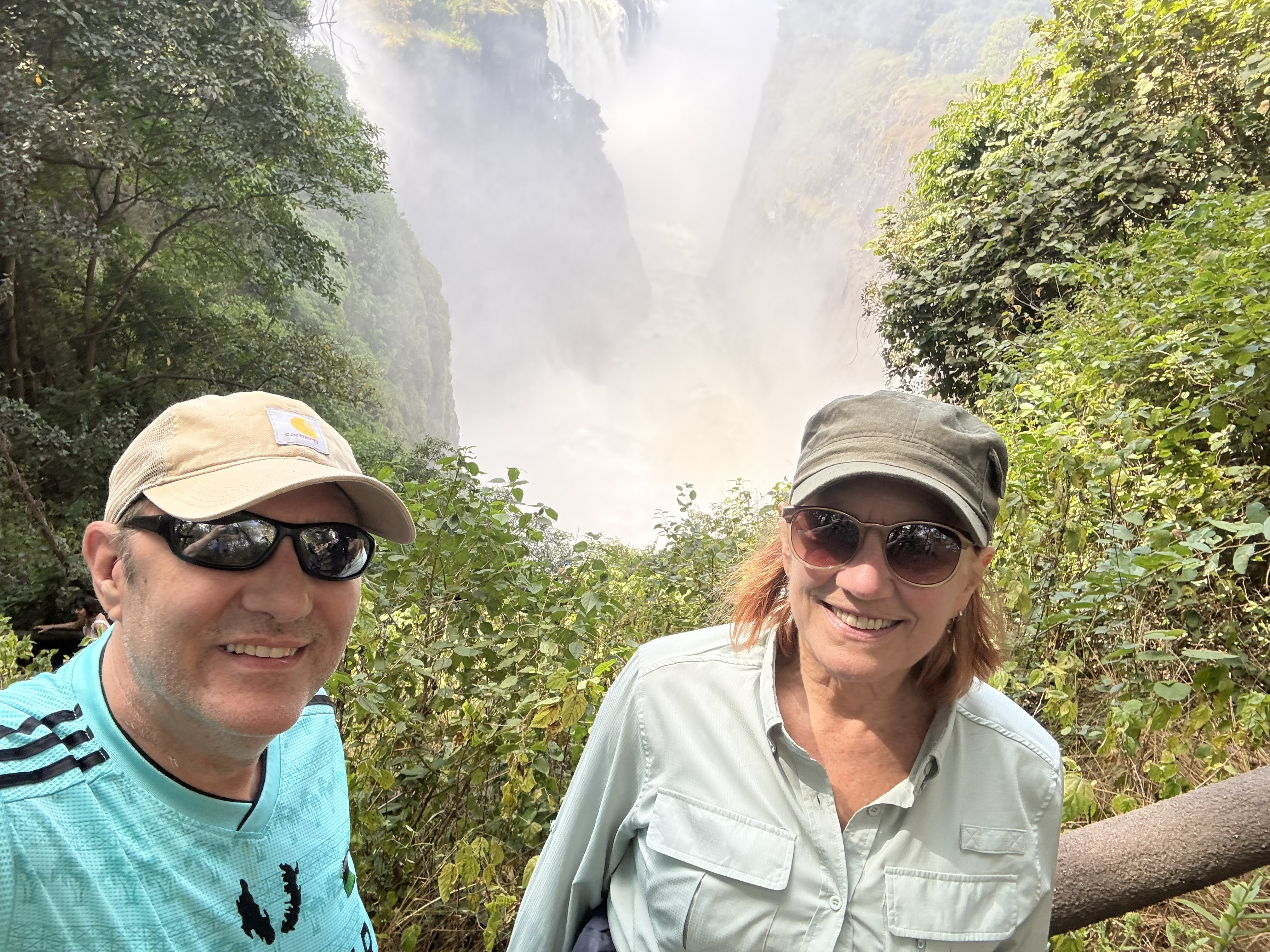
And then we did it the other way — on foot, along the rim, which is the exact opposite experience and just as necessary. From the air you see the falls. On the ground you feel them. The walking trails run right along the lip of the gorge, directly across from the falling water, and the spray comes across the chasm and lands on you like rain — warm, constant, soaking, so that by the end everybody is wet through and grinning about it. You do not photograph the falls from here so much as get weather from them.
The Rescue
On the way back the tour stopped at a wildlife rescue center, and it turned out to be one of the quiet highlights of the day.
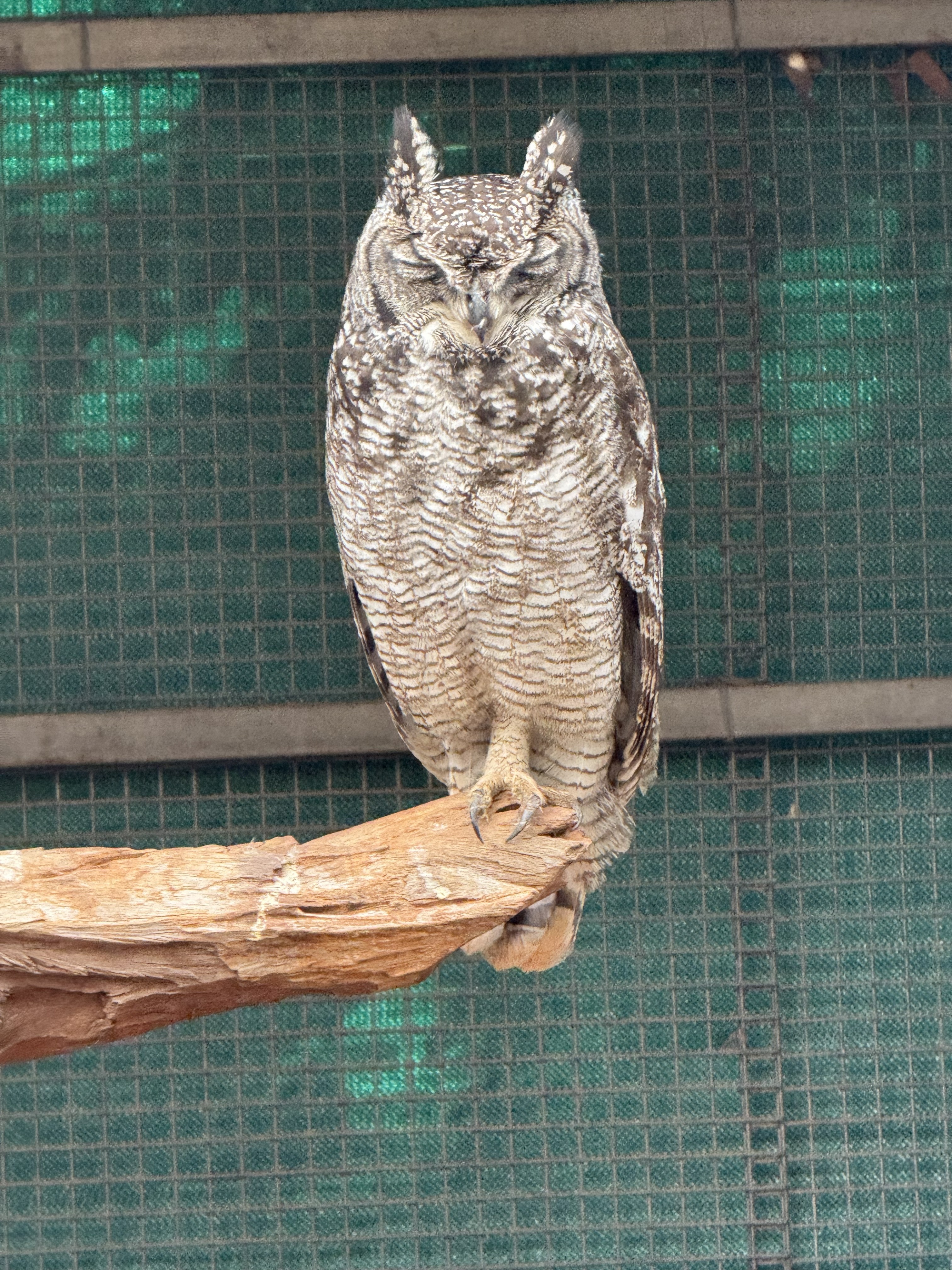
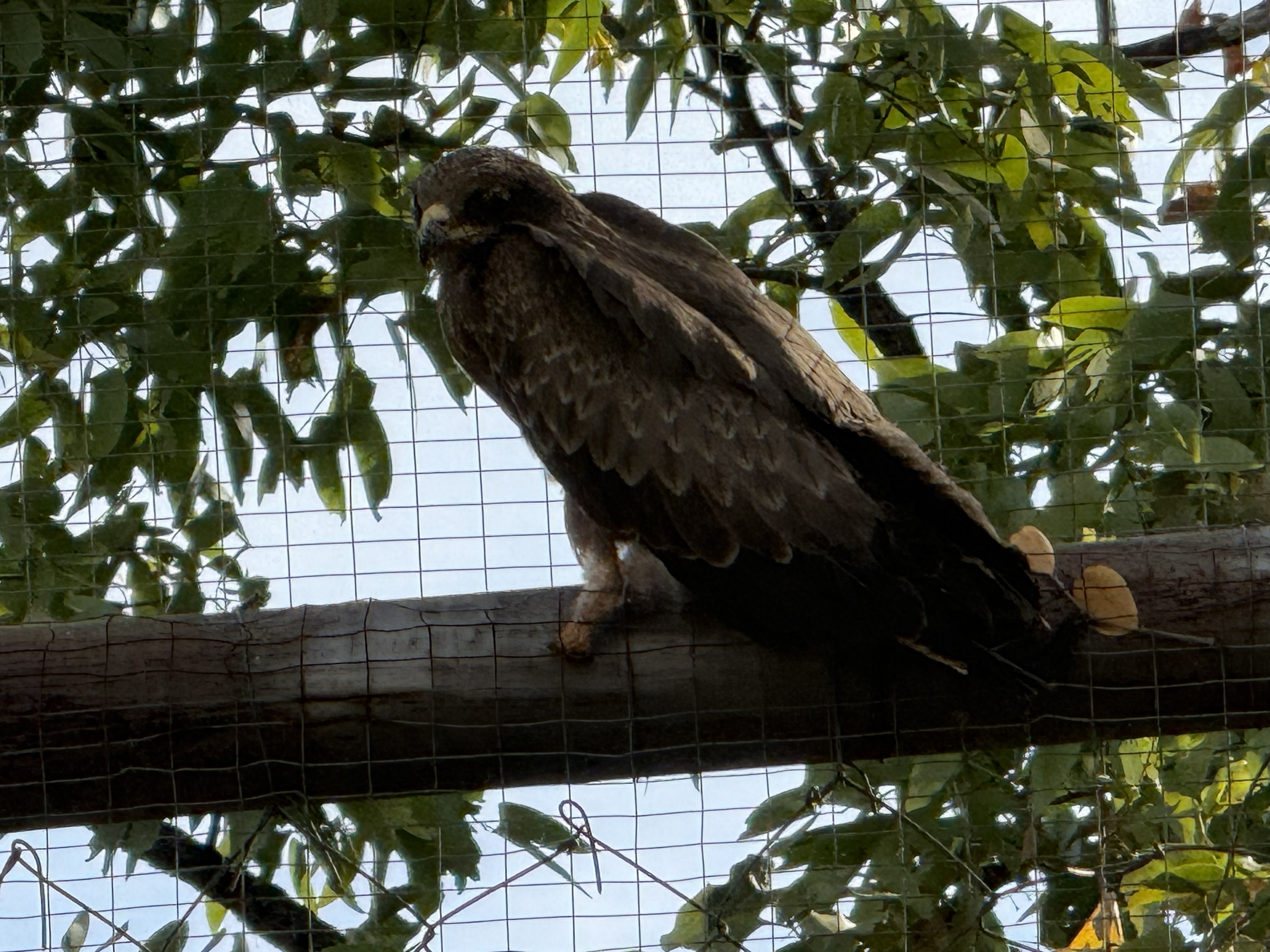
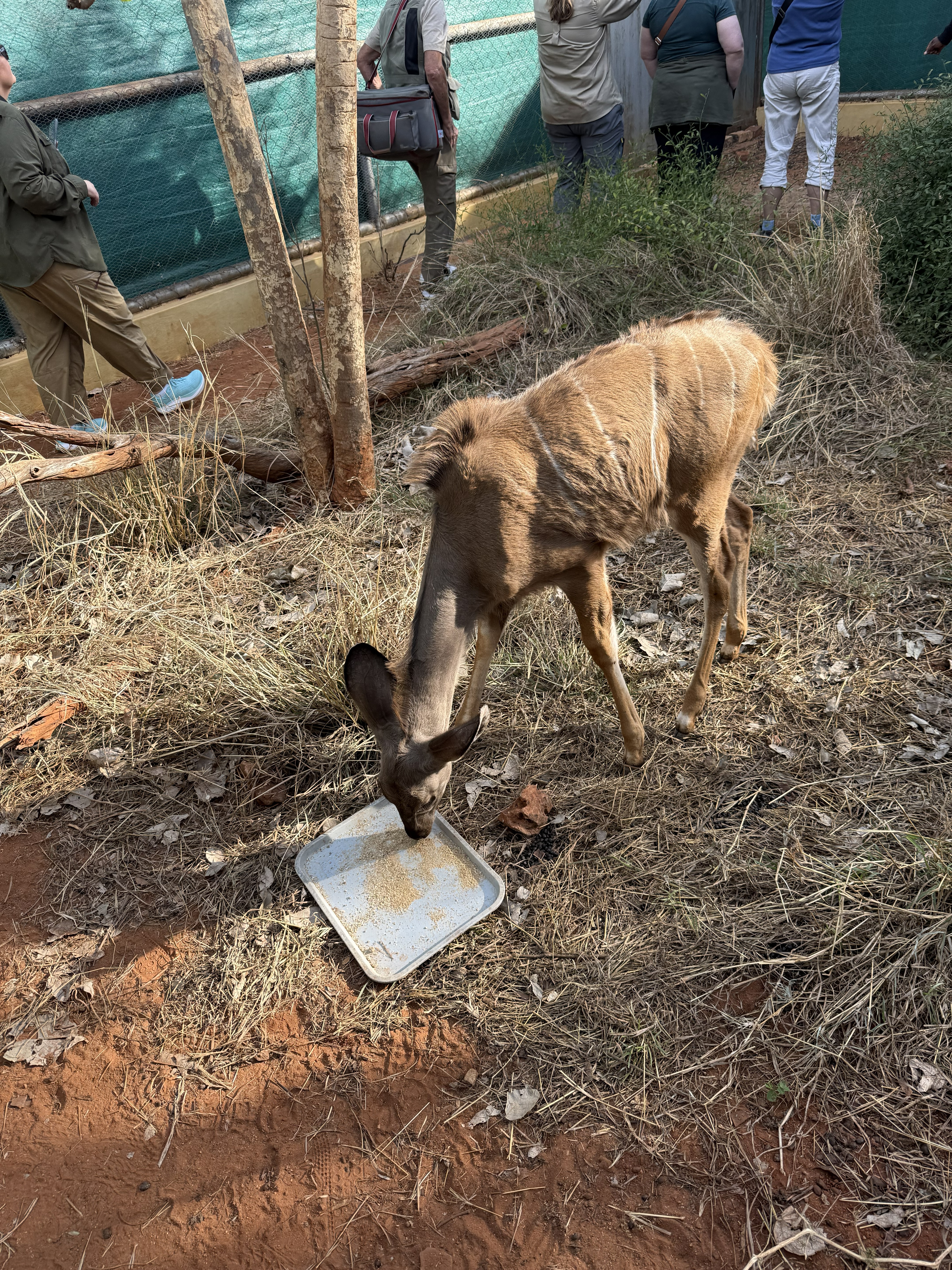
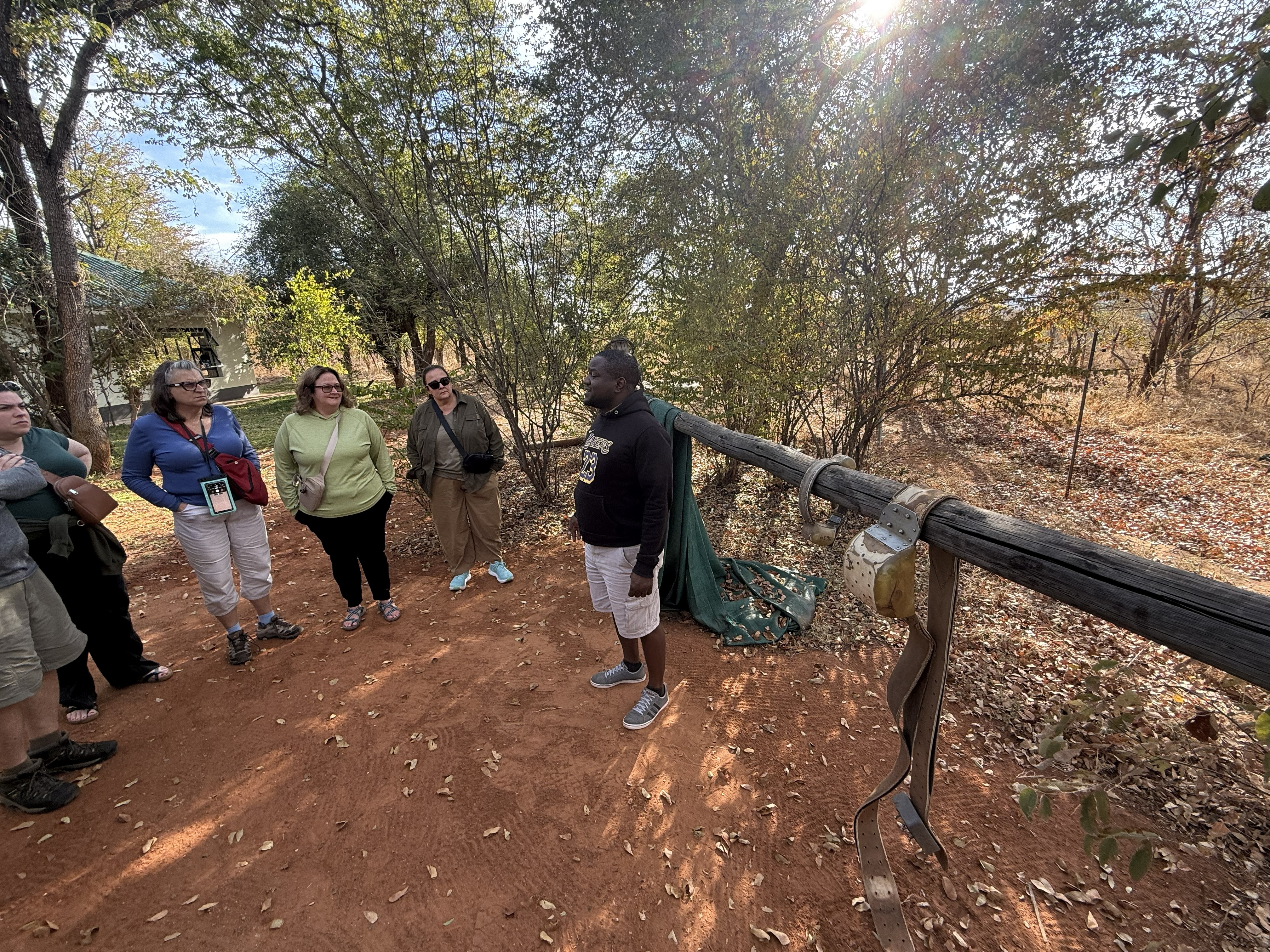
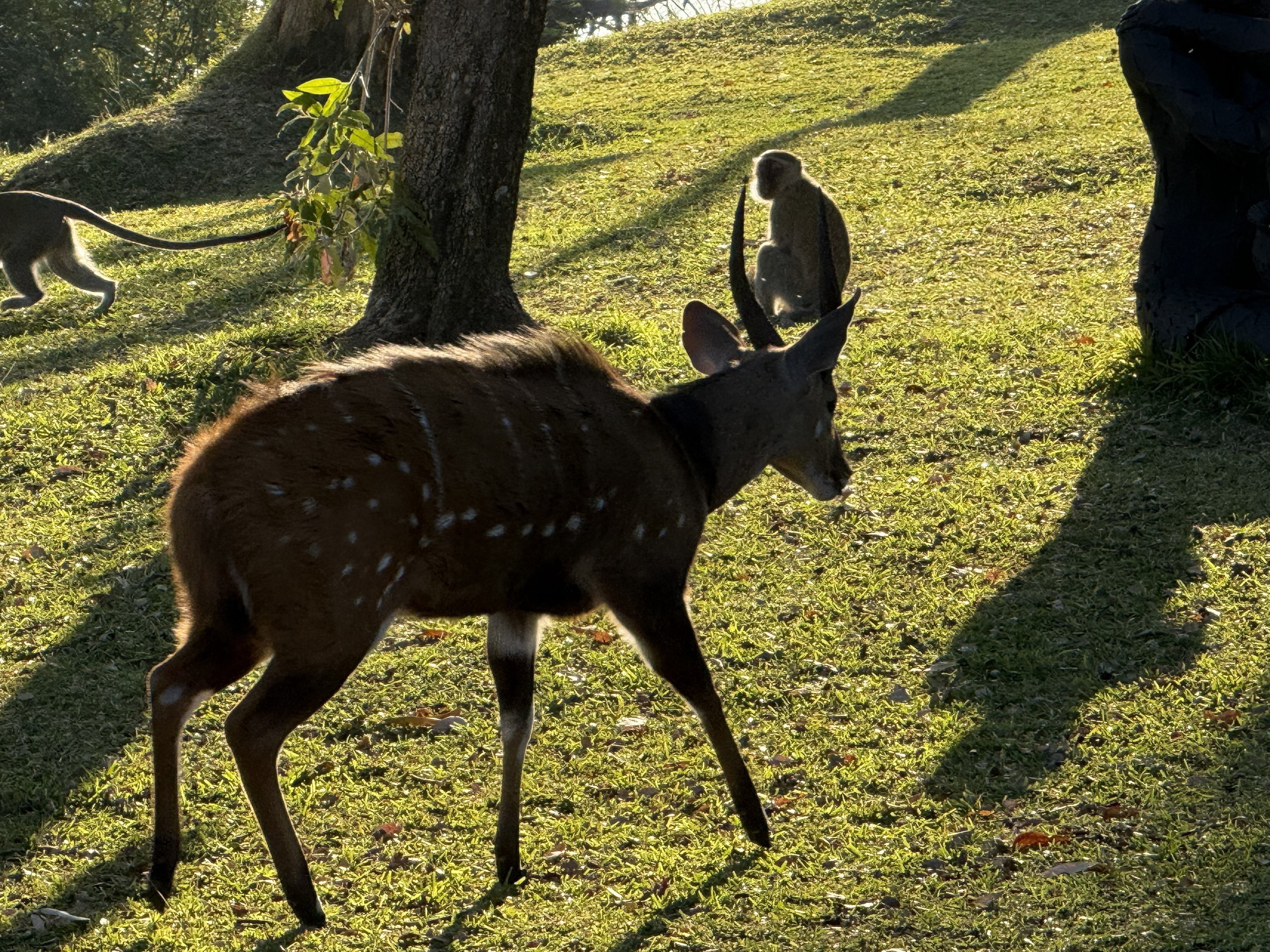
These places do the unglamorous back half of conservation: the orphaned, the injured, the confiscated. A young kudu whose mother is gone; a bird that cannot be released; the animals that fall out of the system and would simply die without somewhere like this. It is not the safari. It is what makes the safari possible, it does not photograph like the falls, and it mattered more than most of what did.
The End of It
It was, in one day, a helicopter over one of the seven natural wonders of the world; a walk close enough to that same wonder to be rained on by it; and a quiet hour with the animals nobody puts on a brochure. You do not get many days like that.