If yesterday was arrival, today was the reason you come. It began with a death and ended with a cake, and in between it delivered more of Africa than any single day has the right to. I will try to take it in order.
The Carcass
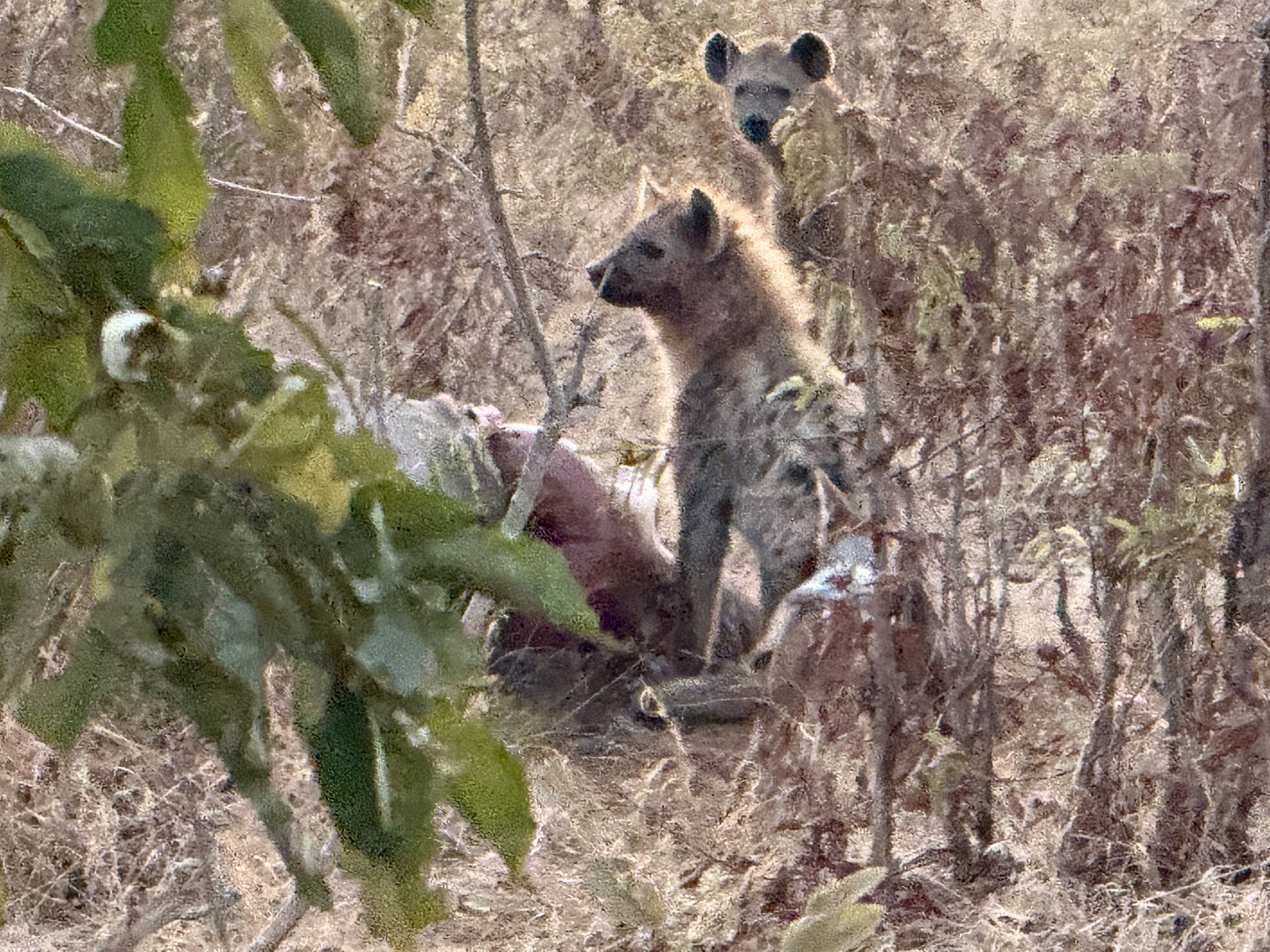
We had not been out long when Nature slowed the truck. Ahead, in the gray half-light, was a dead elephant — an enormous gray collapse of an animal, unmistakable even at distance — and working at it already was a spotted hyena. Nobody knew what had killed it. Nature guessed disease; it might have been age, or something in the water, or any of the quiet things that take even the largest animal on the plain. There was no wound to read, no story to tell. It had simply stopped, and the plain had already begun the business of taking it back.
The morning's first sight: a spotted hyena at the elephant carcass. Hyenas are usually cast as villains, but they are among the most efficient animals in Africa, and they are frequently first to a body — their hearing and their nose bring them in ahead of almost everything else.
It is a strange thing to open a day on. An elephant is the animal the whole safari orbits, the one we had photographed a hundred times and stopped quite being moved by, and here was one reduced to a meal. But there is nothing cruel in it. On this plain nothing is wasted, and over the next few hours we would watch the proof of that — the carcass passing, hour by hour, from one set of mouths to the next.
The Morning
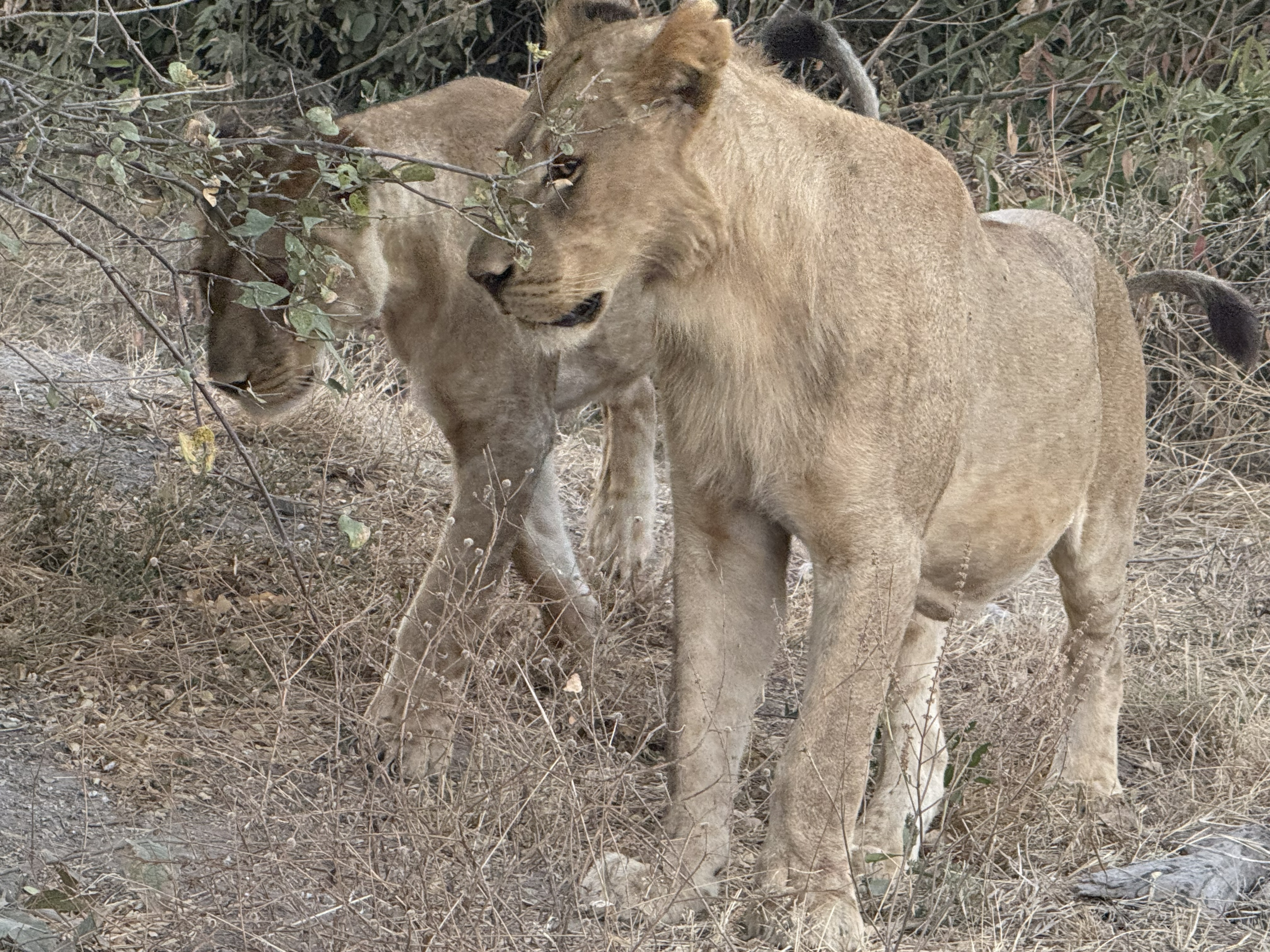
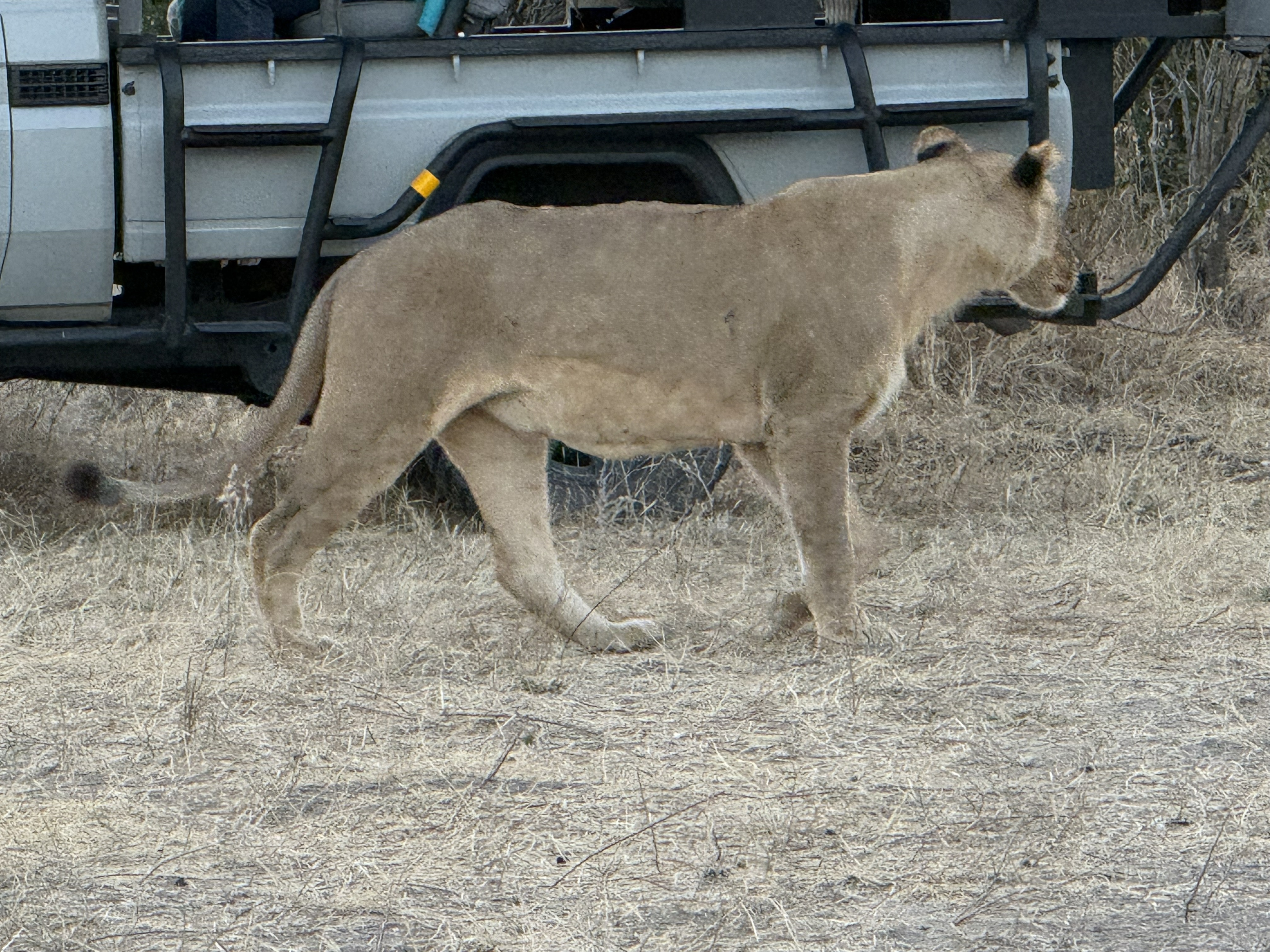
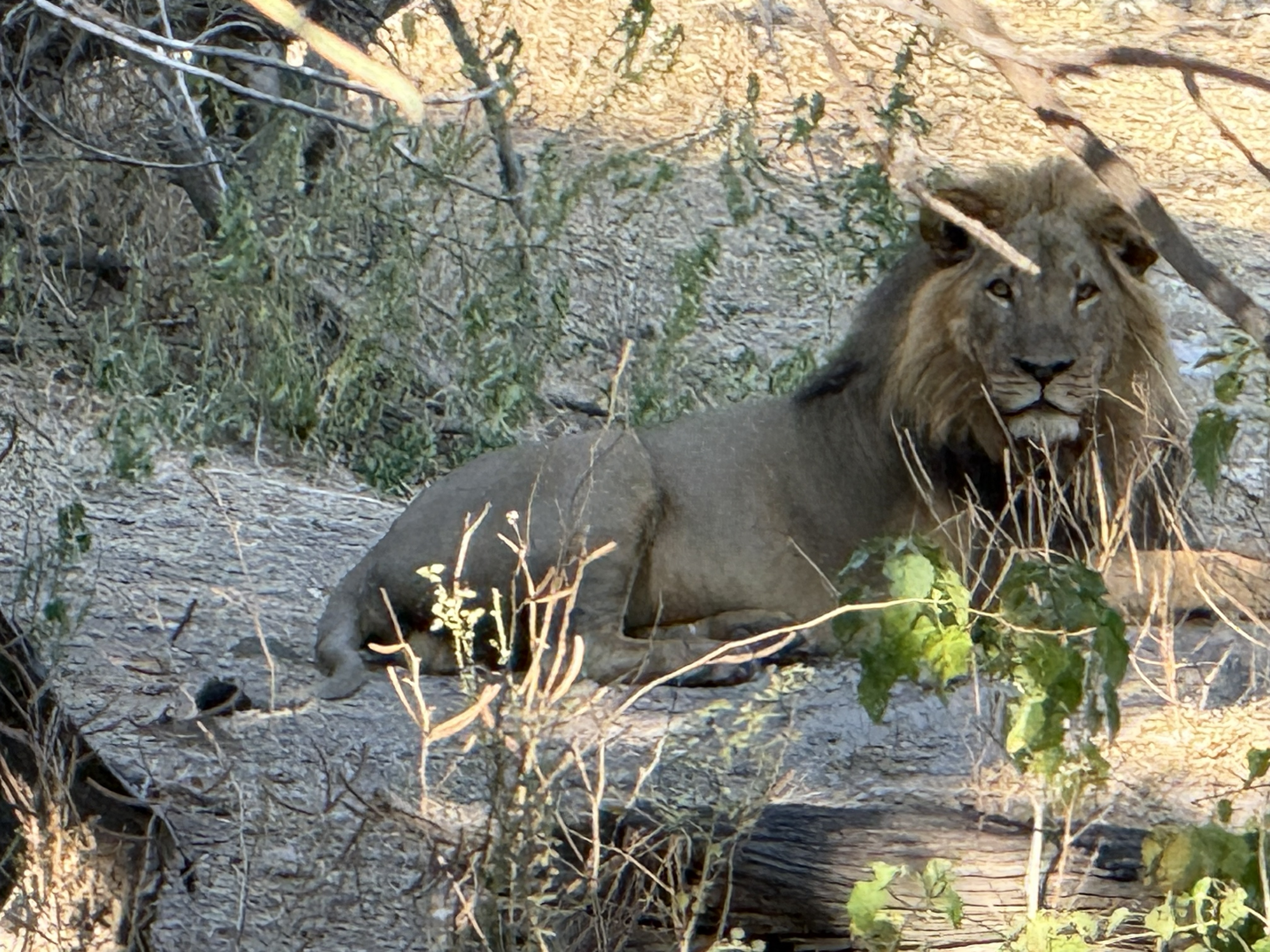
First, though, Chobe simply opened its hands and poured. We had barely left the carcass when we found lions — unbothered, well fed, and doing nothing at all.
Two lions, close and easy with each other in the early light.And one strolling past the truck without so much as a glance — the particular insult of a predator who has decided you are furniture.
And then the morning turned into a kind of catalogue, the sort of run of sightings you stop quite believing even as you are photographing it.
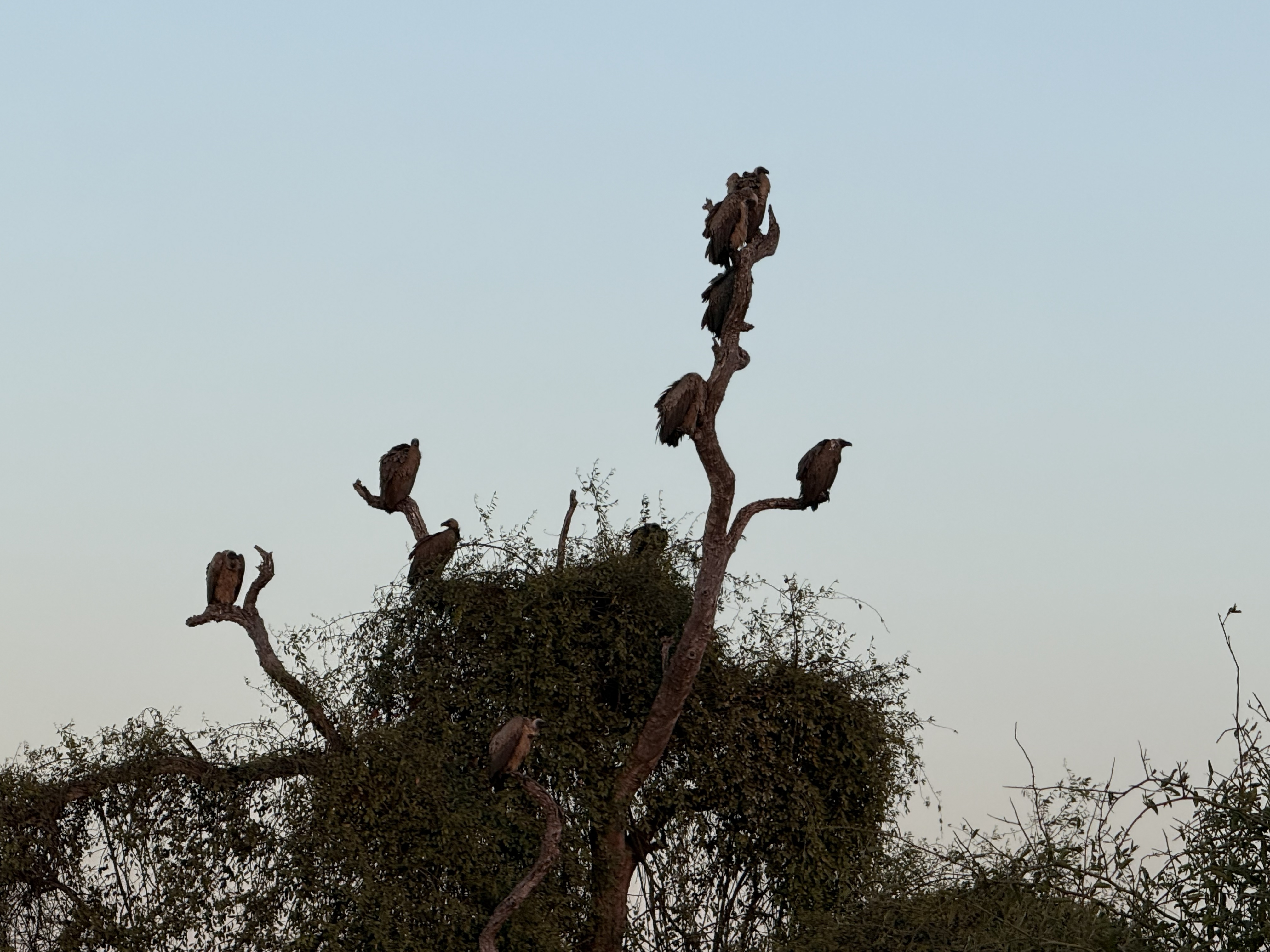
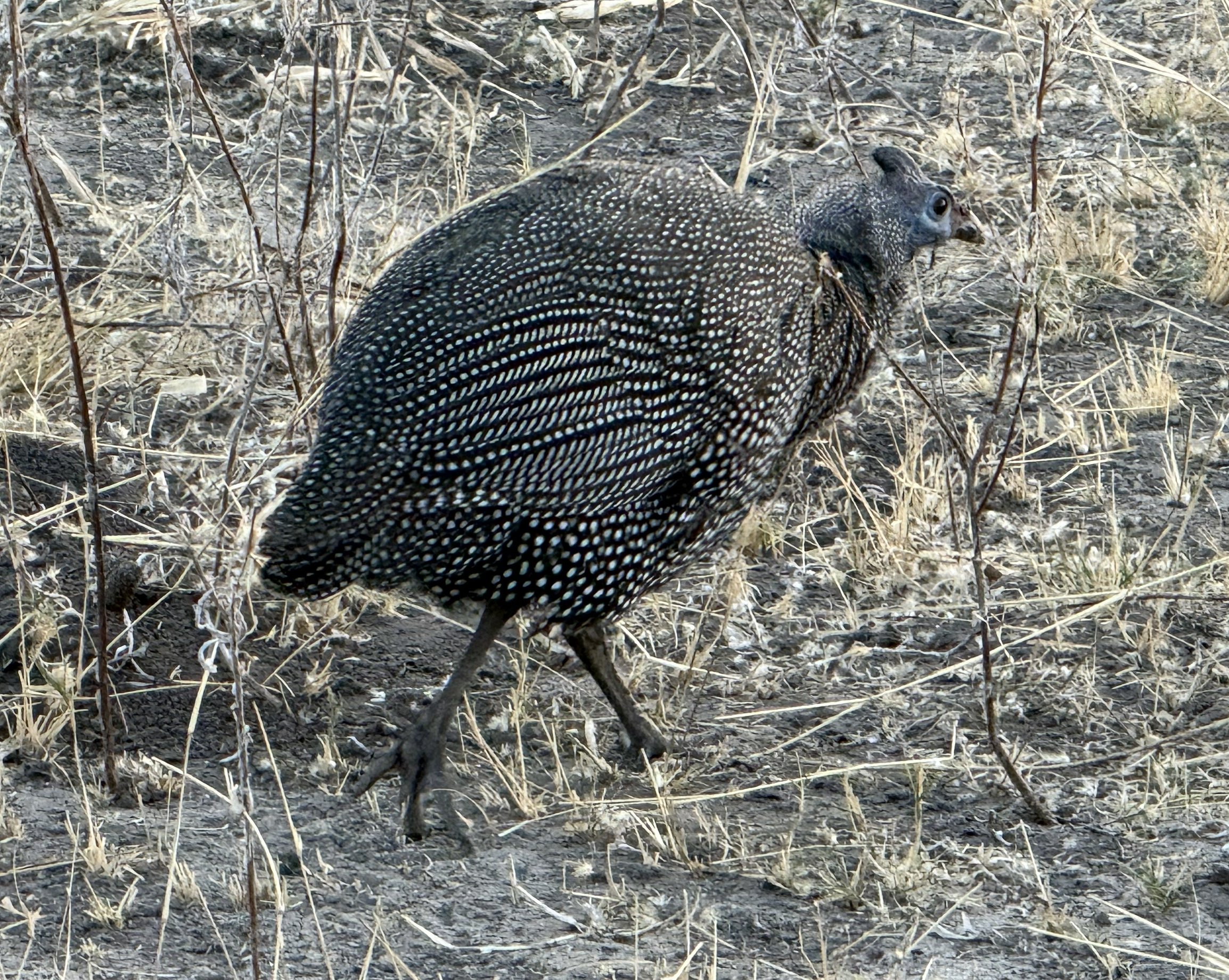
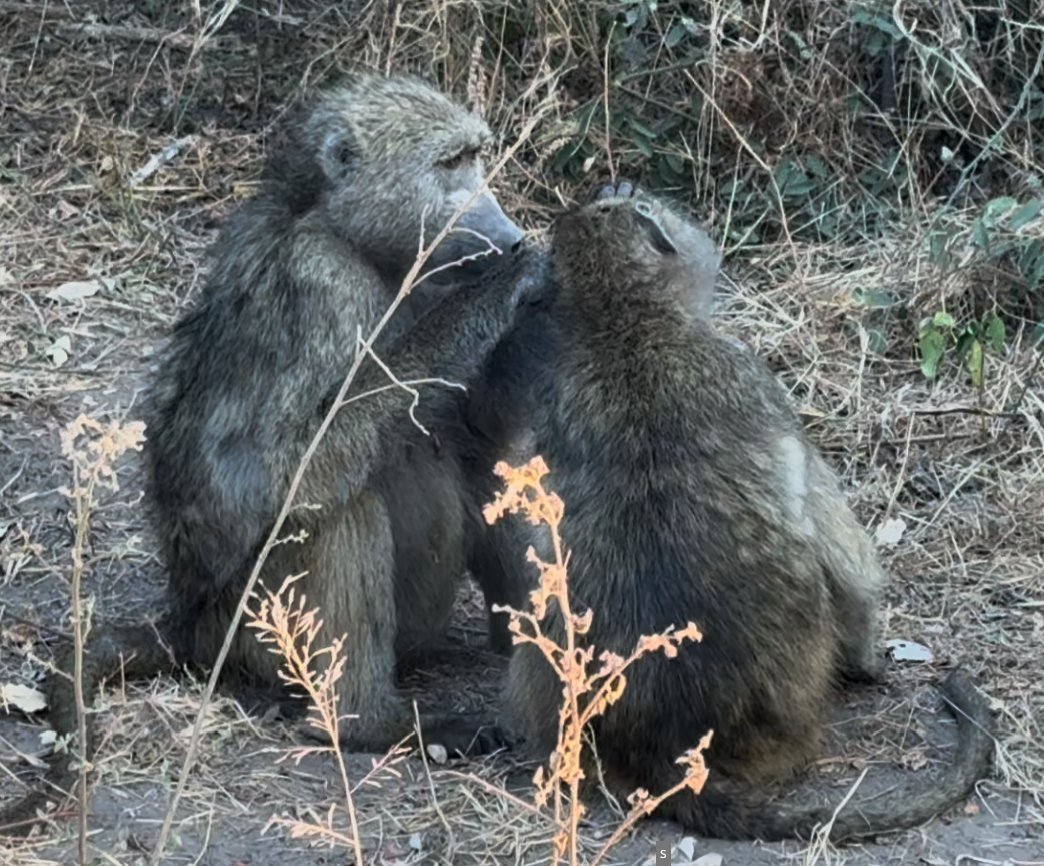
A bare tree hung with vultures, waiting on the day to warm enough for the thermals that let them soar without effort.Helmeted guineafowl, the polka-dotted committee of yesterday, reconvened.Baboons grooming — which is less about cleanliness than about politics; grooming is the currency that holds a troop together.
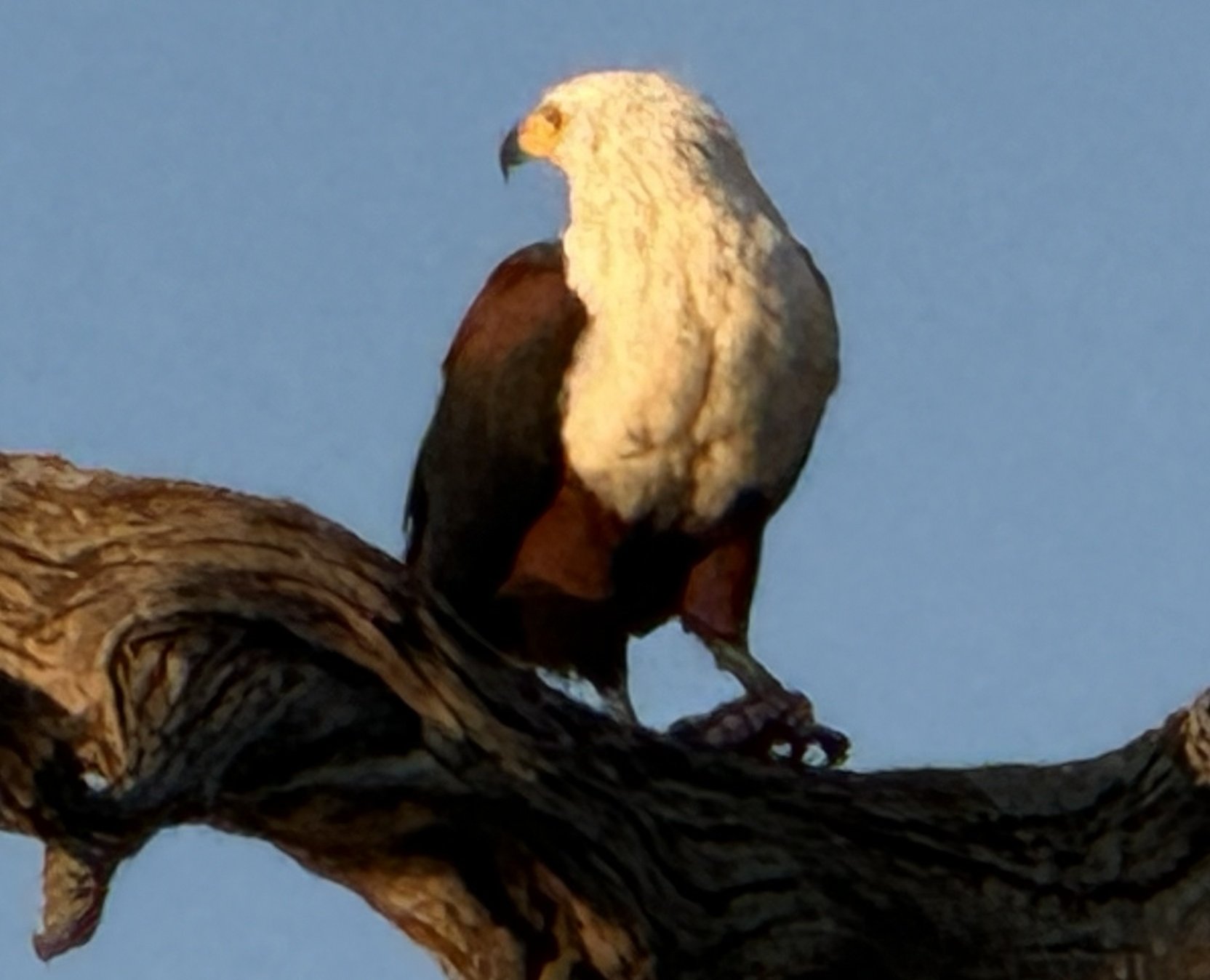
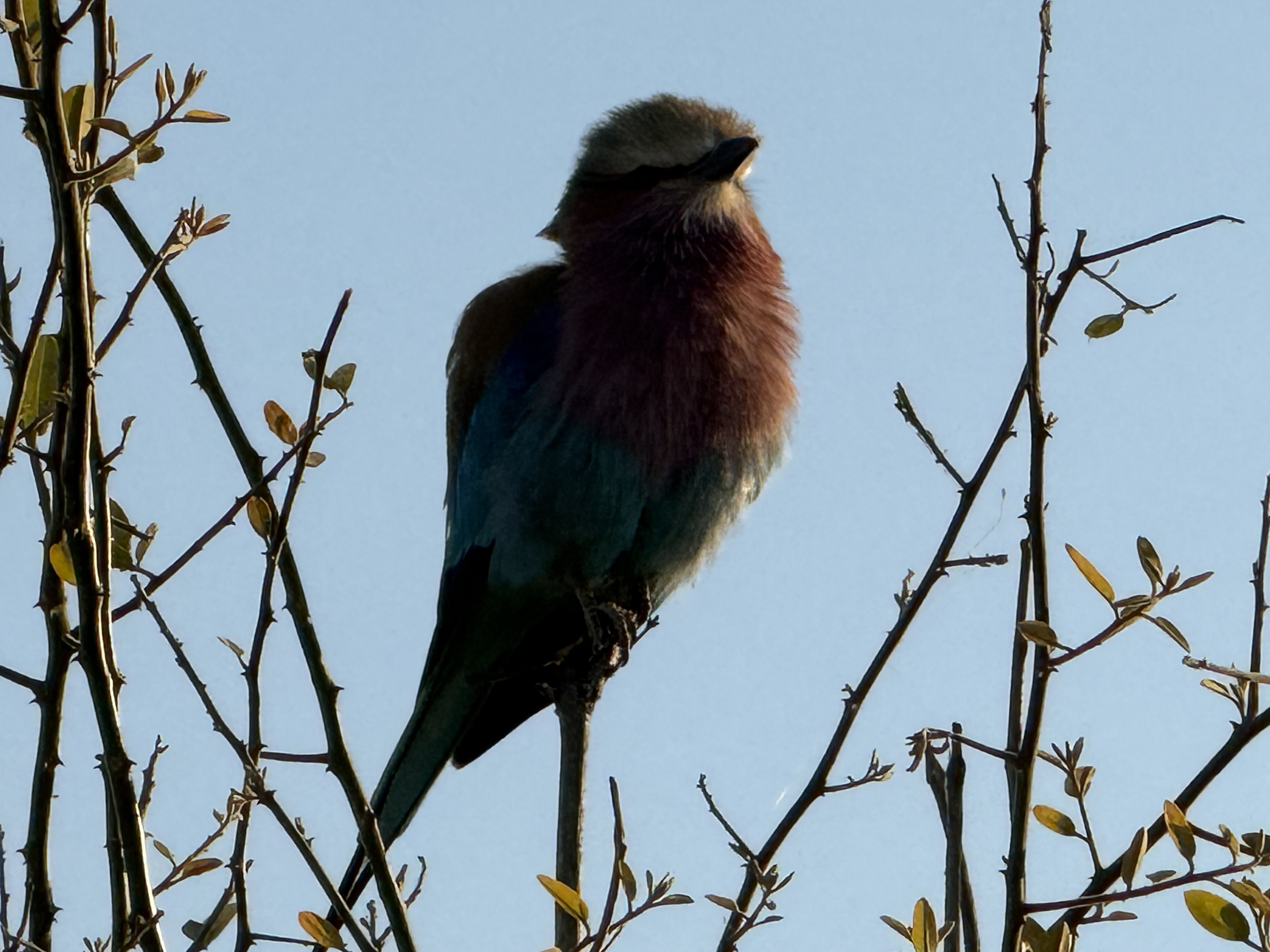
Two birds, though, stopped the truck outright. First a fish eagle, the sound and symbol of these rivers, and then the bird everyone waits for.
An African fish eagle on a bare branch over the water. Its call — a wild, ringing yelp thrown back with the whole head — is the sound people mean when they say “Africa.”A lilac-breasted roller, and there is simply no arguing with it. Lilac throat, turquoise belly, blue wings, cinnamon back — eight colors on one small bird. It is often called Botswana's unofficial national bird, and you can see why the country would want it.
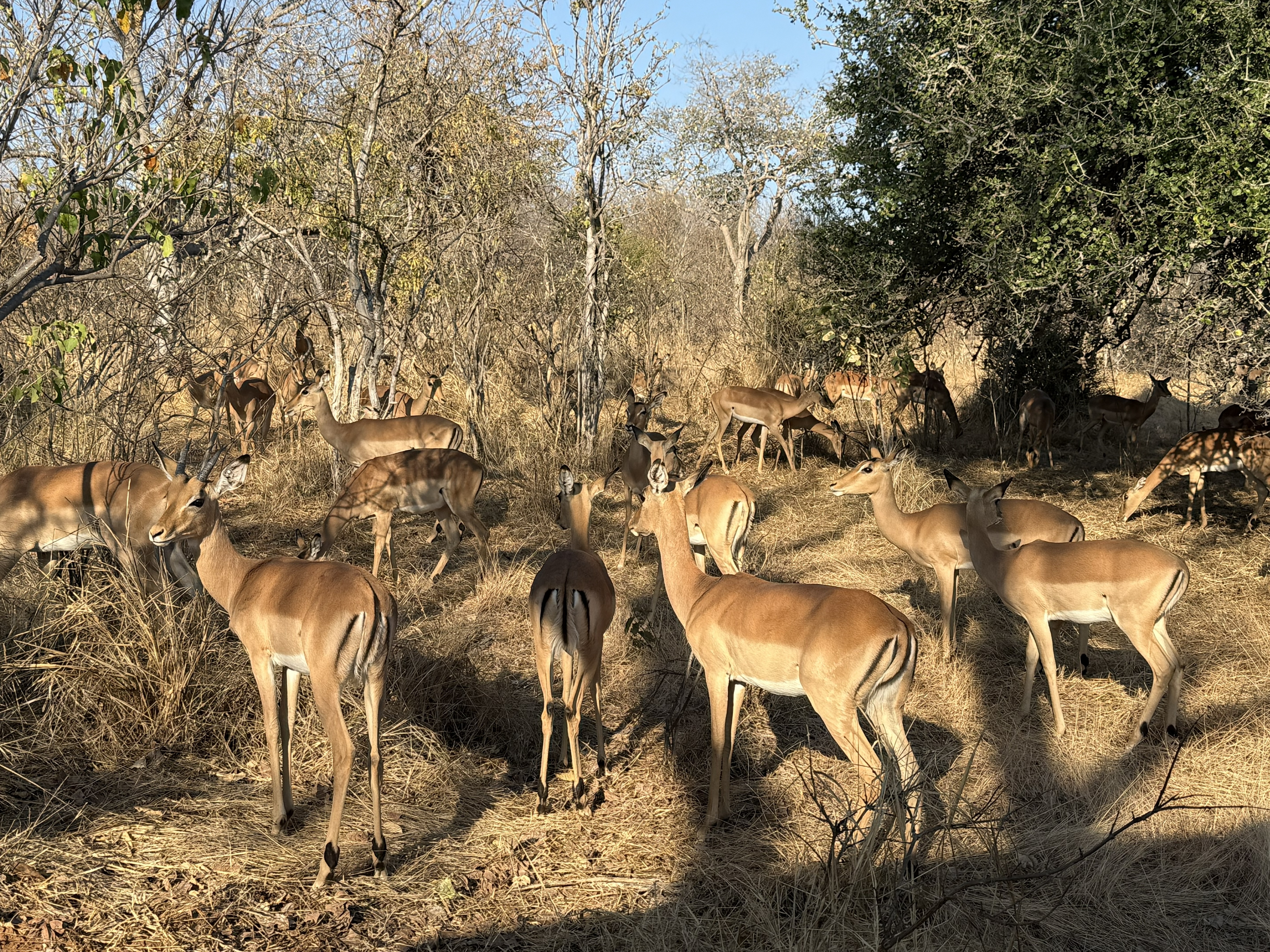
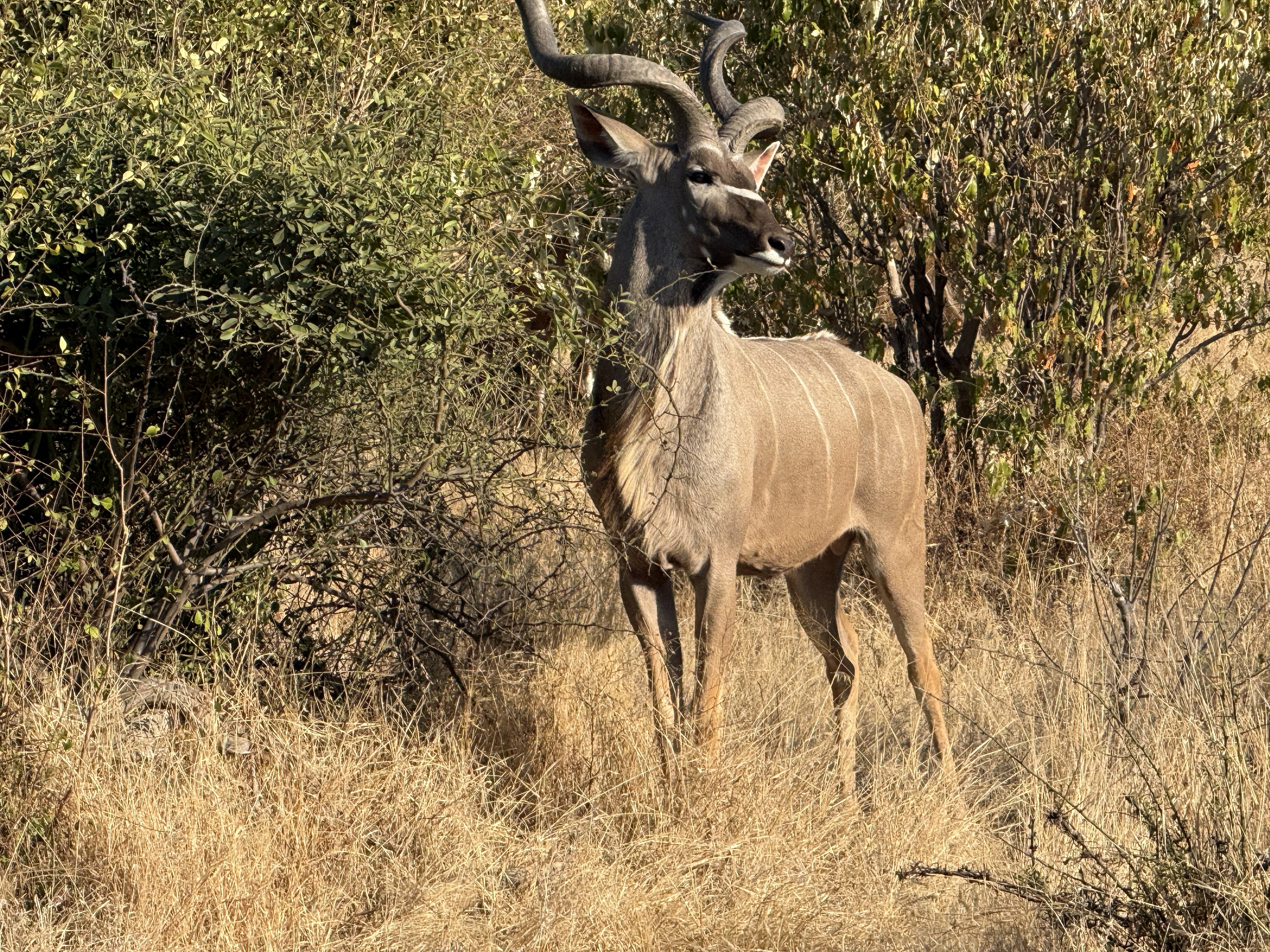
Impala, and then more impala, and then more. There are, remarkably, a great many at Chobe — the animal you photograph least and see most, moving through the bush in loose bright herds.A kudu bull, watching us with those big spiral horns held high — one of the most elegant animals in the country and, mercifully, unbothered.
The Carcass, Later
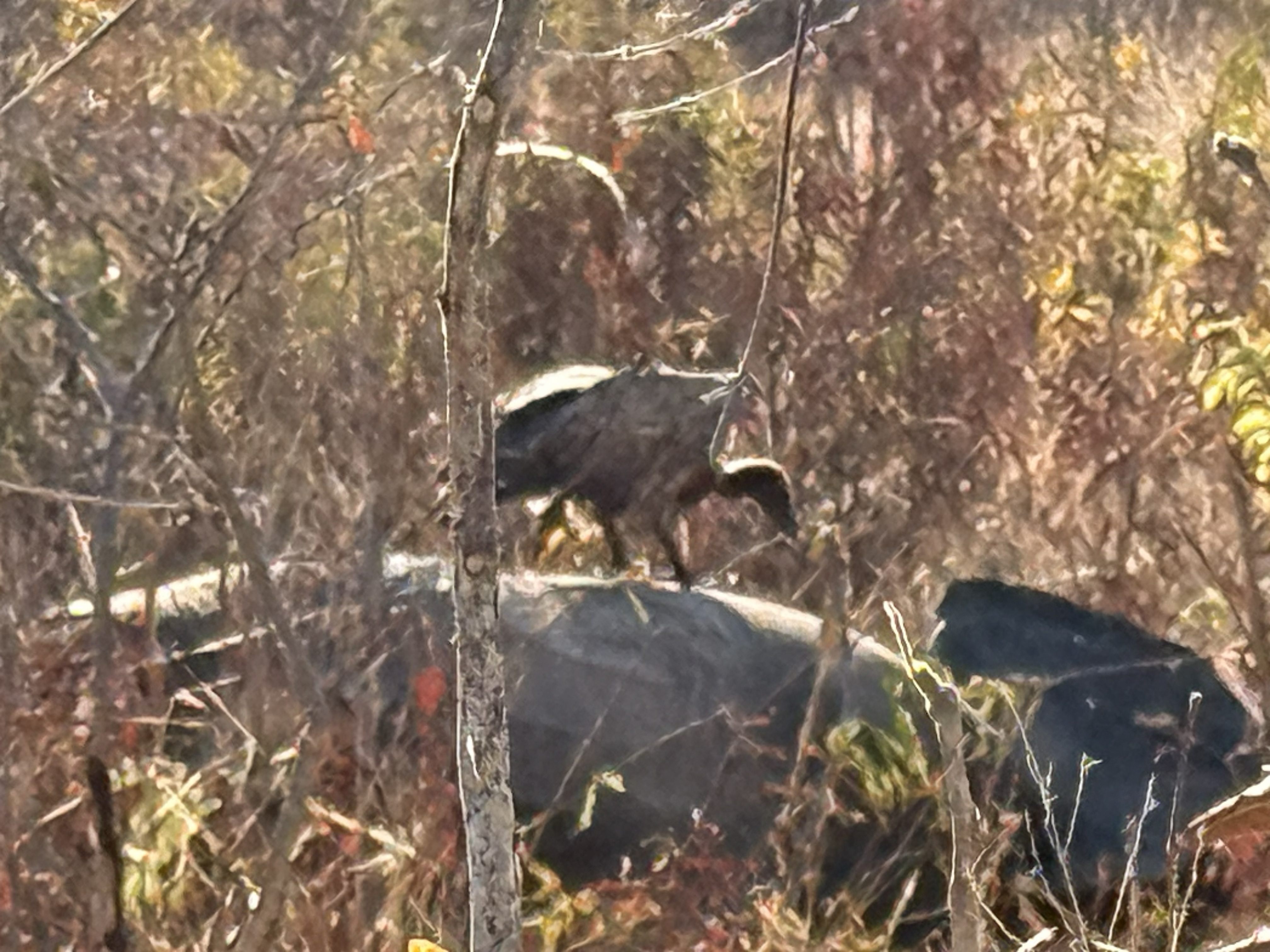
And then, working our way back, we came again on the elephant — and it had changed hands. The hyena was gone. The vultures had it now.
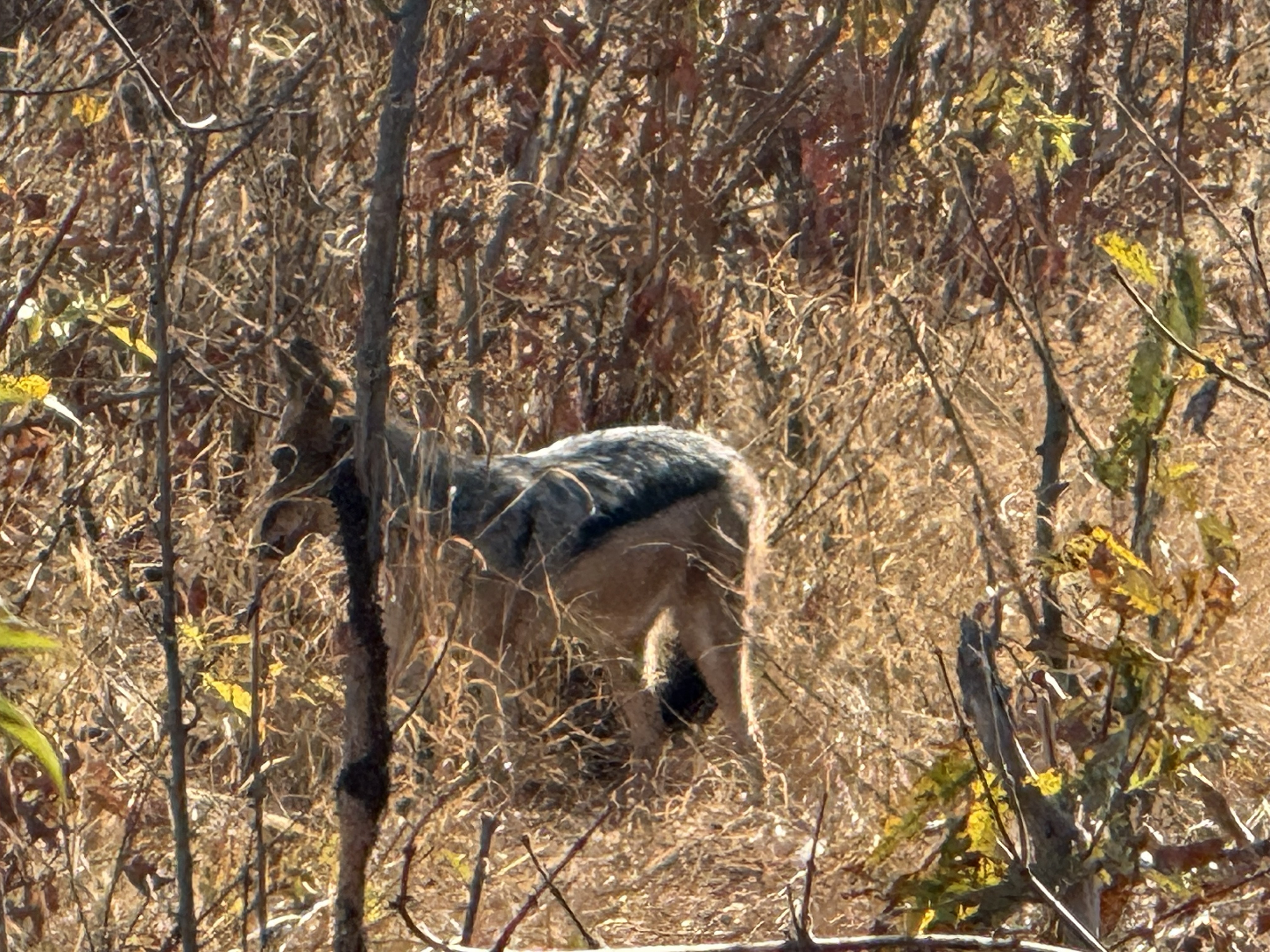
The vultures have taken over. They descend in numbers, mob the body, and strip it with astonishing speed — the plain's clean-up crew, doing in hours what would otherwise take weeks.And at the edge of it all, a jackal — too small to compete, too clever to leave, waiting for a gap and a scrap. The opportunist's whole life is patience.
So there it was, laid out for us across a single morning: hyena, then vultures, then jackal, each taking their turn on the same enormous animal. You could not stage it so neatly on purpose. The plain simply did it, on schedule, without an audience in mind, and let us watch.
Down at the Water
The river's edge gave us the rest of the morning's cast.
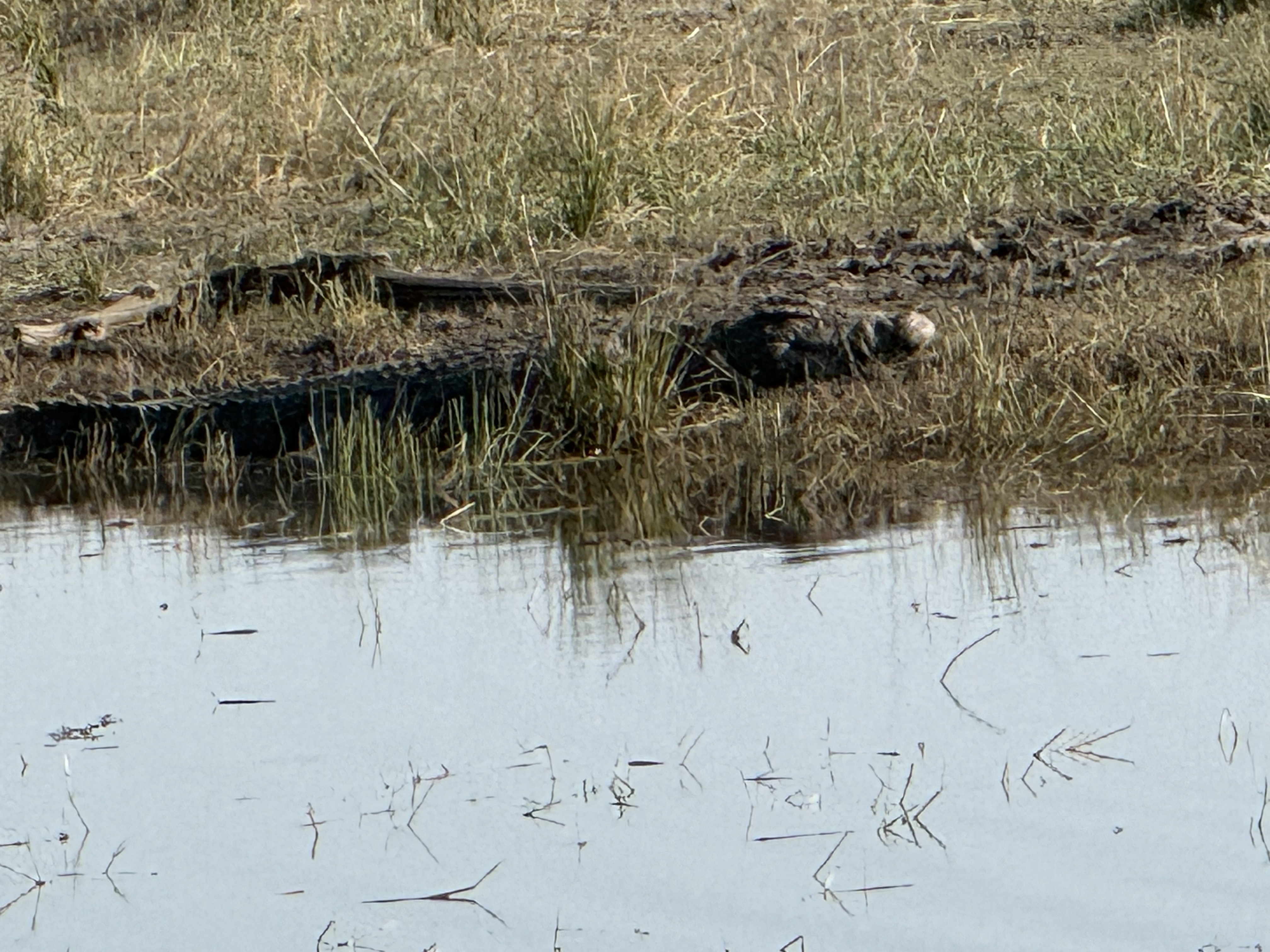
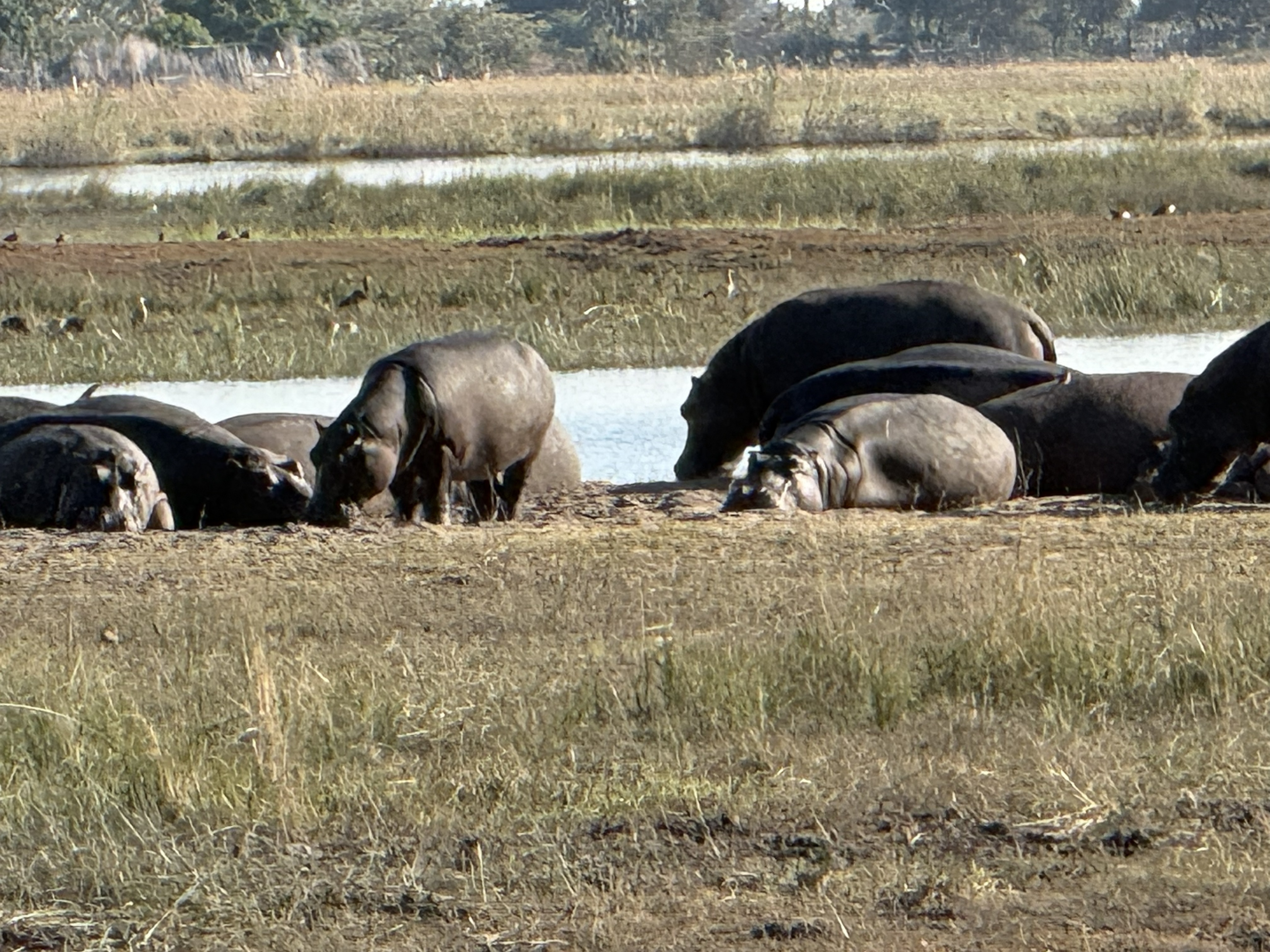
A crocodile on the bank, doing its impression of driftwood — which is exactly how it gets close enough to matter.And a raft of hippos, hauled together in the shallows, looking comic and being anything but; they kill more people in Africa than any of the animals you are actually afraid of.
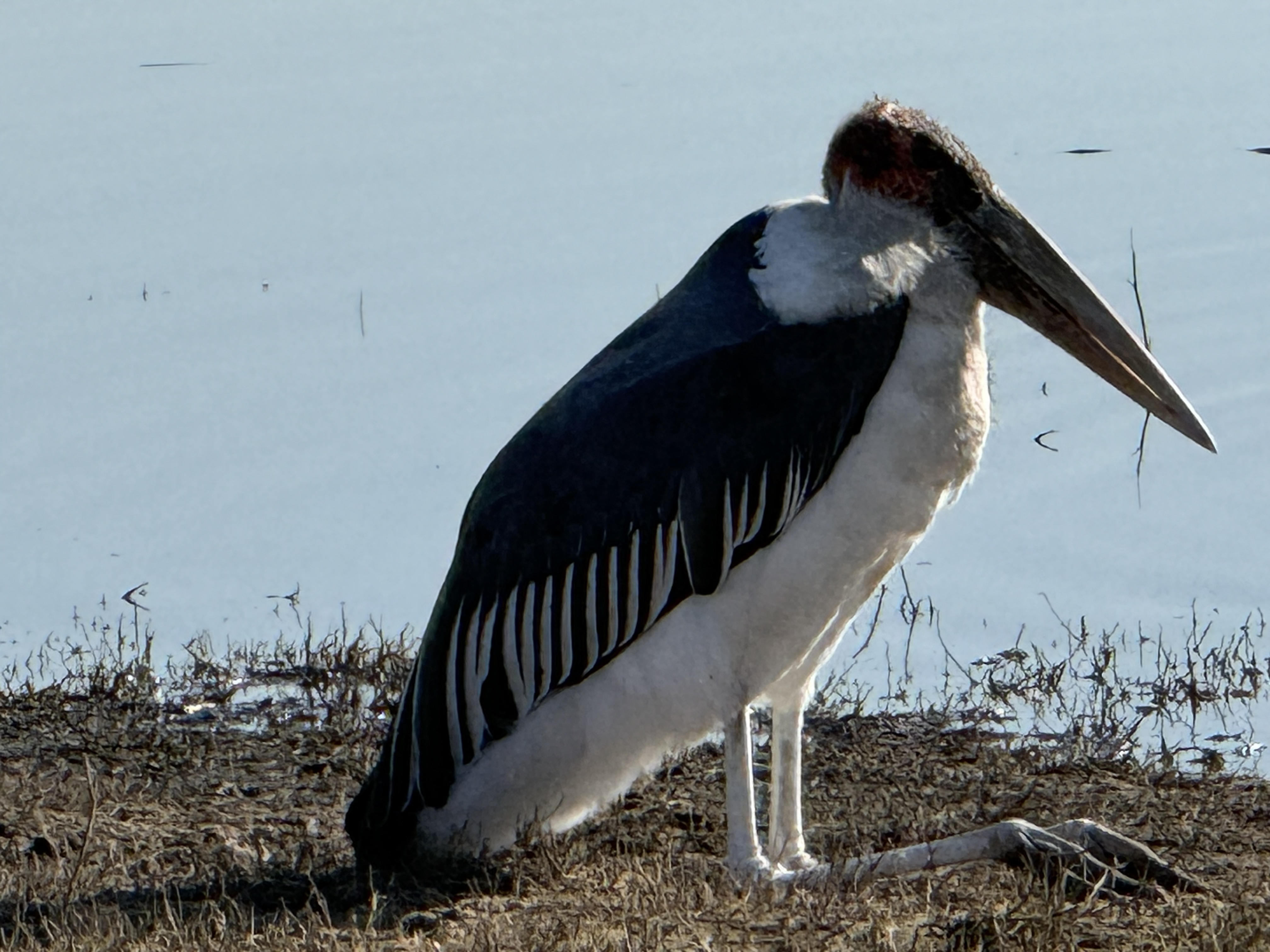
Another lion, flat in the grass, doing exactly as little as the first.And the marabou stork again — bald, hunched, undertaker-grim, and, after a morning spent watching things eat a dead elephant, suddenly right at home.
Midday
We came back to the lodge for the middle of the day, and the middle of the day at Chobe is for sitting still in the shade and letting the heat pass.
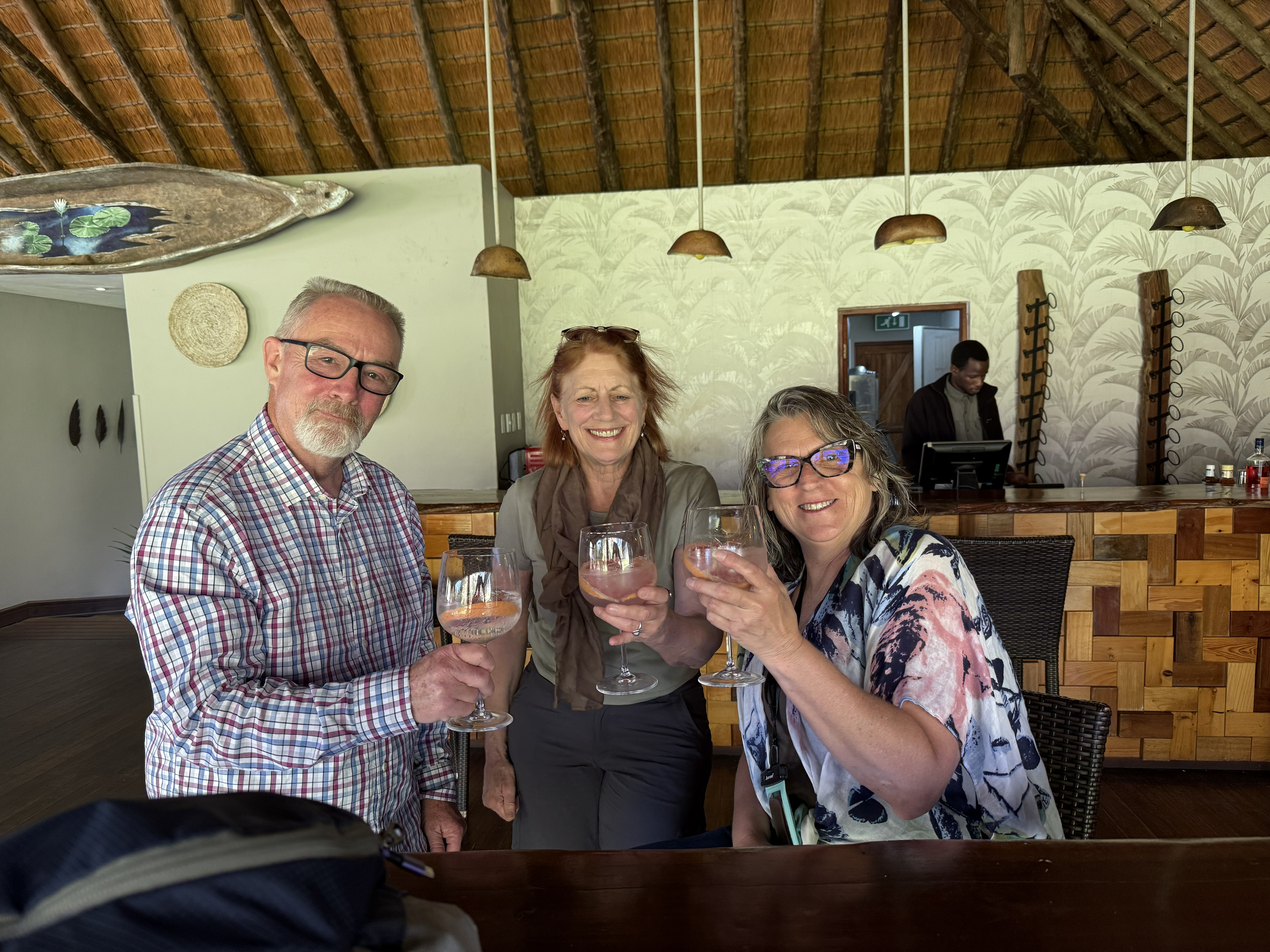
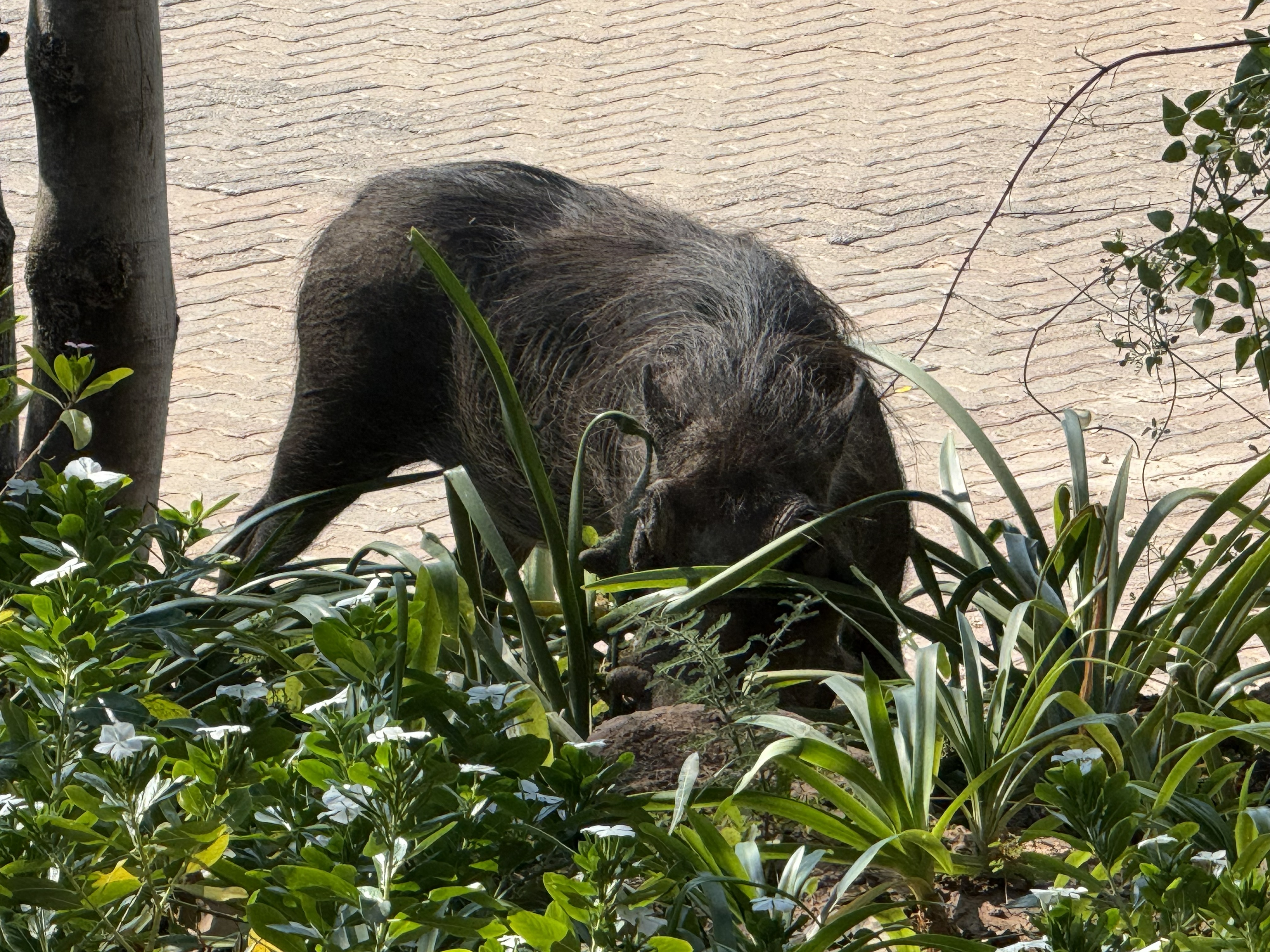
Bill, Bonnie, and Debbie, gin and tonics in hand — a drink with a genuine claim to this landscape, since the quinine that flavors the tonic was once taken, in earnest, against malaria. We were drinking it purely on tradition.A warthog grazing directly outside the front door of the lodge, on its knees in the way warthogs feed, entirely unconcerned with checking in or out.
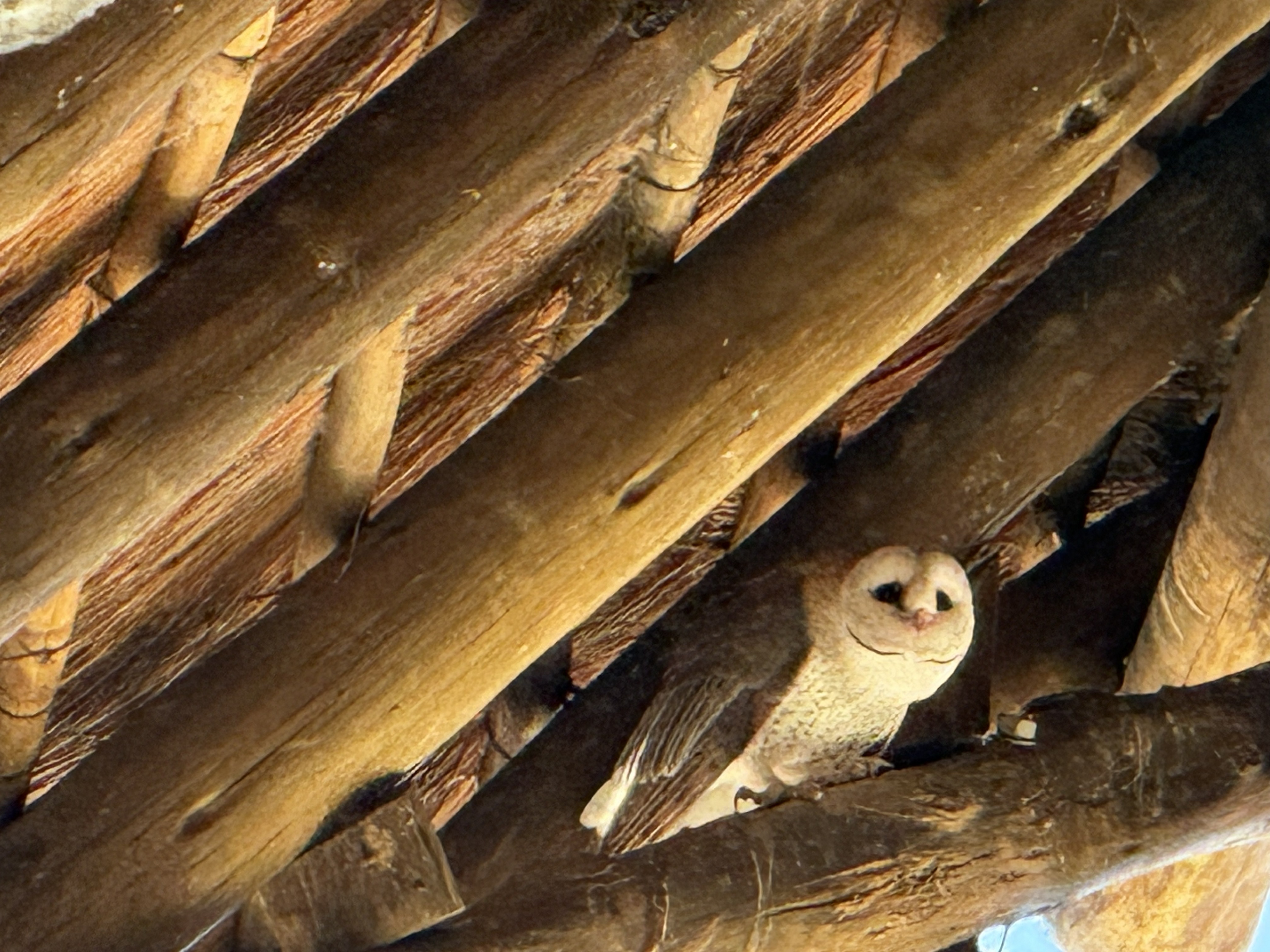
And, tucked up in the roof of the lodge, an owl — pale, still, and watching the lot of us with the patience of something that owns the night shift.
On the Water
And then, in the afternoon, the thing we had been promised since we arrived: the boat. Yesterday the river had been the view; today it became the road. You sit at the waterline, the engine drops to a murmur, and Chobe comes to you.
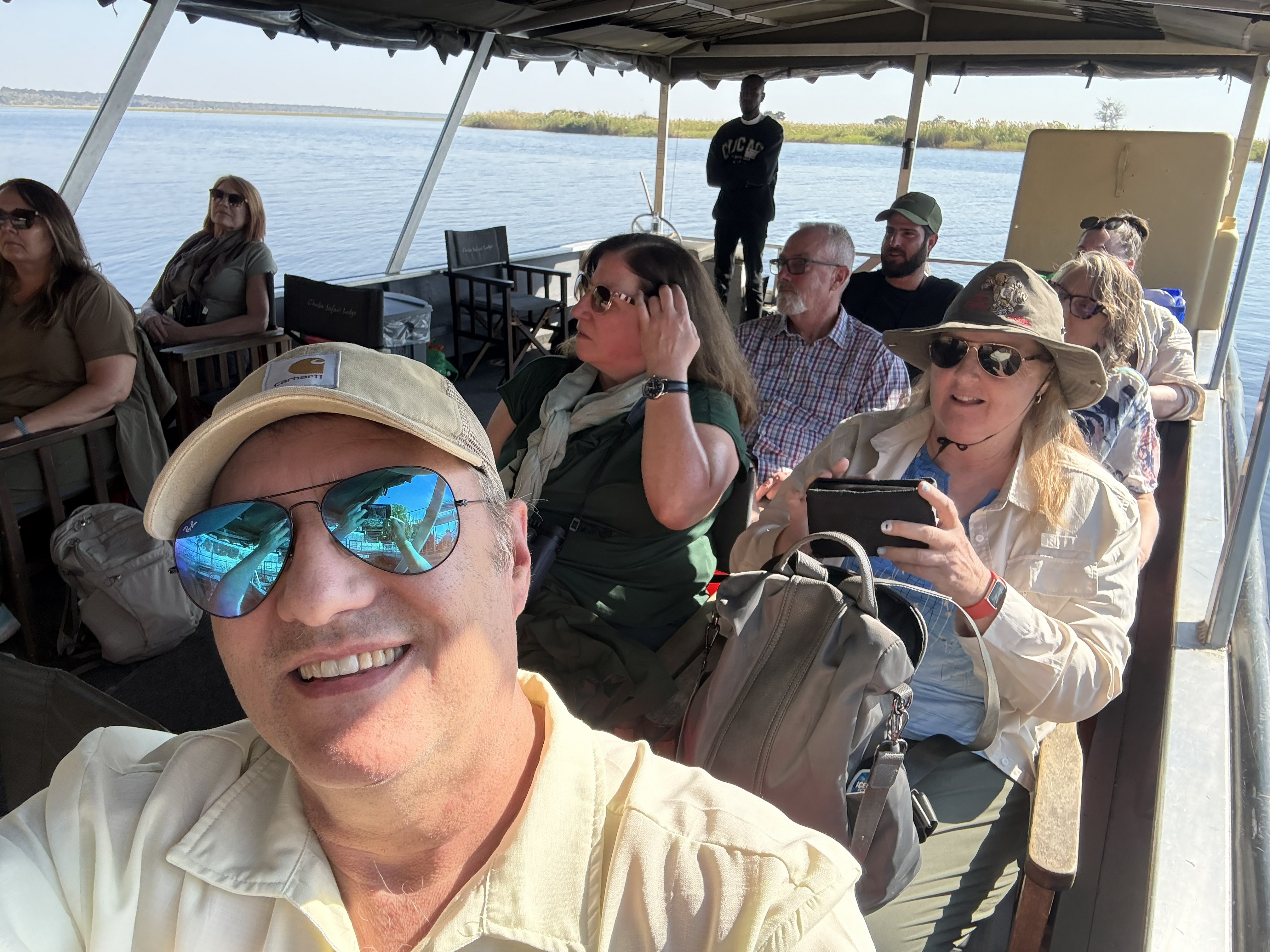
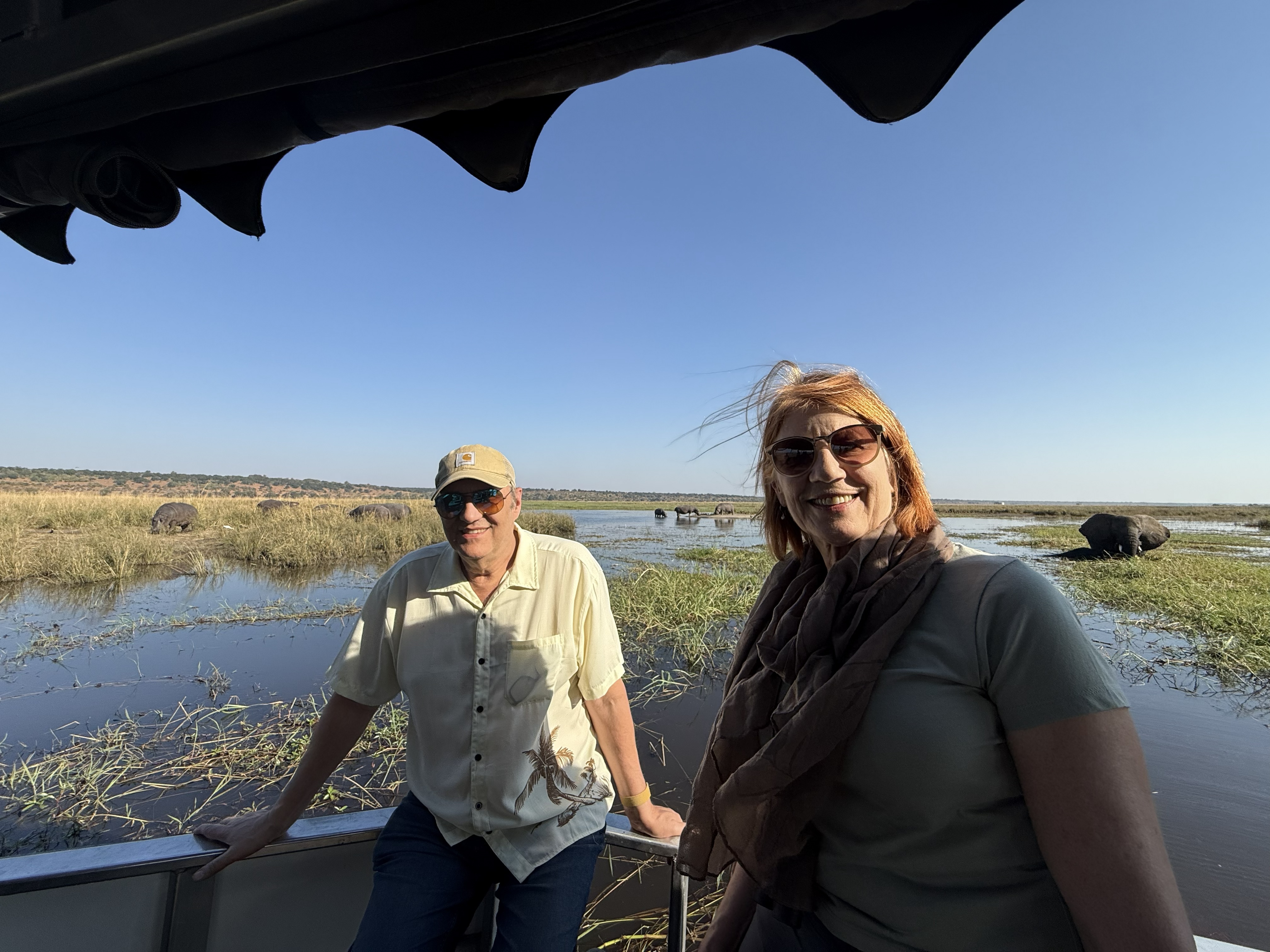
The group aboard, sun hats and long lenses and the particular good cheer of people who have realized the afternoon is going to be easy.Bonnie and me — one of the few photographs from the whole trip that is not a selfie, which tells you something about how these weeks are documented.
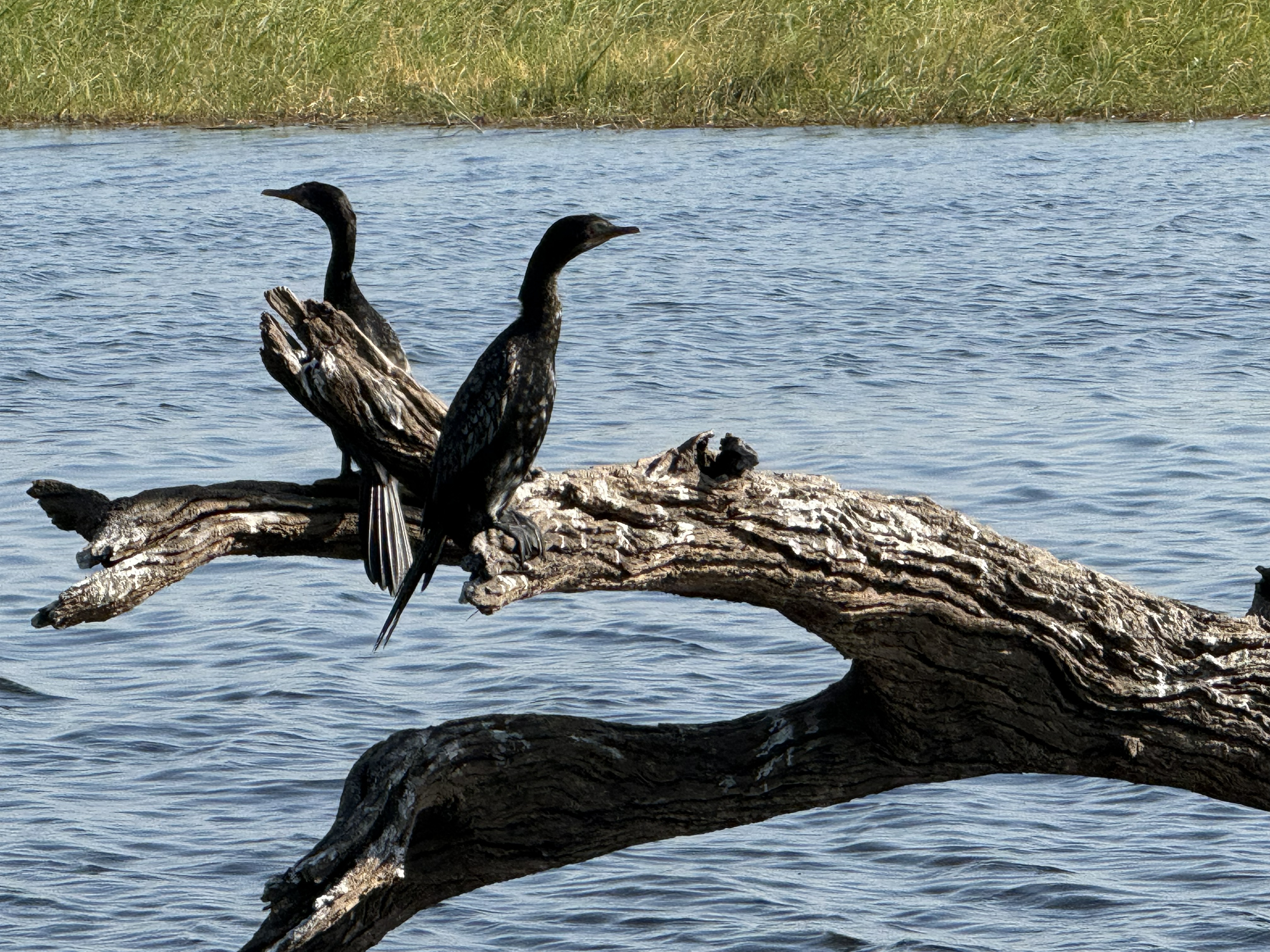
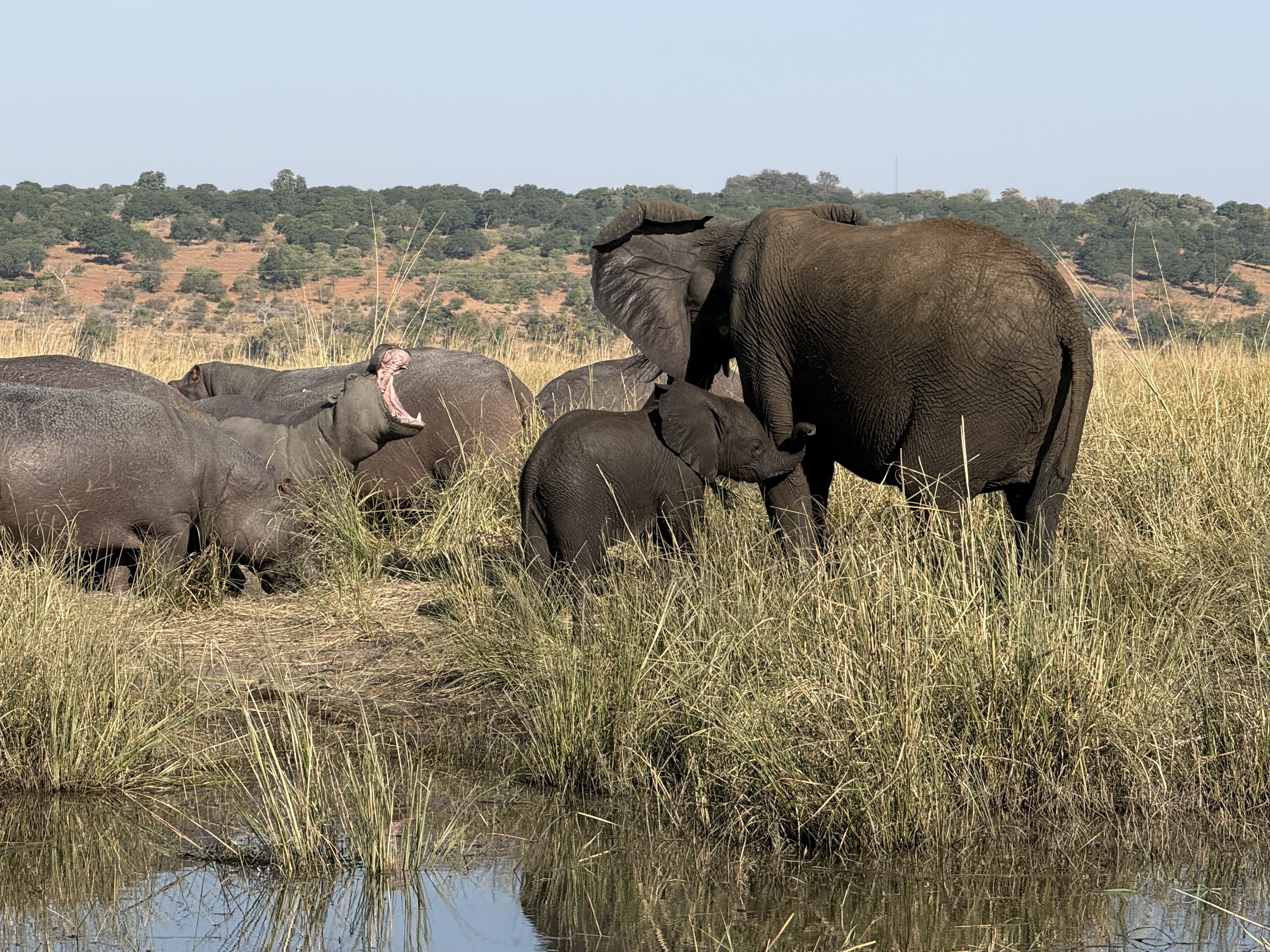
Cormorants drying off on the reeds — their feathers aren't fully waterproof, which is the price they pay for being able to chase fish underwater.Hippos and elephants sharing the same green shallows — the two heaviest animals on the river, keeping their own counsel.
From the boat the birds came one after another, close and unbothered, in the low gold light that the river seems to keep in stock.
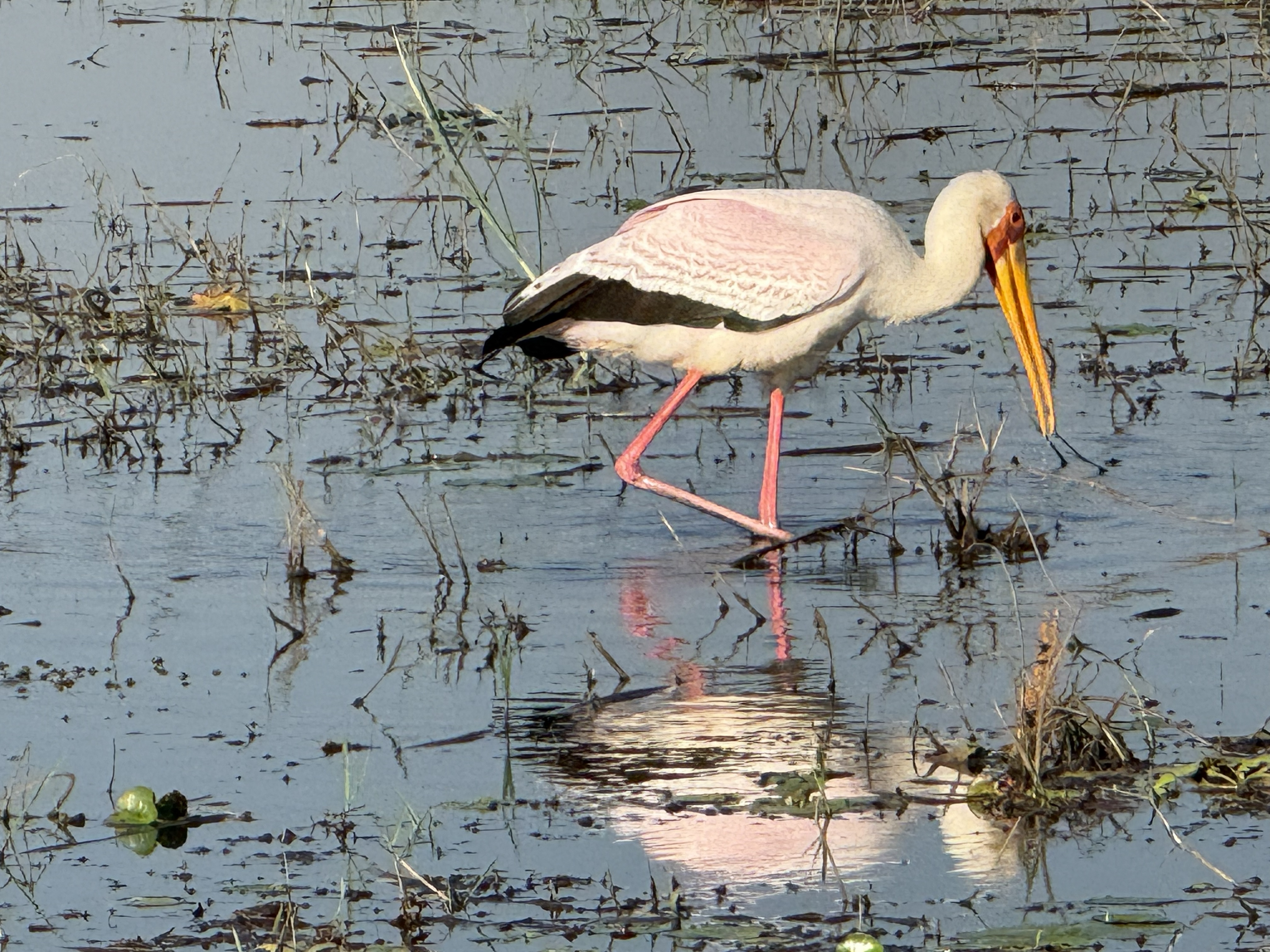
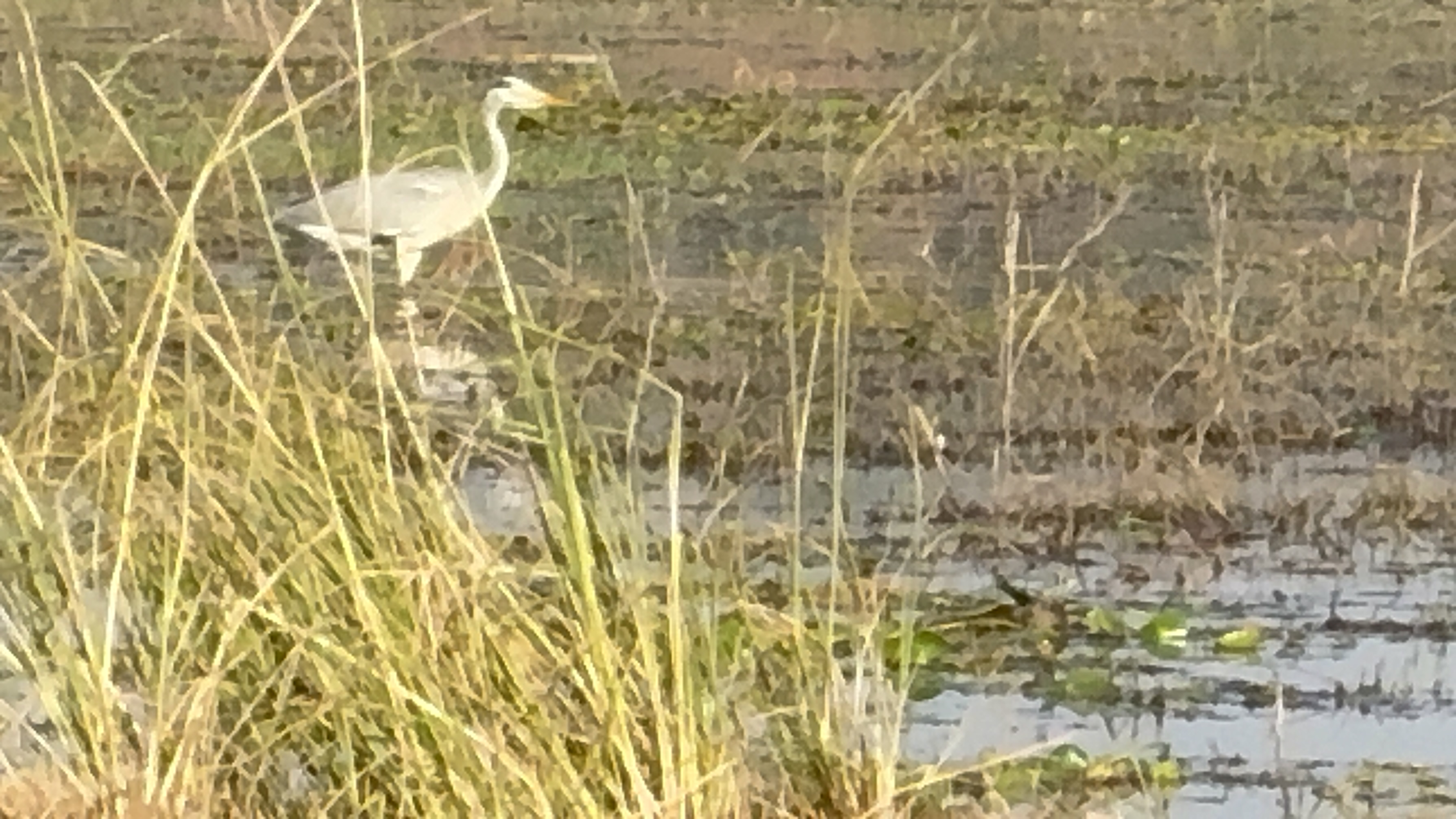
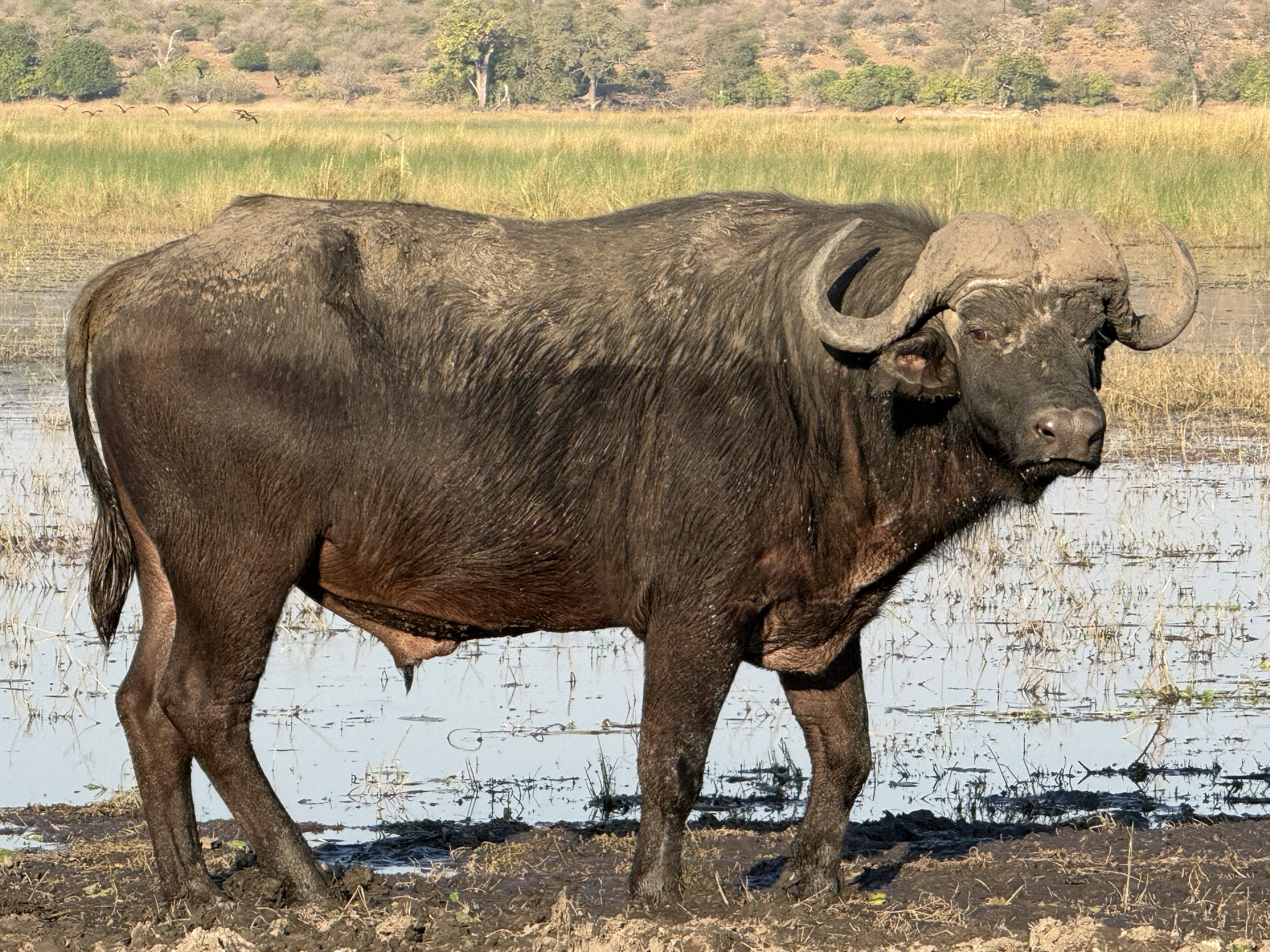
A yellow-billed stork wading its reflection, that long down-curved bill held ready.An egret, white against the green, standing with the stillness that is really a hunting strategy.A Cape buffalo at the water's edge, giving us the flat, unimpressed stare that buffalo give everything.
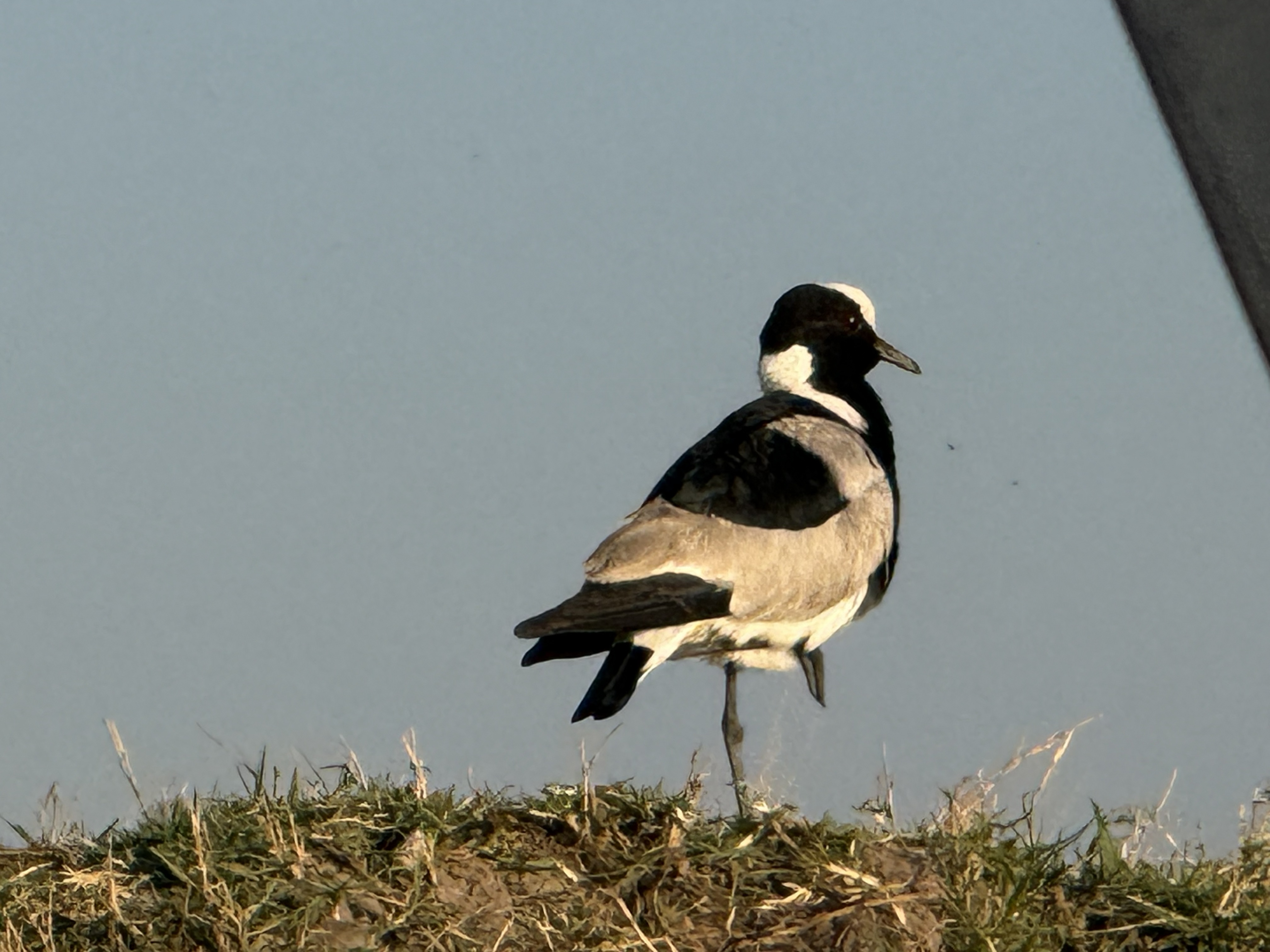
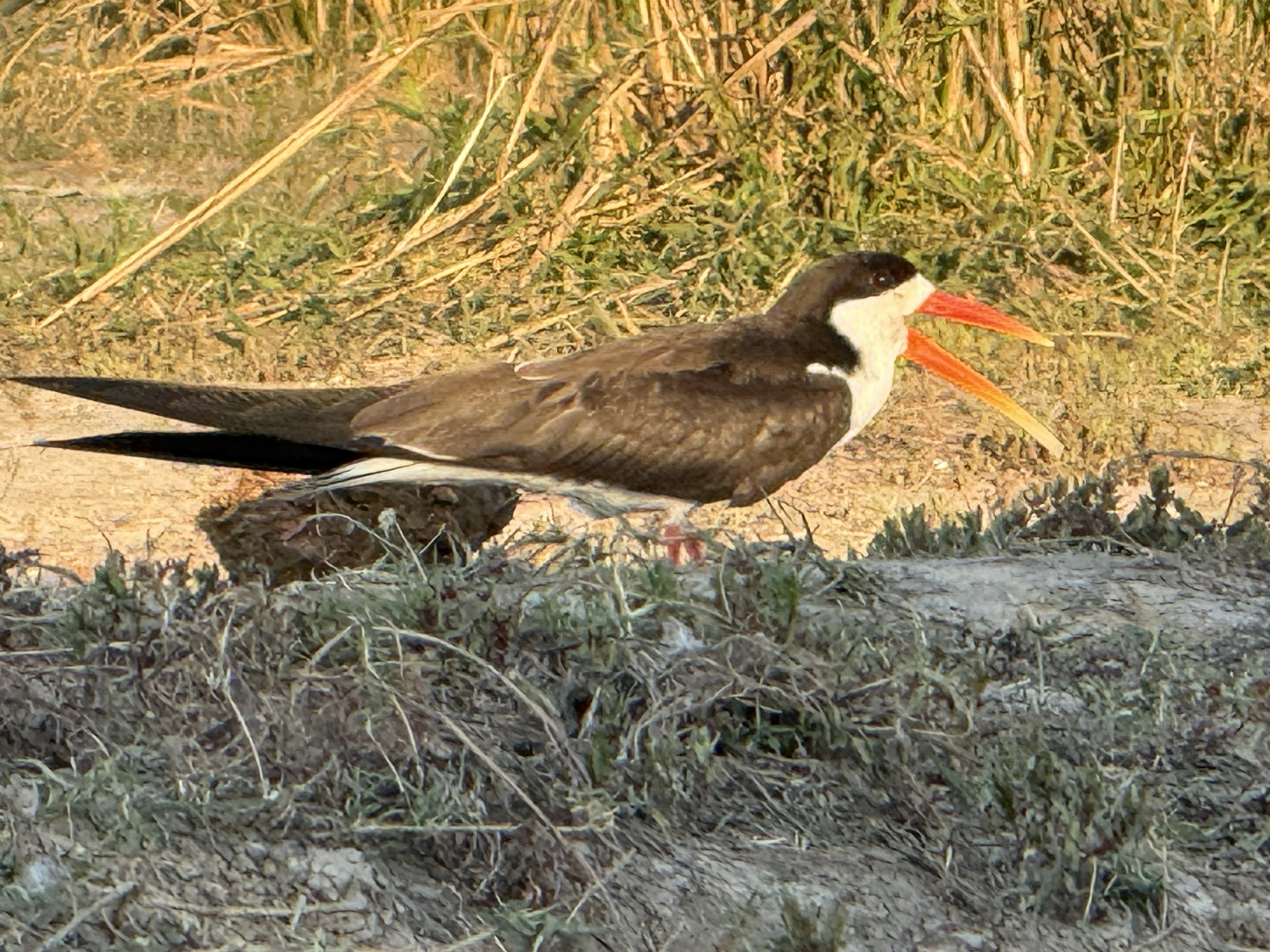
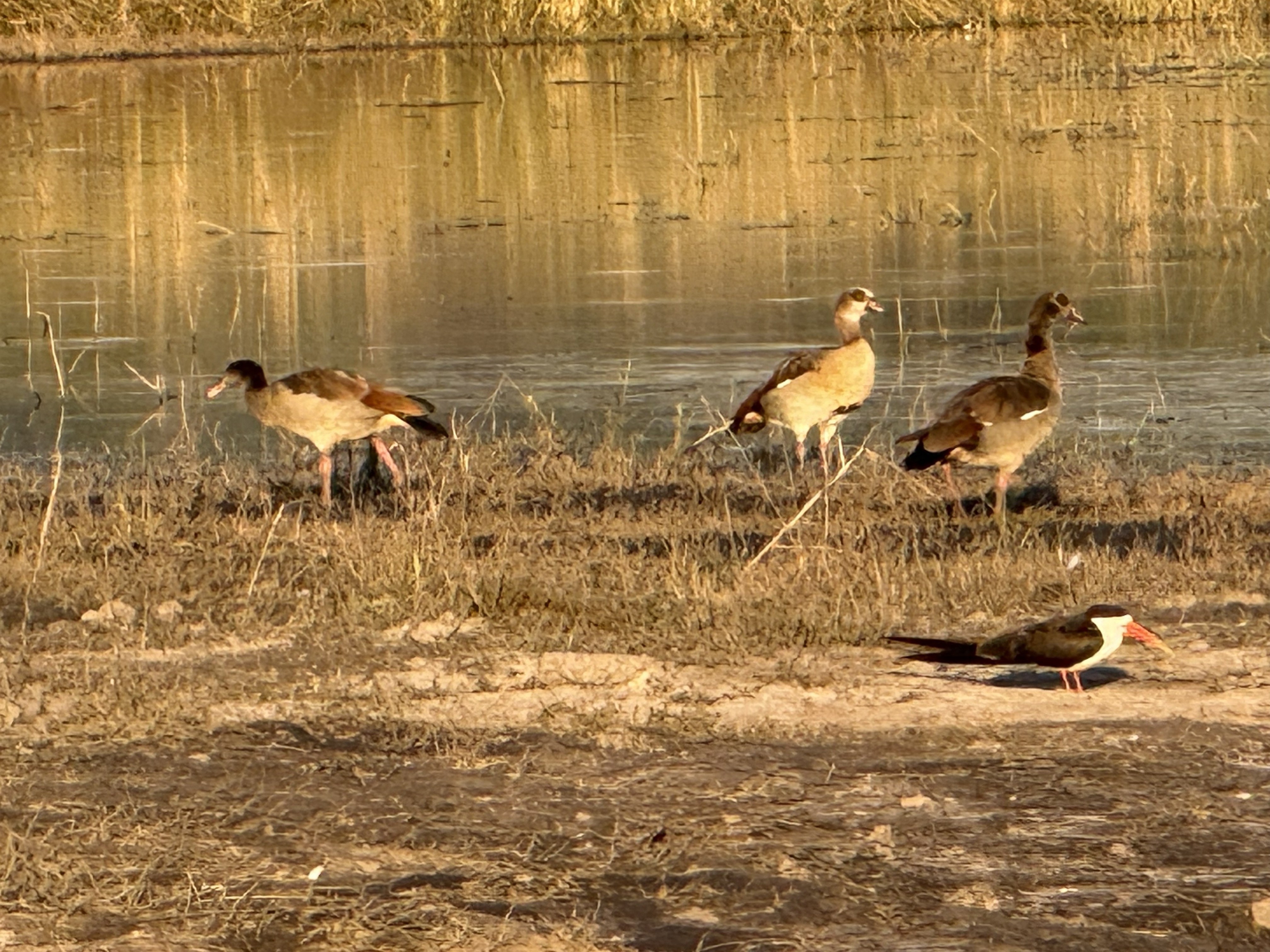
A blacksmith lapwing, named for its call — a sharp metallic “tink” like a hammer on an anvil.And the prize: an African skimmer. Its lower bill is longer than its upper, so it flies low with that blade slicing the surface and snaps shut on any fish it touches. Chobe is one of the very few places in southern Africa you can reliably find them, and only in the dry months, when the sandbars they nest on rise out of the falling river.Egyptian geese out on the sandbar, with an African skimmer resting in front of them.
The Fourth of July
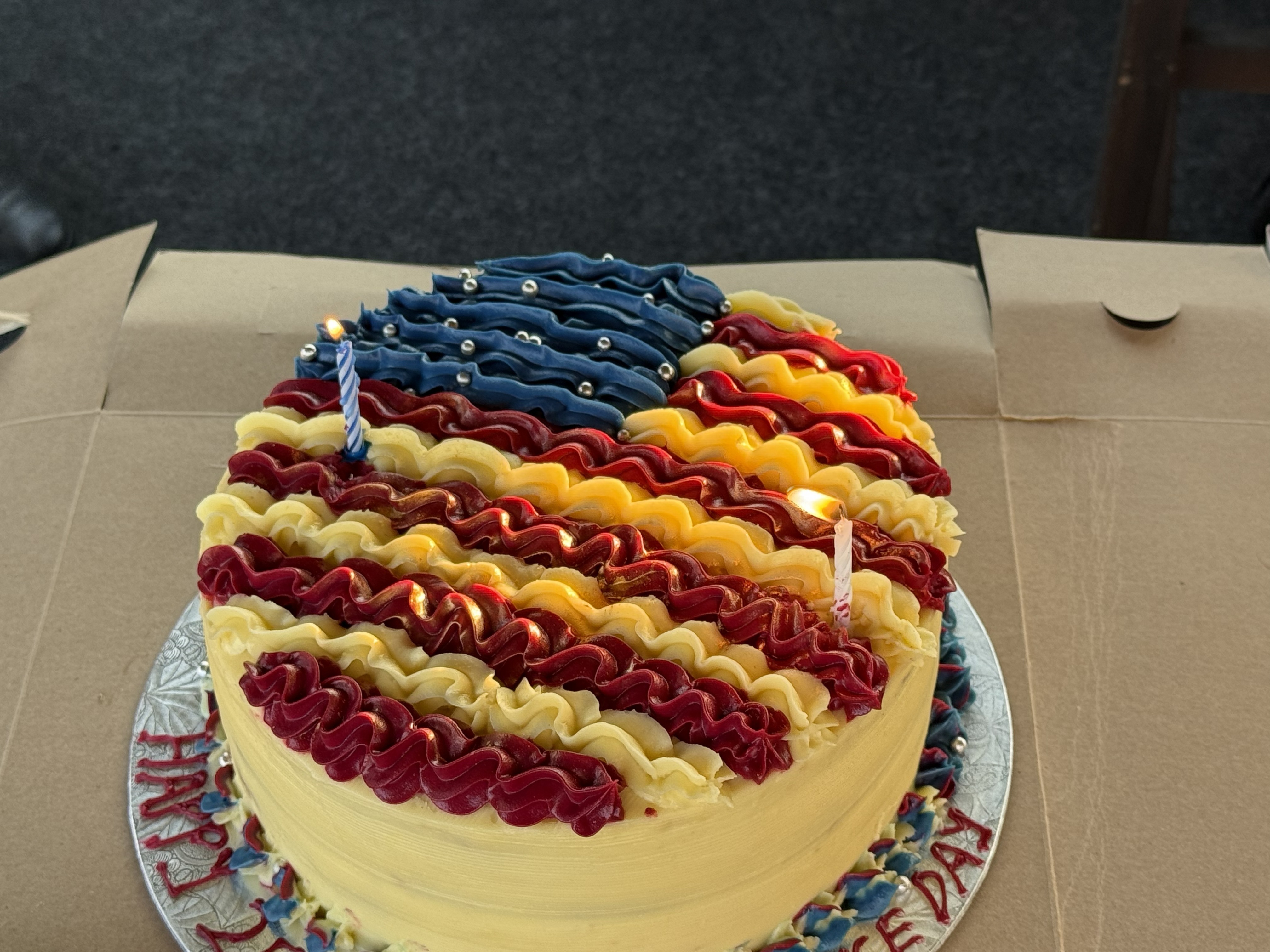
I had almost forgotten what day it was. The crew who run the boats had not. They had made us a cake — for us, the Americans aboard, on our Fourth of July, in the middle of Botswana, without being asked. Dylan did the cutting, and when I said the slices were generous he took it as an instruction and made the next three times as generous again. I managed, honestly, about a third of mine. We thanked them, and thanked them, and thanked them again, because there is not much you can do with a kindness that size except say so, repeatedly, and mean it.
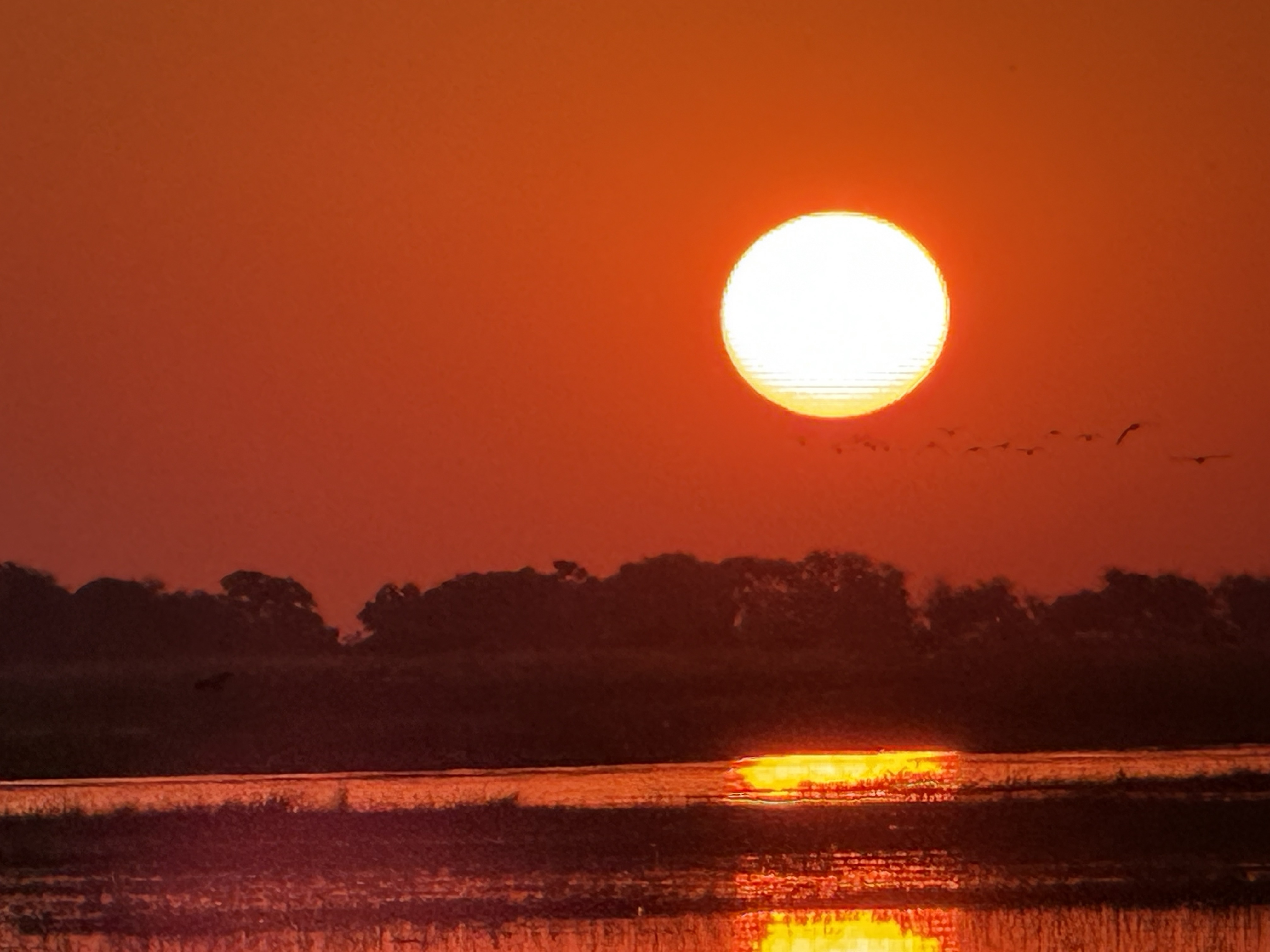
The cake, made for us by the boat crew for the Fourth of July. Nobody asked them to. That is the whole point of it.And the sun going down over the Chobe to close the day — red and enormous, the way it seems to be every evening on this river, as though the light were showing off.
It was, by a distance, the fullest day of the trip — a death and a feast and a river and a kindness, all inside one turn of the sun. I asked Nature about the painted dogs, as I asked everybody, and somebody asked about a leopard, as somebody always did, and we got the answer we always got. It did not seem to matter much today. Tomorrow we would leave the river for the Delta, and there was still time.